The Practice
How to Make a Matcha Latte at Home
A café matcha latte is mostly technique you can do at home: sift, make a paste, whisk, add milk. The method for hot and iced, and the grade to use.
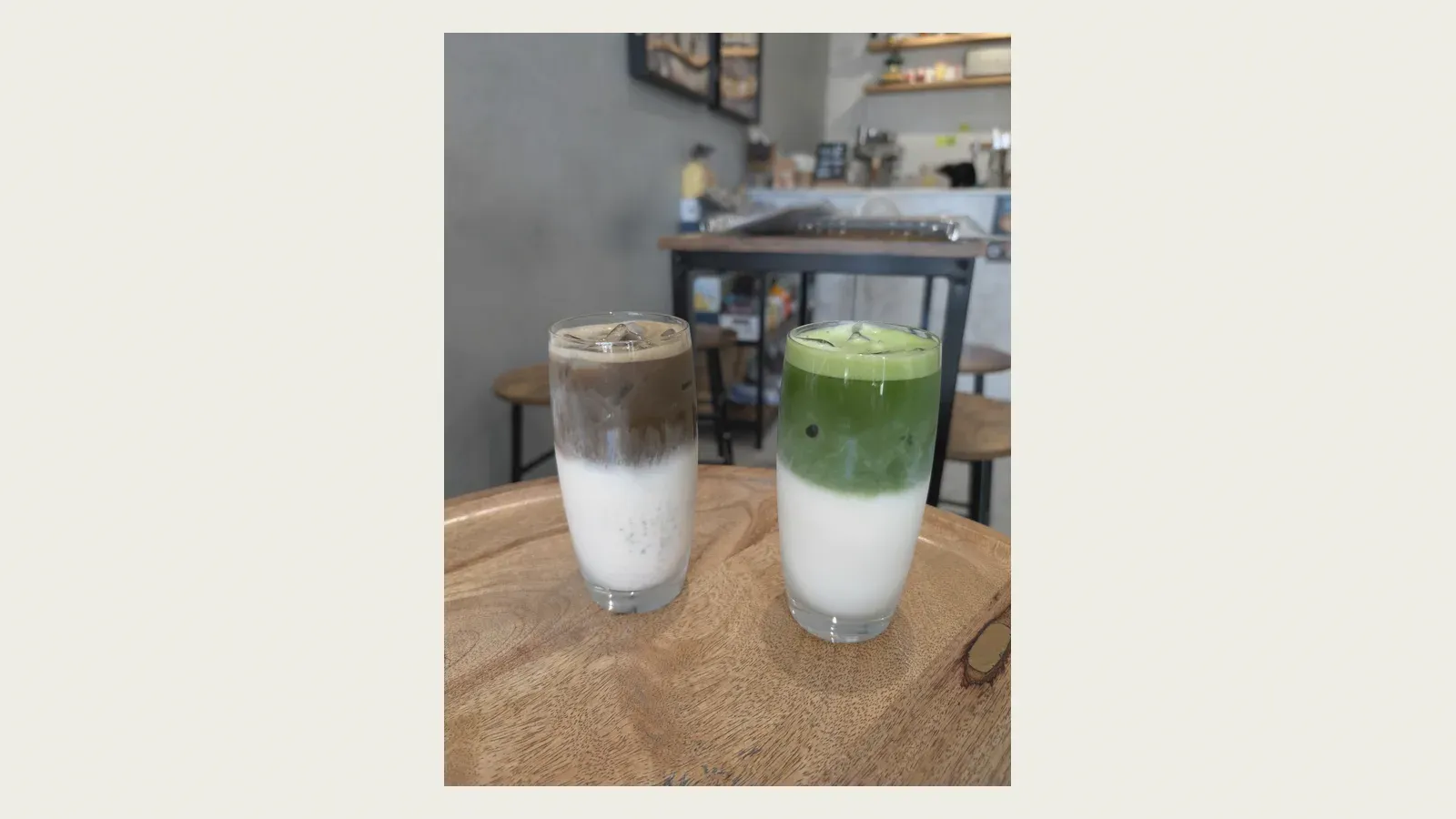
A good matcha latte at home comes down to one trick: whisk the matcha into a smooth paste with a little hot water (around 80°C) before you add the milk, so it never clumps. Use about 2–3 g of matcha to 200 ml of milk, hot or over ice. And don’t waste top ceremonial grade on it — a solid everyday matcha is the right tool for milk and sweetener.
A café matcha latte costs five or six pounds and takes the barista about forty seconds. The forty seconds are the part to copy. Behind the counter there is no secret ingredient and no special machine, only a sieve, a whisk or a frother, a little hot water, and one order of operations that home versions usually get backwards. Fix the order and the drink in your kitchen is the same drink, for the price of the milk.
Make the paste before the milk
Matcha (抹茶) doesn’t dissolve. It suspends: fine solid particles held in the water by the whisk, the way silt hangs in a shaken jar rather than the way sugar melts into tea 3. Drop the dry powder straight into milk, hot or cold, and it seizes into floating green lumps that no amount of later frothing will break apart. The cure is to wet the powder with a small amount of water first and work it into a smooth, glossy paste, then add the milk to the paste.
Every published café-style recipe runs this way. Ippodo sifts 3 g of matcha into a cup, adds 100 ml of water at 80°C, whisks fifteen seconds in an M, and only then pours in the milk 1. Its Japan-side recipe is the same order at 90 ml of water, milk added last to taste 6. The whisking-with-water stage is the paste. Skip it and you are asking a caking powder to disperse into cold fat, which it will not do, and the tool you blame afterward was never the problem.
What you need
- Matcha, a mid-grade everyday one. Which one, and why not your best, is below.
- A whisk or frother. A bamboo chasen (茶筅), the split-bamboo whisk, makes the finest paste, but an electric milk frother, a small handheld whisk, or a jar with a tight lid all disperse the powder well enough for milk. More on the small kit in the matcha starter kit.
- A small sieve to sift the powder. A kitchen tea strainer does the job. Sifting through a fine net before any water goes in is the standard first move even in a formal bowl 6.
- Milk, about 150–200 ml.
- Optional sweetener: a little honey, maple, or simple syrup.
The grade to use, and the money you can waste
Here is the piece of advice that saves you the most money. A latte is the wrong place for your best tin. What you pay a premium for in a high grade, its delicate sweetness and fine umami, is precisely what milk and any sweetener cover over. Pour dairy and syrup on a top ceremonial matcha and you have spent bowl money to taste a latte.
There is no legal or regulated “ceremonial grade” to anchor the price to in the first place. No organisation certifies the term, and Japan runs no standardized matcha grading system, so the words on the front of a tin are the seller’s, not a standard’s 4. That cuts both ways. It means a modestly priced tin can be excellent, and it means the expensive one is not automatically the right buy for a drink that hides most of what you paid for.
What a latte wants is a mid-grade, everyday matcha: bright and clean, with enough body and colour to read as matcha through the milk, but well short of the tin you would keep for a plain bowl. Skip the cheapest culinary baking powders too. Made from later-harvest, more sun-grown leaf, they carry more of the bitter catechins and can taste flatly harsh even under milk 3. Aim for the middle.
| Powder | Character | Best for |
|---|---|---|
| Culinary / baking grade | Later harvest, more bitter and astringent | Cakes, ice cream, heavily sweetened smoothies |
| Everyday / mid-grade | Bright, balanced, decent body and colour | A milk latte, hot or iced |
| Top ceremonial | Delicate sweetness, fine umami, high price | A plain whisked bowl of usucha |
The full grade picture, and how to read a tin without trusting the front label, is in ceremonial vs. culinary matcha.
A hot matcha latte
- Sift 2–3 g of matcha (about one to one-and-a-half teaspoons) into a mug or small bowl.
- Make the paste. Add roughly 40 ml of water at 80°C and whisk until glossy and lump-free. Off-the-boil water rested a minute is about right. A chasen makes the smoothest paste, a frother or a shaken lidded jar is close enough.
- Heat and froth 150–200 ml of milk with a frother, a steam wand, or a saucepan and a whisk.
- Pour the milk onto the paste, sweeten if you like, and drink.
Ippodo’s own latte is stronger and evenly split, 3 g of matcha to 100 ml of water and 100 ml of milk, which gives a bold, tea-forward cup 1. For the milder café style most people picture, keep the matcha at 2–3 g, use only the 40 ml of water the paste needs, and carry the rest with milk up toward 200 ml. The technique holds either way. Only the ratio moves.
No steam wand is needed for the foam. The same electric frother that makes the paste will froth warm milk, and failing that, warm the milk in a saucepan or the microwave, then whisk it hard, or seal it in a jar half full and shake it for thirty seconds before a short burst of heat sets the foam. The froth is a texture, not a requirement. A flat white pour of warm milk over the paste is still a matcha latte, and the layered top is optional.
An iced matcha latte
Iced is the same drink with cold milk, and the paste matters more, not less, because cold milk will not disperse dry powder at all. You still make the paste with a little warm water first, then build the glass cold around it.
| Step | Hot | Iced |
|---|---|---|
| Matcha | 2–3 g, sifted | 2–3 g, sifted |
| Paste | ~40 ml water at 80°C | ~40 ml water at 80°C |
| Milk | 150–200 ml, warmed and frothed | 150–200 ml, cold |
| Assembly | Pour milk onto the paste | Fill the glass with ice and cold milk, pour the paste over |
Make the warm-water paste as above, fill a tall glass with ice, pour in the cold milk, and float the paste over the top. Ippodo builds its iced latte the same way, roughly one part whisked matcha to one part cold milk, poured over the milk and ice for the layered look 2. That green-over-white layering is the suspension at work: the matcha is heavier than the milk and, left alone, its particles drift down and streak through the white before settling toward the bottom. It makes for a good photograph and a badly balanced drink, so stir it well before the first sip, or the last third comes out strong and the top runs pale. For a colder, frothier result without any hot water, a lidded jar shaken hard with the matcha, a splash of water, and a couple of ice cubes handles the paste and the chill in one move, though a small pinch of powder tends to escape the shake and speckle the foam.
Milk, honestly
The milk changes the drink as much as the matcha does, and the differences below are ones you can taste.
| Milk | How it behaves | Notes |
|---|---|---|
| Whole dairy | Froths rich, most body | The creamiest cup; the benchmark most cafés work from |
| Oat (barista) | Froths to a stable microfoam | Naturally sweet, the common café default for plant milk 5 |
| Soy | Froths hardest, on high protein | Smooth and stable, though the beany note is divisive |
| Almond | Runs thin | Lighter and nuttier, can taste washed-out and may split if heated fast 5 |
Whole dairy and barista-blend oat are the two safe picks, one for richness and one for a sweet, froth-stable plant option. Soy foams the most of any of them thanks to its protein, so it suits anyone chasing latte-art foam, if the flavour agrees with you 5. Almond is the thinnest and the fussiest under heat, so add the hot paste to warm almond milk gently rather than boiling it. “Barista” blends of the plant milks are formulated to froth and hold, which is why the café version foams better than the carton in your fridge.
On sweetener: a café latte usually carries a small amount of sugar, and that touch is where the familiar flavour comes from. Matcha and milk are good plain. If you want the café taste, a teaspoon of honey or simple syrup stirred into the hot paste dissolves cleanly and goes further than the same amount added cold.
Quick troubleshooting
Most home lattes fail at one of three points, and each has a one-line fix.
| Problem | Cause | Fix |
|---|---|---|
| Floating lumps | You skipped the paste | Wet the powder with water and whisk it smooth before any milk |
| Gritty on the tongue | You didn’t sift | Press the matcha through a sieve into the cup first |
| Bitter or harsh | Water too hot, or too much powder | Cool the water to about 80°C; hold the dose near 2–3 g |
The bitter case has more to it than a latte needs, and the full diagnosis, from water temperature to a stale tin, is in why your matcha tastes bitter.
If the dose you are pouring into milk has started to look expensive, the same paste-before-milk method works with roasted leaf at a fraction of the cost — see the hōjicha latte.
A latte is the sweet, milky, approachable way into matcha, and there is nothing lesser about starting there. Just know what it rewards. It rewards the paste and a middling tin far more than it rewards an expensive one, because the milk is doing half the flavour and covering most of the rest. The forty-second café trick turns out to be a sieve, a splash of water off the boil, and the patience to whisk a paste smooth before the milk arrives. When you want to taste what a good tin is on its own, whisk it into nothing but hot water and drink it from a bowl. That plain bowl is where the home practice really starts, and behind it the whole formal tradition of chadō (茶道), the way of tea, from which the milk was only ever an addition.
Sources
6sourcesIppodo Tea (USA)
SupportsHot matcha latte: 3 g matcha, 100 ml water at 80°C, 100 ml warm or foamed milk; sift, add water, whisk 15s in an M shape, then pour in milk (paste before milk)
Ippodo Tea (USA)
SupportsIced matcha latte: same 3 g / 100 ml water at 80°C whisked paste, 100 ml cold milk (1:1); add cold milk and ice to the glass, then pour the matcha over the top for the layered float
Naoki Matcha
SupportsWater above 80°C/176°F makes matcha bitter; matcha is a suspension that cannot dissolve, only be mixed evenly, hence clumps; for lattes a modest ceremonial grade is less bitter than culinary and needs less sweetener
Naoki Matcha
SupportsNo government or organisation regulates 'ceremonial grade'; Japan has no standardized matcha grading system; first-flush leaf is typically best; culinary grade later-harvest and more bitter
Matcha Sense
SupportsMilk comparison: barista oat froths to a stable microfoam and is naturally sweet (café default); whole dairy is creamiest; soy froths hardest on high protein; almond runs thin and can curdle if heated fast with whisked matcha
Ippodo Tea (Global)
SupportsJapan-side matcha latte: sift 3 g, 90 ml water at 80°C, whisk vigorously 15s, then add milk to preference — same paste-before-milk order
Common questions
What grade of matcha is best for a latte?
A solid everyday matcha — brighter and less harsh than culinary baking powder, but not your most expensive ceremonial tin. Milk and any sweetener cover the delicate sweetness and umami you pay a premium for, so a top ceremonial grade is money you can't taste in a latte. Spend that on the matcha you whisk plain.
Can I make a matcha latte without a whisk?
Yes. The bamboo chasen makes the smoothest paste, but a small electric milk frother, a handheld whisk, or a sealed jar you shake hard all disperse the powder well enough for a latte. The step you cannot skip is making a paste with a little water first. That, not the tool, is what stops the clumps.