L4 · The Aesthetic
Wabi-Sabi: Finding Beauty in Imperfection
What wabi and sabi mean in their own terms, how Rikyū built them into the tea room and the bowl, and why the Western version mostly gets it wrong.
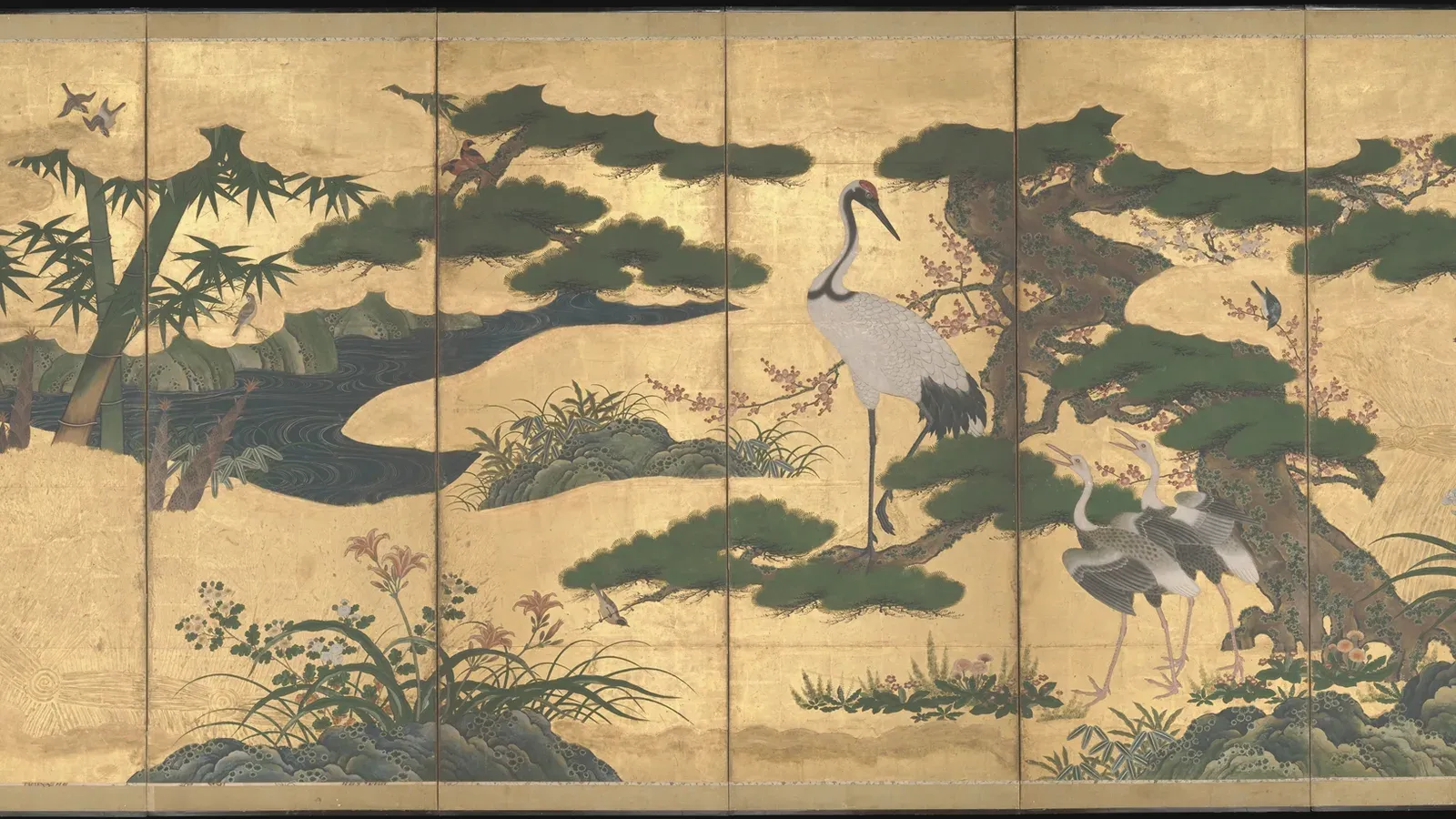
Wabi (austere, lonely beauty) and sabi (the beauty that comes with age and wear) are two old, separate ideas. Tea fused them into an aesthetic of the small room, the irregular hand-built bowl, the mended crack, and the single flower — meaning in plain, worn, incomplete things, not in the word “serene.”
The word is everywhere now, and most of what it labels is decoration. It sells candles, throw pillows, and skincare. It gets stuck to anything beige, anything cracked, anything a little rough, and offered as a synonym for shabby chic or “perfectly imperfect.” Some of that sits in the neighborhood of the real thing. Most of it is a mood board.
Start with the fact that unsettles the mood board. “Wabi-sabi” as one hyphenated concept is largely a modern coinage, and a Western one. Paul Atkins, who teaches Japanese at the University of Washington, notes that wabi and sabi are “yoked together far more often outside Japan than in it.” The compound began appearing in English print around 1980, helped along by Sōetsu Yanagi’s 1972 translation of The Unknown Craftsman, and was then re-imported to Japan as a packaged phrase. It does not appear in standard dictionaries of Japanese, where online writers mostly explain it to foreigners.3
The reduction costs something. Once wabi-sabi becomes a palette, it drops the one claim that gives it force: that a plain, worn, or broken object can outshine a flawless new one, and that the beauty sits in the object itself, open to anyone who looks.
The two words themselves are old and precise. The tidy fusion you can buy on a candle is the recent part. So this page takes wabi and sabi apart, looks hard at each, then rebuilds the compound the way the tea masters did: through specific rooms and objects, in the house voice of a repaired bowl and a two-mat floor.
What wabi means
Wabi (侘) comes from the classical verb wabu (侘ぶ), “to languish or be miserable,” and it survives in the adjective wabishii (侘しい): lonely, wretched, forlorn.3 The root is bleak. It is the feeling of being alone in the cold, short of what you need, with the wind getting in.
That feeling was revalued. By the medieval period, the hermit who had walked out of a crowded, status-anxious society read less as a failure and more as someone who had slipped its grip. Poverty chosen looked different from poverty suffered, and a life pared to essentials began to seem like a form of wealth. Wabi is the beauty of that condition: subdued, plain, quiet, deliberately under-supplied. Buddhism sits underneath it, in the acceptance of straitened circumstances without complaint.2
Atkins puts the starting point bluntly. The plain-language gloss of early wabi tea, in his account, runs to “miserable tea and loneliness.”3 The taste began as a way of finding worth in the exact conditions most people spend their lives trying to escape: cold, scarcity, solitude, the unadorned. Comfort came later, if at all.
In tea, wabi is the value behind a rough local bowl chosen over a costly imported one, and behind a room barely wide enough to kneel in. Austerity becomes a positive quality, something to compose with.
What sabi means
Sabi (寂) starts somewhere else. Its verb, sabu, gives the modern sabiru, “to rust,” carrying age and slow decay, and it stands beside the adjective sabishii, “lonely.” Older senses run to “grow cold” and “wither.”3 The philosophical reading turns on three overlapping senses: aged as ripe with experience and insight, solitary, and quietly at peace.2 All three describe a thing that time has changed for the better. Where wabi is about how little you have, sabi is about what time does to what you keep.
Sabi is the patina. The darkening of a bronze kettle. The worn sheen on a wooden post that a hundred years of hands have passed over. The depth an iron surface earns as it oxidizes. It is the beauty an object collects by being used and by lasting. A new thing cannot have sabi. It has to be lived with first, and the living has to show.
One line holds the two apart. Wabi is the beauty of poverty and bareness. Sabi is the beauty of age and wear. One turns on scarcity, the other on time. Tea is where they met.
The masters who fused them
Wabi-tea, wabicha (侘茶), took shape across the fifteenth and sixteenth centuries as a turn against fashion. The prestige tea of the day was a display sport, staged in bright shoin (書院) reception rooms around rare Chinese utensils, the imported karamono (唐物) that announced a host’s rank and purse. A short line of masters pushed the other way, toward the small, the plain, and the locally made.7
The lineage is three names, and the order carries the idea:
| Master | Dates | What they changed |
|---|---|---|
| Murata Jukō (村田珠光) | 1423–1502 | Opened the direction. A Nara merchant’s son who studied Zen under the reformer Ikkyū Sōjun, he set native Japanese implements beside the prized Chinese ones and is credited as the founder of wabicha.6 His letter to his disciple Furuichi Chōin, the Kokoro no fumi (心の文, “letter of the heart,” c. 1488), is an early statement of the spirit.8 |
| Takeno Jōō (武野紹鴎) | 1502–1555 | Deepened the wabi mood, drew the suggestive restraint of waka (和歌) poetry into the room, and taught Rikyū. |
| Sen no Rikyū (千利休) | 1522–1591 | Carried it to its most radical form in practice. |
What changed under this line was concrete. The bright shoin display room gave way to the sōan (草庵), the grass hut: a small, thatched, deliberately rustic space modelled on a farmer’s cottage. Named Chinese treasures gave way to plain local clay and bamboo, so that the objects in the room carried no price tag to admire and the eye had only their form and surface to go on. Britannica sums the resulting taste as simplicity, quietude, and the absence of ornament.7 The two-mat floor and the crawl-in door were the endpoint of that shrinking.2
Sen no Rikyū is the man most people mean by “wabi-sabi,” including those who have never heard his name. He shrank the room to two mats, brought the crawl-in door to its logical extreme, and chose plain local clay and bamboo over the named treasures a host of the previous generation would have staked his reputation on.2 The gesture was social as much as visual: at the height of an age of warlords, he built a room where a daimyō and a merchant knelt at the same low height on the same worn mats. His end came hard. In 1591 Toyotomi Hideyoshi ordered him to commit seppuku (切腹), ritual suicide. The politics around the aesthetic of plainness had a hard edge, and the man who perfected it paid for it with his life.
An aesthetic, an ethic, and a feeling
Three ideas share the tea room and get mashed together online. Keeping them apart is most of understanding any of them.
Wabi-sabi is an aesthetic: a way of judging what looks and feels right in a bowl, a room, a repair. Wa-kei-sei-jaku (和敬清寂), the four principles of harmony, respect, purity, and tranquility associated with Rikyū, is an ethic of the gathering: how host and guest treat each other and the space. Mono no aware (物の哀れ), the quiet ache at the passing of things, is a feeling, the emotional response to impermanence itself.2 Wabi-sabi tells you why a cracked bowl is beautiful. Wa-kei-sei-jaku tells you how to behave around it. Mono no aware is what you feel when you notice the crack will outlive the potter. They meet in one room and answer three separate questions.
The blur is easy to explain. All three grew in the same soil: the medieval Buddhist sense that things pass, and that close attention to passing things is a kind of wisdom. From that shared root, one branch became a way of making and judging objects, one a code of conduct between host and guest, and one a name for the feeling running under both. A shared root still leaves three separate plants, and a teacher who conflates them flattens the tradition into a single word of vague uplift.
How wabi-sabi shows up in tea
The quickest way into the aesthetic is the things it made.
The room. The orthodox tea room is small on purpose. Okakura gives the standard as four-and-a-half mats, “ten feet square,” and calls the space the “Abode of the Unsymmetrical,” “consecrated to the worship of the Imperfect,” a room that purposely leaves something unfinished “for the play of the imagination to complete.”1 Rikyū went smaller. His Tai-an (待庵, 1582), the only tea room reliably attributed to him and a designated National Treasure, is a two-mat space entered through the nijiriguchi (躙口), a crawl-in door roughly 60 by 60 centimetres. Everyone bends low to pass it, which strips rank at the threshold and keeps swords outside.2 Inside: unfinished wood, earthen walls, one scroll. The chashitsu takes the room apart in detail, and the roji, the dewy garden path, resets you before you reach the door.
The tea-room is consecrated to the worship of the Imperfect, purposely leaving something unfinished for the play of the imagination to complete.
Okakura reaches for two more names for the same space: the “Abode of Vacancy” and the “Abode of Fancy.” The walls stay bare except for the one thing set there to answer an aesthetic need of the moment, and the asymmetry is deliberate. Nothing in the room repeats, and nothing looks finished, because a complete, symmetrical arrangement leaves the imagination nothing to do.1 That refusal of the finished is the whole wabi-sabi idea stated as a rule for a room: leave a gap, and let the person in the room close it.
The bowl. A wabi bowl is hand-built, often a little off-round, its glaze pooled and uneven, its surface left looking like clay a person shaped and a fire changed. Rikyū had the potter Chōjirō make exactly this: low-fired, hand-formed raku ware, “utilitarian, un-adorned, often asymmetrical,” in place of smooth imported porcelain.2 The Nanpōroku (南方録), a later record of Rikyū’s teaching whose authorship scholars still debate, goes further and prizes the under-adequate utensil. To dislike a piece “when it is even slightly damaged,” it says, “shows a complete lack of comprehension.”2 The unevenness was put there by hand and kept on purpose, a thing to prize. How to read and hold such a bowl belongs to the chawan.
The mended crack. When a bowl breaks, kintsugi (金継ぎ, “golden joinery”) rejoins it with urushi (漆) lacquer dusted or mixed with gold, leaving a bright seam where the fracture ran.5 The repair is drawn in gold and shown. This is sabi made literal: an object’s history of breaking and surviving becomes the most beautiful thing about it. Britannica dates the technique to the late fifteenth century and ties it to the shogun Ashikaga Yoshimasa, said to be displeased when a favourite bowl came back from China stapled together with ugly metal.5 Keep the fact straight: kintsugi is slow lacquer work, gold laid over months of urushi, closer to restoration than to a craft-kit hack. The mend enters the object’s biography, and a bowl valued for having broken and been made whole can be prized above the same bowl unbroken.5 The full method covers it.
The single flower. Tea flowers, chabana (茶花), are arranged to look barely arranged: one or two seasonal stems set as if just picked, and never a dense display. Okakura’s rule for the room is that nothing repeats. “If you have a living flower, a painting of flowers is not allowable,” he writes, and a round kettle wants an angular water jar beside it.1 One stem, against a bare wall, chosen for the week it is in. Which flower is right depends on the calendar. The chabana and kakemono pairing carries the hanging scroll alongside the stem, and the season that governs both is the subject of the tea year.
Each of these is plain, or worn, or incomplete, sometimes all three. That is the aesthetic, shown instead of asserted.
Where wabi-sabi gets confused
Because the word stretches to cover almost anything, a few fences help.
Shabby chic borrows the look and skips the history. Distressed furniture and factory scuffs are age faked onto new things. Sabi is age accumulated, the record of real use. A costume of wear points the opposite way from the idea.
Minimalism sands the flaw out. Wabi-sabi keeps it. Minimalism chases clean, precise, often glossy perfection, the white room and the seamless surface. Wabi-sabi holds on to the wear and the irregularity: reductive, but never slick. As Leonard Koren puts it, wabi-sabi is the beauty of things “imperfect, impermanent, and incomplete,” caught at the moment of coming into being or of fading, short of full bloom.4 A minimalist would polish the flaw away. Wabi-sabi leaves it, or gilds it.
“Perfectly imperfect” points the wrong way. The slogan treats imperfection as a charming finish applied on purpose to something otherwise flawless. Wabi and sabi run the other way round: the plainness and the wear come first, out of poverty or age or use, and the beauty is discovered in them afterward, where circumstance happened to leave it. Designed-in imperfection is a look. Found imperfection is the aesthetic.
The four principles are conduct. The aesthetic is objects. As above, wa-kei-sei-jaku governs behaviour in the room. Wabi-sabi governs how a thing looks and feels. A writer who uses the two as synonyms is telling you which one they have read about.
The test, when you suspect the word is being used as décor: ask whether the bareness or the wear is real. An object with true age, real use, an honest mend, or the marks of the hand earns it. A new object dressed to look that way is wearing a costume.
Wabi and sabi were two separate words for a long time before a tea master set a rough bowl in a small room and made them mean one thing together. The compound came back from the West around 1980. What is old is the choice underneath it: to keep the crack, to use the local clay, to bow through a two-foot door, to set one flower against a bare wall and call that enough. You can read about that choice, or you can pick up whatever cup you already own, notice where it has worn and where it sits off-true, and make a bowl of tea in it. Start with the practice. The aesthetic lives in that attention, in a real object, in your two hands.
The pieces
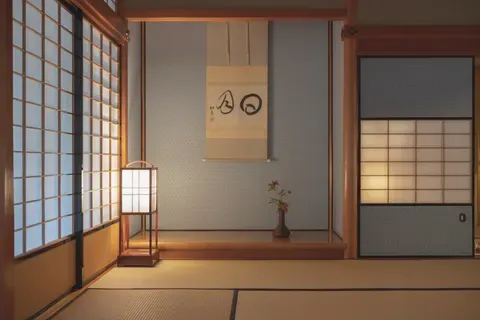 The Chashitsu: Inside the Japanese Tea Room How the wabi tea room works as architecture: two-to-four-mat scale, raw clay and bamboo, the crawl-through nijiriguchi, and Tai-an, Rikyū's only surviving room. 02
 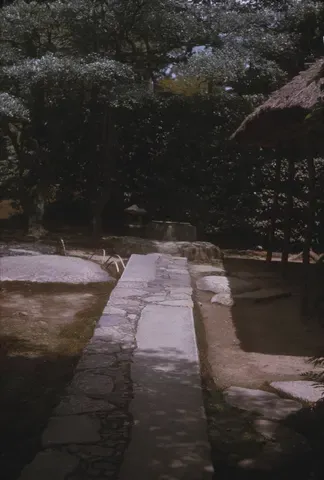 The Roji: The Dewy Garden Path to Tea The roji is the garden path to the tea room: stepping stones that slow the feet, a middle gate, and a low basin that makes each guest crouch and rinse first. 03
 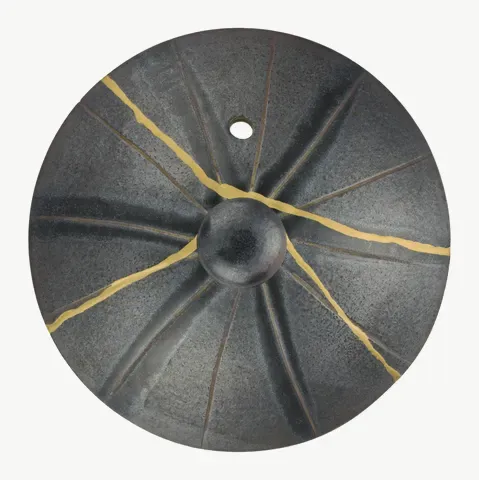 Kintsugi 金継ぎ: The Art of Golden Repair Kintsugi mends broken pottery with urushi lacquer and gold — a months-long lacquer craft, not an epoxy kit. What the work involves, and why tea prized it. 04
 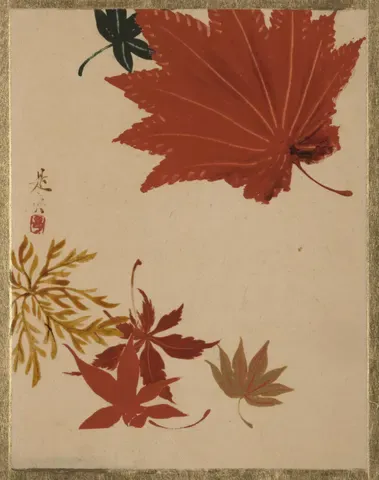 Mono no Aware: The Bittersweet Beauty of Impermanence Mono no aware names a moving awareness of transience. The Edo scholar Motoori Norinaga raised it into a concept — he did not invent the feeling. 05
 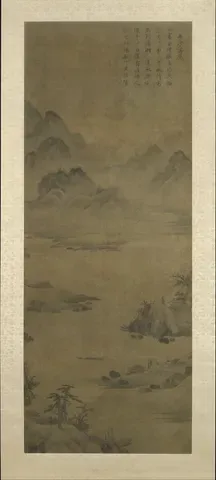 Chabana & Kakemono: Flowers and Scrolls in the Tea Room The hanging scroll is the tea room's most important object, chosen and read first. A single seasonal flower answers it. Why chabana is not ikebana. 06
 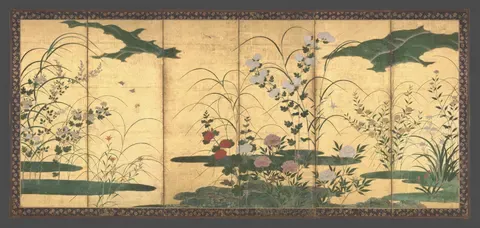 The Tea Year: Saijiki & Seasonality in Chadō How the saijiki, the haiku seasonal almanac, frames the tea year: the furo/ro changeover, robiraki and kuchikiri, shincha, and a gathering tuned to the season.
 Sources
8sourcesOkakura Kakuzō, The Book of Tea (1906), Project Gutenberg
SupportsTea room as the 'Abode of the Unsymmetrical' and 'worship of the Imperfect'; 4.5-mat / ten-feet-square room; no colour or design repeated; single flower; painting of flowers not allowable if a living flower is present
Stanford Encyclopedia of Philosophy, 'Japanese Aesthetics'
SupportsWabi and sabi as distinct concepts; wabi as acceptance of straitened circumstances; sabi as 'aged'/solitude/tranquility; Rikyū's wabicha, nijiriguchi (~60cm), Chōjirō raku; Nanpōroku on the under-adequate utensil and 'complete lack of comprehension'; mono no aware contrast
Paul S. Atkins (Univ. of Washington), 'What is the Japanese wabi-sabi aesthetic actually about?', The Conversation
SupportsEtymology of wabi (wabu/wabishii) and sabi (sabu/sabiru/sabishii); wabi and sabi 'yoked together far more often outside Japan than in it'; compound in English print c.1980, re-imported to Japan; not in standard Japanese dictionaries
Leonard Koren, Wabi-Sabi for Artists, Designers, Poets & Philosophers (1994)
SupportsWabi-sabi as the beauty of imperfect, impermanent, incomplete things; beauty at inception and subsiding rather than full bloom
Encyclopædia Britannica, 'Kintsugi'
SupportsLate-15th-century origin and Ashikaga Yoshimasa legend; urushi lacquer dusted/mixed with gold; repair as part of an object's history
Encyclopædia Britannica, 'Murata Shukō'
SupportsMurata Shukō (Jukō), disciple of the Zen master Ikkyū; credited with founding the tea ceremony and beginning wabi-cha; native implements alongside Chinese ones
Encyclopædia Britannica, 'Wabi-cha'
SupportsWabi-cha, the rustic-simplicity aesthetic; the line from Shukō to Rikyū's codification; wabi as simplicity, quietude, absence of ornament
Wikipedia, 'Wabi-cha'
SupportsDated lineage Murata Jukō (1423–1502) → Takeno Jōō (1502–1555) → Sen no Rikyū (1522–1591); Jukō's Kokoro no fumi (c.1488) to his disciple Furuichi Chōin; native implements over imported Chinese display
Common questions
Are wabi and sabi the same thing?
No. They are two separate old words. Wabi is the beauty of poverty and bareness, from the verb wabu, 'to languish.' Sabi is the beauty of age and wear, from sabiru, 'to rust.' Tea fused them into one aesthetic, but they began as distinct ideas and still carry different meanings.
Is wabi-sabi an ancient Japanese term?
The two words are old. The hyphenated compound 'wabi-sabi' is largely modern and mostly Western: it began appearing in English print around 1980 and was then re-imported to Japan as a packaged phrase. It does not appear in standard dictionaries of Japanese.
Is wabi-sabi the same as minimalism?
No. Minimalism reduces toward clean, precise, often glossy perfection. Wabi-sabi keeps the wear and the irregularity: reductive, but never slick. A minimalist sands the flaw out. Wabi-sabi leaves it, or gilds it with kintsugi.
Is wabi-sabi the same as wa-kei-sei-jaku?
No. Wabi-sabi is an aesthetic of objects and spaces. Wa-kei-sei-jaku (harmony, respect, purity, tranquility) is an ethic of the gathering, describing how host and guest behave. They share a tea room but answer different questions.