L3 · The Way
What Is Chadō? The Way of Tea, Explained
Chadō is the Japanese discipline of preparing and serving matcha — a 500-year practice shaped by Zen, Eisai, and Sen no Rikyū.
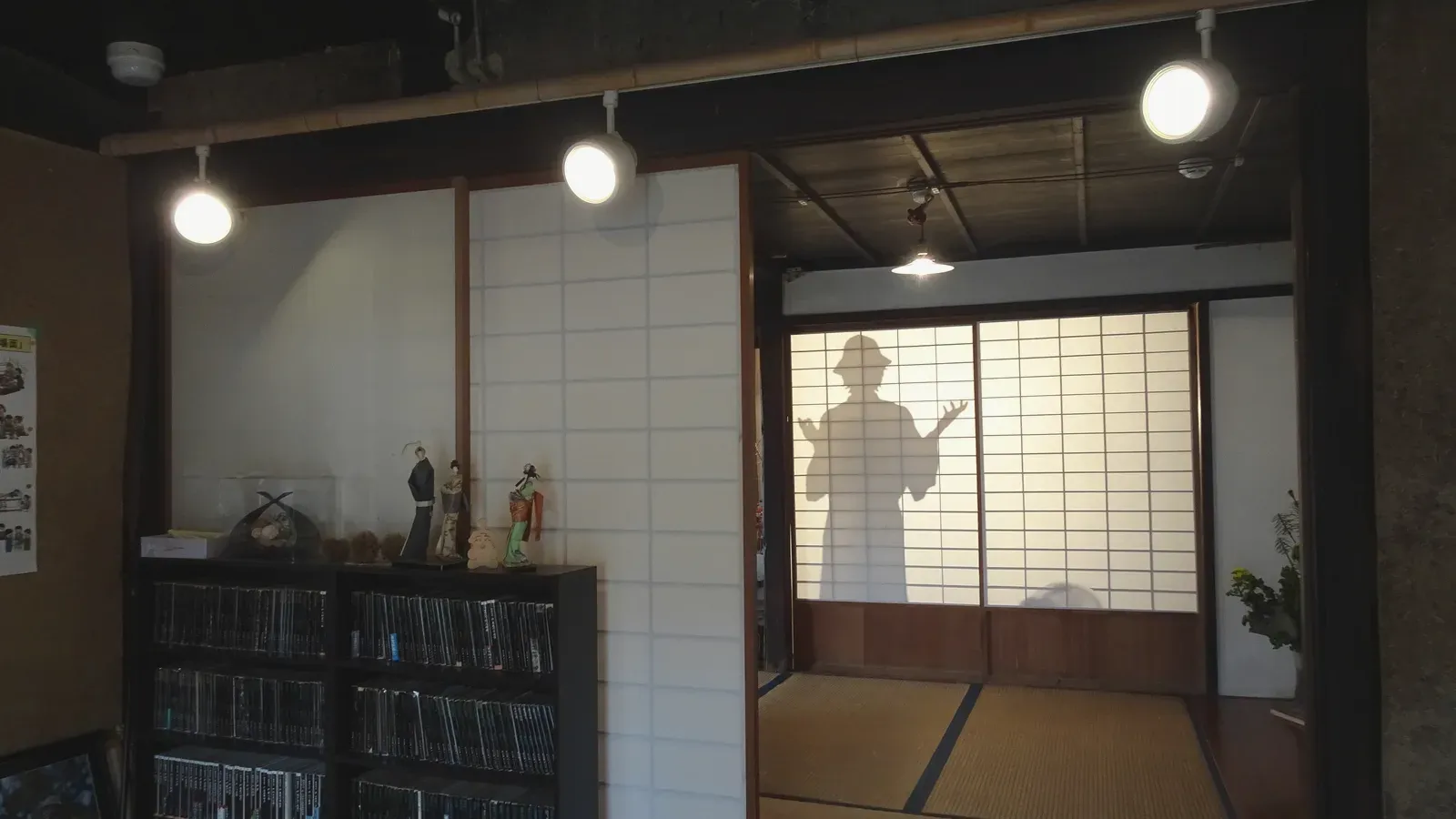
TL;DR: Chadō (茶道), the Way of Tea, is the Japanese discipline of preparing and serving powdered green tea. The bowl of matcha you drink is the visible end of a craft refined over five centuries by Zen monks and tea masters — most decisively Sen no Rikyū.
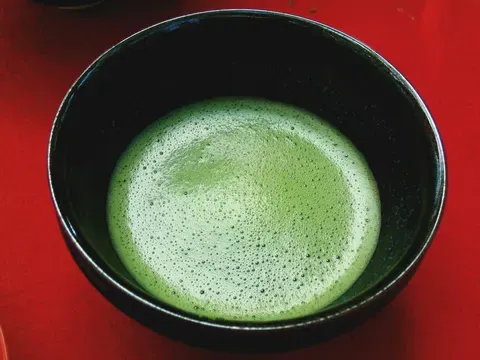
A bowl of matcha takes about three minutes to make. You sift the powder into a warmed bowl, pour water just off the boil, and whisk it to a jade froth. That is the visible act, start to finish. Behind it stand the reasons the room is laid out as it is, the order in which the host wipes each utensil, why the bowl is turned a quarter-turn before you drink, and what the kettle tells you about the season. All of it belongs to a discipline that took roughly five hundred years to reach its present form. The discipline is chadō.
This page is the map. It sets out what chadō is, how it differs from a word you may have met more often, chanoyu, and how the practice descends from the monk who carried tea to Japan down to the master who fixed its aesthetic. It lays out the four principles and the three schools that still carry the tradition, and it points, at each turn, to a fuller page on the specifics. Read it first. Then follow the links.
What chadō is
Chadō (茶道) joins two characters: cha (茶), tea, and dō (道), the way or path. It is the same dō carried by jūdō, kendō, and shodō, calligraphy — a study pursued for life, with no final grade at which a person is finished. What the study organizes is a whole body of etiquette, architecture, ceramics, and seasonal feeling, all of it turned toward preparing and serving one drink. A practitioner spends years learning to handle a few objects well: a tea bowl, a bamboo whisk, a scoop, an iron kettle, a folded silk cloth.
The tea at the center is matcha (抹茶). Growers shade the plants for several weeks before harvest, then steam, dry, and de-vein the leaves to make a flat leaf called tencha, which is stone-ground to a powder finer than flour. Because matcha is whisked into the water instead of steeped and strained away, the drinker takes in the whole leaf, which is why the drink is thick, opaque, and green to the bottom of the bowl, closer to a suspension than to a clear infusion. This is the tea that arrived from China with Zen Buddhism, and the form chadō has been built around from the start.
One reason the study runs so long is that chadō gathers many crafts into a single act. A gathering asks the host to read a hanging scroll, set flowers for the season, judge the charcoal and the water, choose and place the ceramics, and, at a full meal, cook. Ceramics, bamboo, lacquer, calligraphy, ikebana, architecture, and the garden all meet inside the tea room, and a practitioner grows sensitive to each of them in turn.2 The single drink is the occasion for all the rest.
Okakura Kakuzō, writing for Western readers in 1906, opened The Book of Tea with the plainest possible history:
Tea began as a medicine and grew into a beverage. In China, in the eighth century, it entered the realm of poetry as one of the polite amusements.
His own word for the discipline was “Teaism,” which he defined as “a cult founded on the adoration of the beautiful among the sordid facts of everyday existence.”1 The vocabulary is of its period. The claim beneath it has lasted: chadō treats the ordinary act of serving a drink as work that deserves complete attention.
Chadō and chanoyu: two words for one room
The two terms travel together, and telling them apart shows what kind of thing chadō is.
Chanoyu (茶の湯) reads literally as “hot water for tea.” The Metropolitan Museum of Art’s Heilbrunn Timeline uses that gloss and describes chanoyu as a ritualized, secular practice in which tea is served in a dedicated space by a codified sequence of acts.2 Chanoyu is the event: one gathering, one room, its choreography run once. When an English text says “tea ceremony,” chanoyu is the ceremony it means.
Chadō (茶道) is the wider frame, the way itself — the discipline a person enters and keeps practicing, of which any single chanoyu is one instance. Urasenke, the largest school teaching it today, calls chadō a discipline for the refinement of the self.3 A near-identical reading of the same two characters, sadō, differs only in how it is pronounced. So you host or attend a chanoyu, and you practice chadō. The bowl is the same either way. The second word admits that learning to make it well is the work of a lifetime.
From Eisai to Rikyū: the line that made it
Chadō arrived in stages, each figure reshaping what the last had handed on, and Zen runs through the whole chain as its connecting thread.
Myōan Eisai (1141–1215) brought the raw materials. A monk who studied in Song China and established the Rinzai school of Zen in Japan, he returned in 1191 with tea seeds and the Song method of whisking powdered tea, and he is credited with Japan’s first tea treatise, the Kissa Yōjōki (喫茶養生記), “Drinking Tea for Health,” from around 1211.4 Eisai framed tea as medicine, which is where Okakura’s history opens, and the whisked-powder preparation he carried home is the direct ancestor of matcha today. Monks drank it to stay alert through long meditation, and tea settled into the Zen monastery.
Murata Jukō (村田珠光, 1423–1502) turned monastic tea toward the aesthetic chadō would keep. The tea he inherited had swelled into a display of imported luxury, staged in bright shoin (書院) reception rooms around prized Chinese treasures. A merchant’s son from Nara who studied Zen under the fierce reformer Ikkyū Sōjun, Jukō pulled the practice the other way, toward the small, the plain, and the native, and he stands as the founder of wabi-cha (侘茶), tea in a key of restraint and rusticity.6 From Ikkyū he took the teaching that the Buddha’s law lives in the Way of Tea as fully as in the monastery, the seed of the idea later compressed into cha-zen ichimi (茶禅一味): tea and Zen, one taste.6
Takeno Jōō (武野紹鴎, 1502–1555) carried wabi-cha forward, deepening its taste for plain, honest materials and drawing the suggestive restraint of waka poetry into the room.5 He was the teacher of the man who completed the line.
Sen no Rikyū (千利休, 1522–1591) is where chadō becomes recognizably itself. Rikyū set the wabi aesthetic into a coherent practice: the small earthen room, the rough domestic bowl, the paring-away of whatever merely impressed a guest.7 His Zen training ran through Daitoku-ji, the Kyoto temple whose priests shaped the tea men of his age.3 His one securely attributed tea room, Tai-an (待庵), built in 1582 at Myōki-an near Kyoto, survives as a National Treasure: a space of about two tatami mats, entered through a door so low that every guest, whatever the rank, must stoop to come in.8 The rough, hand-formed raku bowl and the dewy garden path a guest crosses to reach the hut belong to the same reform, each of them plain, native, and made by hand.7 Rikyū served the two warlords then reunifying Japan by force, Oda Nobunaga and after him Toyotomi Hideyoshi, as tea master. In 1591, for reasons still argued over, Hideyoshi ordered him to commit seppuku, ritual self-disembowelment, and at seventy Rikyū carried out the order.7
That collision between the austere master and the gilded warlord is its own subject. Rikyū’s life, work, and death are told in full in Sen no Rikyū (1522–1591): The Man Who Defined Tea, and the politics of tea in an age of warlords, including Hideyoshi’s portable gold tea room, in Warrior Tea: Hideyoshi, Rikyū & the Samurai Way of Chanoyu.
The four principles: wa, kei, sei, jaku
The ethic of a gathering is caught in four characters attributed to Rikyū, wa-kei-sei-jaku (和敬清寂): harmony, respect, purity, tranquility.3 The schools teach them as the heart of a larger frame, the shiki shichisoku (四規七則), “four principles and seven rules.”
- Wa (和), harmony — between host and guests, and between the gathering and its season and setting.
- Kei (敬), respect — for the people in the room and for the utensils, the plain bowl handled with the care given the prized one.
- Sei (清), purity — physical cleanliness, performed in front of the guests, and the clearing of mind that comes with it.
- Jaku (寂), tranquility — the state that settles once the first three hold. It arrives as the result of harmony, respect, and purity together, the still point they produce. A practitioner reaches it by tending the other three.3
The seven rules that complete the frame read as almost comically plain, and that plainness is their weight. Make a satisfying bowl of tea. Lay the charcoal so the water boils. Arrange the flowers as they stand in the field. Suggest coolness in summer and warmth in winter. Be ready ahead of time. Be prepared for rain. Give the people with you your whole attention.3 A student is said to have complained that anyone already knew as much, and Rikyū to have answered that on the day the man could keep all seven without fail, he would become the man’s student.
These four principles are an ethic, a code for how a gathering is conducted. Wabi-sabi is a different thing: an aesthetic, a sense of beauty in the imperfect, the weathered, the incomplete. The two often share a room, and holding them apart is part of reading tea correctly. The principles get their own treatment in Wa-Kei-Sei-Jaku: The Four Principles of Tea.
A second idea belongs beside them: ichigo-ichie (一期一会), “one time, one meeting” — the understanding that this gathering of these people, on this day, will never recur, and is to be met accordingly. Ichigo-ichie is often attributed to Rikyū himself. It was not his coinage. The four-character term as we use it was set down in the nineteenth century by Ii Naosuke (1815–1860) in his treatise Chanoyu Ichie Shū, drawing on a line preserved through Rikyū’s disciple Yamanoue Sōji.9 The distinction matters for the same reason every date on this page does. Ichigo-Ichie: One Time, One Meeting follows the phrase to its source.
The three schools
Chadō is a taught tradition. It passes through schools: lineages with their own procedures, handed from teacher to student. The three most prominent form the san-Senke (三千家), the three Sen houses. A durable myth has them founded by Rikyū. They were not.5 The line runs from Rikyū to his adopted heir Sen Shōan (千少庵, 1546–1614), then to Shōan’s son and Rikyū’s grandson, Sen Sōtan (千宗旦, 1578–1658), who held the family’s wabi tea intact through a generation of showier fashion.10 The branching comes only after Sōtan.
Sōtan divided the practice among three of his four sons, and each founded a house on the family’s Kyoto ground:
| School | Japanese | Founded by | Note |
|---|---|---|---|
| Omotesenke | 表千家 | Kōshin Sōsa (1613–1672) | “Front Sen house” |
| Urasenke | 裏千家 | Sensō Sōshitsu (1622–1697) | “Rear Sen house”; the largest school today |
| Mushakōjisenke | 武者小路千家 | Ichiō Sōshu (1605–1676) | Named for its Kyoto street |
The names front and rear come from where the original houses stood on the family property, one in front and one behind, and the three schools still keep their headquarters within a few streets of one another in Kyoto.10 What separates them lives in the fine grain of practice: how a utensil is handled, the exact path the whisk takes, whether a bowl of thin tea is worked to a full foam or left with a crescent of clear green tea at the rim. On what tea is for, all three agree. Each house is held together by a hereditary head, the iemoto (家元), who holds the founding tea room and fixes the correct form of every procedure, so a lineage keeps its own shape across the generations.5
For most people, geography settles the school: you study with whichever teacher is within reach. Outside Japan that teacher most often follows Urasenke, which built the widest network of branches through the twentieth century and fills most of the English-language books and videos on tea.10 The soundest advice for a beginner is to learn one school’s form and stay in it, because the parts of a procedure are cut to fit each other, and a fold borrowed from one house into another’s sequence fits nothing. The full account of the three, and how they diverge in the bowl, is in The Three Schools: Omotesenke, Urasenke & Mushakōjisenke.
Inside a gathering: the temae and the meal
What the schools transmit comes down to two things a guest can watch. The first is temae (点前), the codified procedure for preparing tea: every motion of cloth, scoop, whisk, and bowl fixed in sequence and rehearsed until it runs without hurry. The second is kaiseki (懐石), the spare seasonal meal that can precede a formal gathering, built to leave a guest satisfied and light before the tea. A full formal occasion, a chaji (茶事), can run some four hours and folds the meal, a course of charcoal, thick tea, and thin tea into one arc. A shorter chakai (茶会) serves bowls to a larger group and asks less of everyone.2 As a guest, you receive the bowl, turn it a small way to avoid drinking from its front, drink, wipe the rim, and turn it back. Every act has a reason, and the reasons are teachable. Both the procedure and the meal are walked through, course by course and motion by motion, in Inside a Tea Gathering: The Temae & Kaiseki, Step by Step.
Why it lasts
Treating chadō as a museum piece, a closed ceremonial art with nothing to say to someone who just wants a good bowl of tea, sells it short.
The practical inheritance is direct. The way you whisk matcha, the reason a good bowl sits right in two hands, the logic of doing one thing at a time and finishing it before the next — these come straight down from the discipline this page describes. No tea room or teacher is required to use them. The least formal descendant, the morning bowl made at your own counter, is laid out in A Daily Matcha Ritual: A Simple Morning Practice.
The deeper reason chadō persists is the one Okakura named, stripped of his period vocabulary: it is a worked-out answer to how a person does an ordinary thing with full attention and no waste. The host cleans each utensil in front of the guests. The cloth, the whisk, and the bowl are being made clean, in sequence, with nowhere to hurry toward, and the guests watch a plain task carried through to its end.1 A practice that solves that problem stays useful, because the problem never expires.
So the whole of it returns to the three minutes you started with. Sift, pour, whisk. Everything on this page is what those three minutes turned out to require, and the next bowl you make is where the tradition goes back to work.
The pieces
 Sen no Rikyū (1522–1591): The Man Who Defined Tea How a Sakai merchant's son codified wabi-cha — the grass-hut room, the crawl-through door, the raku bowl — and why Hideyoshi ordered his death. 02
  Wa-Kei-Sei-Jaku: The Four Principles of Tea Harmony, respect, purity, tranquility — the four principles at the heart of chadō, what each asks of host and guest, and why jaku is a result. 03
  Ichigo-Ichie: One Time, One Meeting Ichigo-ichie was coined by Ii Naosuke, not Rikyū. What the four characters mean, where they come from, and what they ask of a tea gathering. 04
  The Three Schools: Omotesenke, Urasenke & Mushakōjisenke The san-Senke — Omotesenke, Urasenke, Mushakōjisenke — descend from Rikyū's grandson Sōtan's sons, not Rikyū directly. What sets the three houses apart. 05
  Inside a Tea Gathering: The Temae & Kaiseki, Step by Step A full chaji runs about four hours. Walk the formal tea gathering in order — the meal, the charcoal, thick tea, thin tea — and what a newcomer attends instead. 06
  Warrior Tea: Hideyoshi, Rikyū & the Samurai Way of Chanoyu How Nobunaga and Hideyoshi made tea an instrument of rule, the gold tea room set against Rikyū's two-mat hut, and the forced seppuku of 1591. 07
  Usucha vs. Koicha: Thin Tea and Thick Tea Usucha is the thin, whisked, frothy bowl. Koicha is thick tea, kneaded to a syrup and shared from one bowl, and the formal heart of the ceremony.
 Sources
10sourcesOkakura Kakuzō, The Book of Tea (1906), Project Gutenberg
SupportsPublic-domain text; 'Teaism'; tea 'began as a medicine and grew into a beverage'; Zen and Taoist roots; attention to an ordinary act as the discipline's core
The Metropolitan Museum of Art, Heilbrunn Timeline of Art History
SupportsChanoyu = 'hot water for tea'; a ritualized secular practice in a dedicated space with codified procedures; the tea room as a hermit's hut; chanoyu and Zen
Urasenke Konnichian (official English site), 'An Introduction to Chadō'
SupportsChadō as a 'way' and a discipline for refinement of the self; the four principles wa-kei-sei-jaku, with jaku the result of the first three; Rikyū (1522–91) and Daitoku-ji Zen
Encyclopædia Britannica, 'Eisai'
SupportsEisai (1141–1215); transmitted the Rinzai school of Zen from Song China (returned to Japan 1191); brought tea seeds; credited with the tea treatise Kissa Yōjōki (c. 1211)
Encyclopædia Britannica, 'tea ceremony'
SupportsHistory of chanoyu; the rustic wabi style carried by Takeno Jōō and codified by Sen Rikyū (1522–91); usucha and koicha; the modern schools descend from Rikyū's teachings; the iemoto system
Encyclopædia Britannica, 'Murata Shukō'
SupportsMurata Shukō (Jukō, c. 1422/1423–1502), disciple of the Zen master Ikkyū; credited with founding the tea ceremony and beginning wabi-cha; Ikkyū's teaching that the Buddha's law is present in the Way of Tea
Encyclopædia Britannica, 'Wabi-cha'
SupportsWabi-cha, the rustic-simplicity aesthetic; the line from Shukō to Rikyū's codification; wabi as simplicity, quietude, absence of ornament
Wikipedia, 'Tai-an'
SupportsTai-an (1582) at Myōki-an, Rikyū's only securely attributed tea room; a two-mat room; designated a National Treasure
Wikipedia, 'Ichi-go ichi-e'
SupportsIchigo-ichie traced through Yamanoue Sōji's record of Rikyū; the four-character term set down by Ii Naosuke (1815–1860) in Chanoyu Ichie Shū (1858)
Urasenke Konnichian (official English site), 'About Urasenke Chadō'
SupportsLineage Rikyū → adopted heir Shōan (1546–1614) → grandson Sen Sōtan (1578–1658), who transmitted Rikyū's ideals; Sōtan's four sons; three founded the san-Senke; 'omote'/'ura' from the households' front/rear positions
Common questions
What is the difference between chadō and chanoyu?
Chanoyu (茶の湯, 'hot water for tea') is the event: a single tea gathering with its set sequence of acts. Chadō (茶道, 'the way of tea') is the lifelong discipline that any one chanoyu belongs to. You host or attend a chanoyu; you practice chadō. A third term, sadō, is the same two characters read a different way, and means the same thing.
Is chadō a religion?
No. Chadō grew out of Zen Buddhism and keeps a deep debt to it, from Eisai's monastery tea to the Zen calligraphy hung in the alcove, but it is a secular discipline of etiquette, craft, and aesthetics. You need hold no religious belief to study or practice it.
How long does it take to learn chadō?
There is no endpoint, which is the sense of the word dō, 'way.' Students in the schools work through graded procedures over years, and the most advanced are granted only after long training. A beginner can whisk a decent bowl in an afternoon; the tradition treats the practice itself as the work of a lifetime.
Do I need a teacher and a tea room to practice?
To learn the formal temae, yes: a teacher and a school. To bring chadō's core into daily life, no. A whisk, a bowl, good matcha, and unhurried attention are enough for the everyday version, which is the least formal descendant of the tradition.