L2 · The Implements
The Anatomy of the Tea Ceremony: Every Utensil, Named
A plain-language glossary of the twelve core utensils of chanoyu: what each one does, and why it has the form it has.
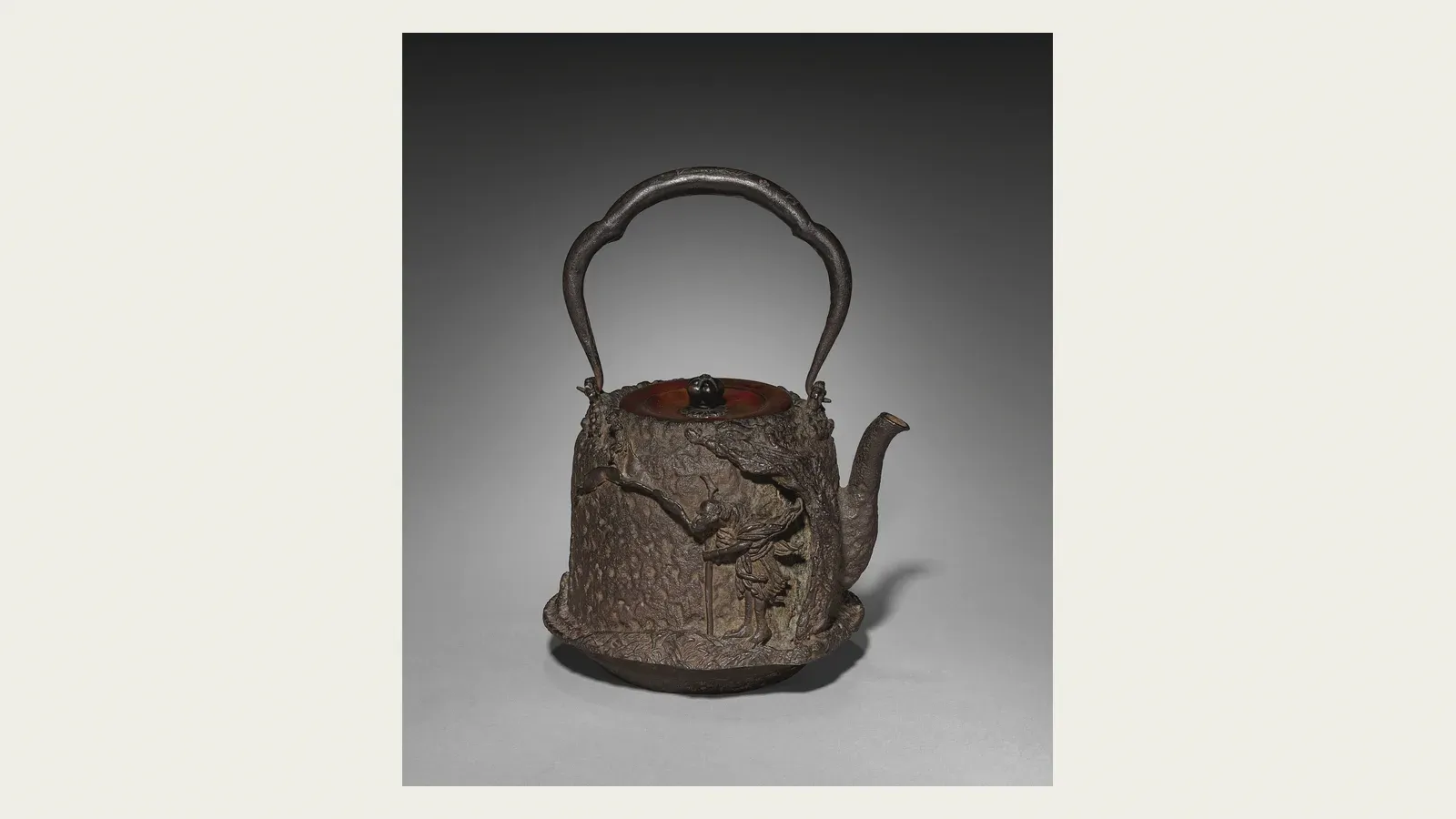
Chanoyu uses a small, fixed set of utensils, each shaped by its job: a bowl wide enough to whisk in, a split-bamboo whisk, a scoop carved from a single node, a caddy chosen by the grade of tea, a kettle with no spout, and the cloths and water vessels that keep the whole thing clean. Learn the twelve names and the rest of the ceremony reads itself.
A tea gathering can look, from the doorway, like a great deal of equipment handled in a very particular order. It is less than it seems. The whole of chanoyu (茶の湯, “hot water for tea,” the matcha ceremony) runs on roughly a dozen objects, and almost every one has the shape it has for a plain mechanical reason. The bowl is wide because you whisk inside it. The scoop bends because it is one piece of bamboo, and bamboo bends where the node is. The kettle has no spout because water is lifted out by ladle. Once you see the job each object does, the choreography stops being mysterious.
This is a glossary in prose: the core utensils, grouped the way they are used, each with its name, its job, and the reason for its form. Where a piece earns its own treatment there is a link to the fuller article. Read it once and you can watch a tea procedure and name what the host is holding.
A quick map before the detail:
| Utensil | Kanji | What it does |
|---|---|---|
| chawan | 茶碗 | the bowl you whisk and drink the matcha in |
| chasen | 茶筅 | split-bamboo whisk that holds the powder in suspension |
| chashaku | 茶杓 | bamboo scoop that measures matcha into the bowl |
| natsume | 棗 | lacquer caddy holding matcha for thin tea (usucha) |
| cha-ire | 茶入 | ceramic caddy holding matcha for thick tea (koicha) |
| kama | 釜 | iron kettle that heats the water, with no spout |
| mizusashi | 水指 | fresh-water jar for topping up and rinsing |
| hishaku | 柄杓 | bamboo ladle that lifts water from kettle and jar |
| futaoki | 蓋置 | rest for the hot kettle lid and the ladle |
| kensui | 建水 | vessel that catches the waste rinse water |
| fukusa | 袱紗 | silk cloth for purifying the scoop and caddy |
| chakin | 茶巾 | damp linen cloth for wiping the bowl |
The bowl and the whisk
The chawan (茶碗), the tea bowl, is the object everyone notices first, and rightly so: it is the only utensil the guest holds, turns, and drinks from. Its form follows what happens inside it. A matcha bowl is wide and fairly shallow so the whisk can travel briskly across the floor of it, where a narrow cup would trap the tines and the powder. It sits footed and a little heavy, steady under the wrist, and the interior draws the tea toward the center where the whisk finishes. Underneath is the kōdai, the cut foot ring, which a knowledgeable guest turns the bowl over to study at the end of a serving. The bowl also carries the season. A summer bowl runs shallow and flared so the tea cools and shows its surface. A deep winter bowl, the tsutsu-jawan, can stand nearly cylindrical to keep the heat in. In use the guest turns the bowl a few degrees to avoid drinking from its front, the shōmen, then turns it back before setting it down. The most storied are the hand-formed black and red Raku wares, an earthenware modeled by hand rather than thrown on a wheel, made in Kyoto from the 1570s when the potter Chōjirō shaped bowls to Sen no Rikyū’s (1522–1591) austere specification. The Metropolitan Museum keeps Momoyama-period Raku bowls of exactly this kind 2. Reading one, choosing one, and holding it correctly is a subject of its own — see the chawan in depth — as is the family of clays and kilns behind it, in Raku, Hagi, Oribe and the rest.
The chasen (茶筅) is the whisk, and one of the cleverest objects in the room: a single length of bamboo, its upper half split into dozens of fine tines and curled inward. Its work is to break up clumped powder and hold the matcha in even suspension in the water, which is why the tines are so many and so thin. Counts run from the sixties up. Eighty tines is the everyday standard for thin tea and for Urasenke practice, a high-count whisk called a kazuho. Finer counts near a hundred give a silkier foam and cost more to make. Thick tea gets a different tool: koicha is kneaded into a paste rather than frothed, so it takes a coarse araho of a few dozen stiffer tines. The whisk has a hometown. Takayama, in Nara, is where the craft is traditionally said to have begun in the Muromachi period, when a maker remembered as Takayama Sōsetsu is credited with fashioning a whisk at the request of Murata Jukō, the early advocate of austere tea 5. Most good whisks still come from there 4. A chasen is a consumable — the tines soften and snap with use — so it is the one utensil you should plan to replace. The chasen by type and care covers prong counts and how to make one last. For the motion itself, see how to whisk matcha.
The scoop and the caddies
The chashaku (茶杓) is the slim scoop that carries matcha from caddy to bowl, two scoops to a serving of thin tea. Early scoops were ivory or metal, borrowed from the medicine spoon. The bamboo version is the wabi-era refinement. Rikyū cut his own from a single narrow piece of bamboo, and the form follows the material. A node, the woody ring, sits near the middle of the shaft. That centered node became the standard after Rikyū, and it falls where the bamboo is stiff enough to take the slight bend that lifts the bowl of the scoop. Tea people read a great deal into the exact angle and the placement of that node — Rikyū’s scoops bend sharply, Furuta Oribe’s sweep — while the underlying fact stays plain. It is one piece of grass, shaped by where it was willing to bend. A finished scoop runs about nineteen to twenty-two centimeters. The good ones are carved by a named hand and kept in an inscribed bamboo tube, the tsutsu, that records the carver, the poetic name given to the scoop, and often the occasion it was made for. The Met holds a scoop attributed to Rikyū of just this kind 1.
What the scoop reaches into depends on the tea. For usucha (薄茶), thin tea, the matcha lives in a natsume (棗), a lidded caddy of lacquered wood named for its resemblance to the jujube fruit. For koicha (濃茶), thick tea — the denser, more formal preparation kneaded from better leaf — it lives in a cha-ire (茶入), a small ceramic jar kept in a silk pouch, the shifuku (仕覆), and handled as the most precious utensil of a formal gathering. The split follows the grade of the tea. Better leaf earns the ceramic jar and the more careful handling, and everyday thin tea takes the lacquer caddy. The most prized cha-ire are old Chinese imports, karamono, and a single one could be recorded, named, and handed down like a sword. The natsume, for its part, comes in nested sizes, with a plain black-lacquer form as the most formal. Both the scoop and the caddy are treated together, since in use they are inseparable.
The heat: kettle, brazier, and hearth
Heat is the quiet center of the room, and its arrangement changes with the calendar.
The kama (釜), named the chagama (茶釜) when it is spoken of as the tea kettle, is cast in iron and set over the fire to heat the water 8. Its most telling feature is what it lacks. No spout, no pouring handle. Water is lifted out of it a ladleful at a time 3. A kettle built for pouring would carry a lip and a bail. The kama has instead a pair of small lugs and a lift-off lid, because each transfer of water is meant to be a deliberate, visible act. This is where the tetsubin (鉄瓶), the spouted cast-iron kettle most people picture when they hear “Japanese iron teapot,” parts company with the ceremony. The tetsubin has a spout and an overhead handle and belongs to sencha (煎茶) brewing and everyday use, a different tool for a different tea 7 (see tetsubin versus kyūsu). A small one is sometimes carried for tea outdoors.
Sit with the spoutless kettle for a moment. Everything about a tetsubin is built for speed: you lift it, tip it, and the water goes where you aim. The kama refuses that. To move hot water you take up a ladle, draw one measure, carry it, and pour it in a single controlled line, then return the ladle to its rest. That refusal is the detail that gives the game away. Chanoyu is not built for efficiency. It is built so that every ordinary act of making tea is done slowly and in the open, and a pouring spout would quietly erase half of them. The kettle’s lineage, the famous Ashiya and Tenmyō irons, and why the sound of its water has a name of its own are taken up in the kama.
The kama sits over one of two heat sources, and which one is in use tells you the season. From roughly May to October the kettle rests on a portable brazier, the furo (風炉), set out on the matting at a courteous distance from the guests so its charcoal does not add to the summer heat. From November to April it sits over the ro (炉), a hearth sunk into the floor, which brings the fire close and warms the room 6. Over the sunken ro the kama hangs from an iron trivet, the gotoku, set down in a bed of ash. On the furo it rests on the brazier’s rim. The autumn change to the sunken hearth, robiraki (炉開き, “opening the hearth”), is one of the real events of the tea year, and it rebuilds the host’s whole sequence of movements. Why the same room feels like two rooms across the year is the subject of furo versus ro.
The fire under the kettle is arranged with the same care as everything else. Before the water is brought to the boil the host lays the charcoal in its own small procedure, the sumi-temae, building the fire so it burns evenly through the gathering. The ash beneath it is raked into set patterns that differ by season. Even the fire is composed, down to the shape of the ash.
The water vessels
Around the kettle stand the vessels that bring water in and carry it out.
The mizusashi (水指) is the fresh-water jar, a lidded container of ceramic, lacquer, or sometimes glass, holding the cold water that tops up the kettle and rinses the utensils. Its opposite number is the kensui (建水), the waste-water vessel, which catches the water used to warm and rinse the bowl. The kensui is the humblest thing in the room and is kept to the host’s side, mostly out of the guests’ line of sight. A plain one is correct. Drawing the eye to dirty water would be a small failure of tact. What to look for in a fresh-water jar, where the range of material is widest, is set out in the mizusashi.
Moving water between all of these is the hishaku (柄杓), a bamboo ladle with a long handle and a cylindrical cup, a node set into the handle 3. The host lifts hot water from the kama and cold water from the mizusashi with the same tool, and the exact way it is held, raised, and laid down is closely prescribed. The ladle itself comes in two builds, a larger cup for the sunken hearth and a slimmer one for the brazier, matched to the season like the kettle above it. When it leaves the host’s hand the ladle rests across the futaoki (蓋置), the lid rest, a small stand — classically a green bamboo stub — that holds both the kettle’s hot lid and the ladle. A futaoki earns its place because two things in the procedure run hot and must be set down cleanly, off the mat. These three overlooked vessels, the waste-water kensui, the hishaku, and the futaoki, are treated together in kensui, hishaku and futaoki.
The cloths
Three textiles keep the utensils visibly clean, in front of the guests, as part of the procedure rather than before it.
The fukusa (袱紗) is a square of fine silk, tucked at the waist when it is idle, with which the host purifies the scoop and the caddy. Its folding and handling, fukusa-sabaki, is among the first things a student learns and one of the most exacting. Men carry purple across all three Sen schools. The colour women carry varies by school, and the schools themselves are quieter about the convention than the shops are. The folding, the weight of silk to buy first, and the colour question are worked out in the fukusa. The chakin (茶巾) is a small white cloth of linen or hemp, dampened, used to wipe the inside of the bowl. A third, the kobukusa (古帛紗), a thicker brocade square about six inches across, most often presents the bowl of thick tea to a guest and handles prized objects.
It is tempting to call the cleaning symbolic, and it is. It is also literal. The cloth, the scoop, the caddy, and the bowl are wiped clean, in order, with the guests watching and the host with nowhere to hurry to. The attention has somewhere concrete to go. Keeping these objects sound between gatherings is a craft of its own, set out in how to care for your teaware.
How they come together
Named one at a time, the utensils are a list. In use they are a sequence, and the sequence is the same every time. The host carries in the bowl, the whisk, the scoop, and the caddy, then the waste-water vessel with the ladle laid across it, and sets each in its appointed place. With the fukusa folded and refolded in the air, the caddy and the scoop are purified where the guests can see. Hot water comes up from the kama on the hishaku to warm the bowl, the damp chakin wipes it, and the chasen is checked tine by tine against the warm water. Then the tea: two scoops of matcha from the natsume with the chashaku, a measure of hot water, and the brisk whisking that raises the foam. The bowl is turned so its front faces the guest, passed, received, admired, turned again, and drunk. Rinse water goes to the kensui, the whisk and bowl are cleaned once more, and the utensils leave in the reverse of the order they arrived. Learn the objects and you can follow every step of a temae without being told which is which.
Where to begin
You do not need the full set to start, and you should not buy it all at once. The matcha you make at home is thin tea, and thin tea asks for four things: a bowl, a whisk, a scoop, and a caddy. Everything else on this list belongs to the formal procedure and to a tatami room.
Buy the chawan and the chasen first, and buy them honestly. A bowl wide enough to whisk in and a Takayama-made eighty-prong whisk will serve you for years, and because the whisk wears out you should expect to replace it well before the bowl. A bamboo chashaku costs very little and gives you the correct measure. A simple natsume holds enough tea for a sitting. Leave the cha-ire, the kama, the hearth, and the cloths until you sit a procedure yourself, at which point a teacher will tell you what to get and why. Treat the word “ceremonial” on a box of utensils the way you would treat it on a tin of matcha. It is marketing, not a grade. Buy the object that does the job. All of this equipment, down to the last cloth, exists to serve chadō, the Way of tea, and a beginner meets it a few objects at a time.
One object on the mat quietly outranks the rest, and it is the cheapest. A fine cha-ire can be a daimyō’s treasure and a Raku bowl a museum piece, yet the chashaku is a curl of bamboo a host can cut in an afternoon, and it is the one a tea master signs, names, and stores in an inscribed tube as the record of a single gathering. The most personal object in chanoyu is worth almost nothing in materials. Learn the twelve names on this page, and the procedure that looked from the doorway like a wall of ritual turns into what it always was: a set of ordinary tasks, each handed the right tool, done in order and in the open.
The pieces
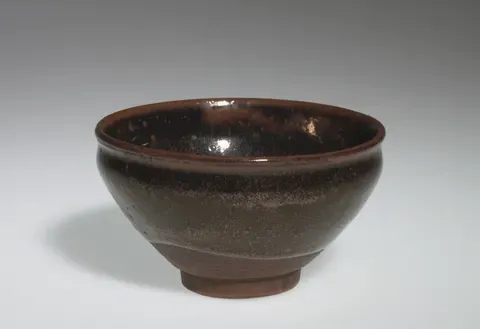 The Chawan: How to Read, Choose & Hold One How to read a Japanese tea bowl — its shape, foot, and front — and how to choose a first chawan and hold it without a beginner's fumble. 02
 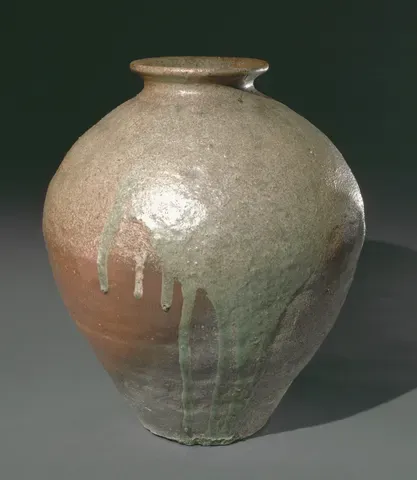 Raku, Hagi, Oribe, Seto, Bizen: Japan's Tea Ceramics Five Japanese ceramic traditions made for tea — Raku, Hagi, Oribe, Seto, Bizen — and how to tell their bowls apart by clay, glaze, and feel. 03
 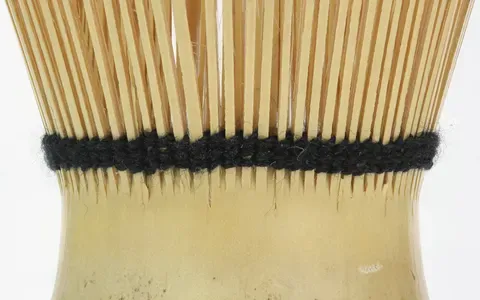 The Chasen: Types, Prong Counts & Care How a bamboo matcha whisk is carved from one node, which prong count to buy for usucha or koicha, and how to make it last. 04
 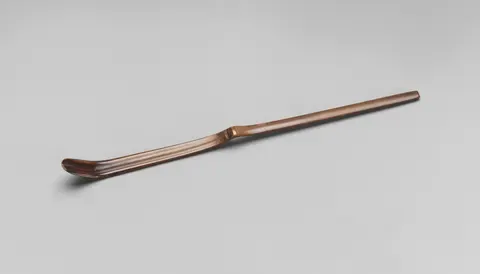 The Chashaku & Natsume: Scoop and Tea Caddy Demystified The bamboo tea scoop and the lacquer caddy explained: why the natsume holds thin tea and the chaire holds thick, and how to choose and handle each. 05
 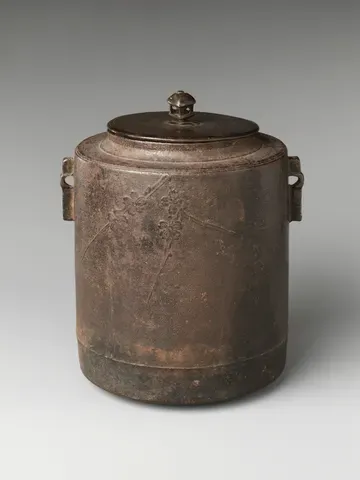 Furo vs. Ro: The Brazier, the Sunken Hearth & the Tea Year The furo brazier (warm season) and ro sunken hearth (cold season) split the chanoyu year in two, and the November changeover is tea's true new year. 06
 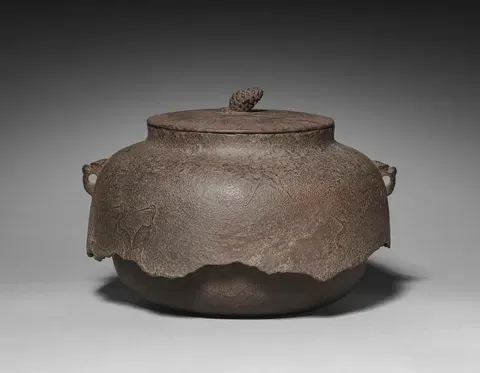 The Kama: The Kettle and the Wind in the Pines The spoutless iron kettle of chanoyu: how one is cast, why iron pieces are lacquered into its base to tune the boil, and the Ashiya and Tenmyō lineages. 07
 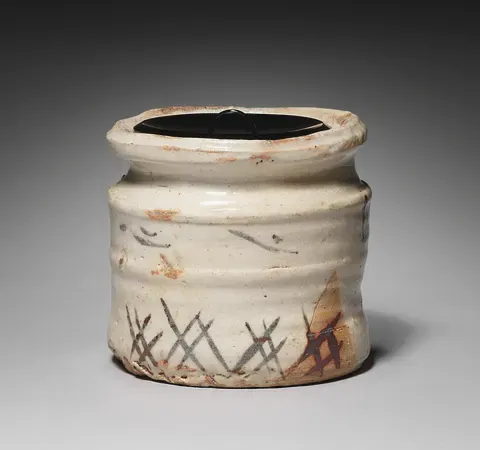 The Mizusashi: The Fresh-Water Jar The lidded jar of cold water in chanoyu: what the cold is for, when the lid comes off, and the summer and October forms that change with the season. 08
 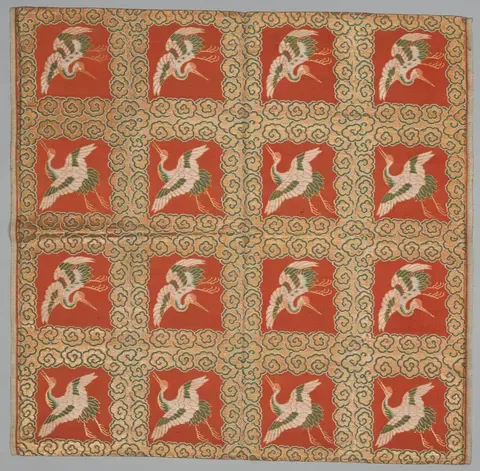 The Fukusa: The Silk Cloth and Its Folding The host's silk cloth in chanoyu: its real size and weight, the fukusa-sabaki folding sequence, and what the colour convention can be sourced to. 09
 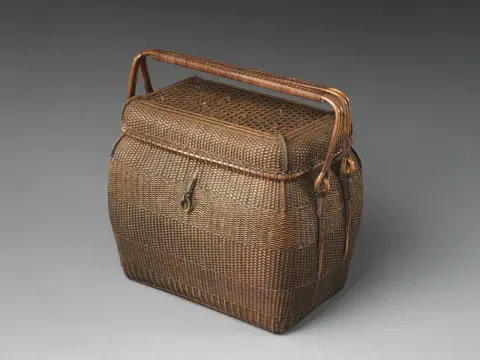 How to Care for Your Japanese Teaware Object-by-object care for a chasen, chawan, tetsubin, lacquer natsume and bamboo scoop — what to rinse, what never to soak, and what to replace. 10
 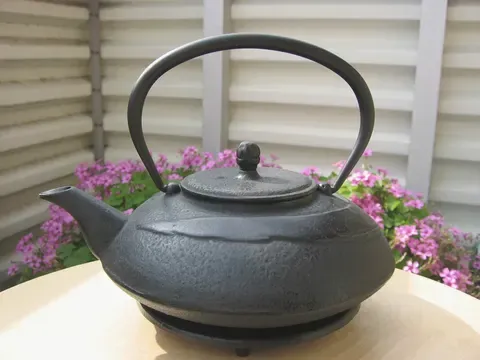 Tetsubin, Tetsukyūsu & Kyūsu: Choosing a Japanese Teapot A tetsubin boils water; a tetsukyūsu and a kyūsu brew tea. The difference is the lining and the heat — get it wrong and you ruin the pot or the tea.
 Sources
8sourcesThe Metropolitan Museum of Art
SupportsTea Scoop (chashaku) attributed to Sen no Rikyū, Momoyama period; carved from a single narrow piece of bamboo
The Metropolitan Museum of Art
SupportsBlack Raku tea bowl, Momoyama period; hand-formed earthenware esteemed in chanoyu
JAANUS (Japanese Architecture and Art Net Users System), Columbia University
SupportsHishaku (bamboo water ladle) definition and use in chanoyu
JAPAN SUI COLLECTION (Government of Japan)
SupportsTakayama as the origin of the chasen; the Murata Jukō connection; traditional-craft designation
KOGEI JAPAN (Assoc. for the Promotion of Traditional Craft Industries / METI)
SupportsMuromachi origin; whisk made by Takayama Sōsetsu at the request of Murata Jukō; Takayama as the producing region
Wikipedia, 'Japanese tea ceremony'
SupportsThe furo (brazier) season, traditionally May to October, and the ro (sunken hearth) season, traditionally November to April
Wikipedia, 'Tetsubin'
SupportsTetsubin form (spout, overhead handle) and its association with sencha rather than the matcha ceremony
Wikipedia, 'Chagama'
SupportsThe chanoyu kettle (kama/chagama) is cast iron or copper and is heated over the furo in the warm season and the ro in the cold season
Common questions
How many utensils does the tea ceremony use?
The core set a newcomer needs to recognize is about a dozen: the bowl, whisk, scoop, and caddy that make the tea, the iron kettle and the brazier or hearth under it, the fresh- and waste-water vessels, the ladle and lid rest, and the silk and linen cloths. A full formal kit adds a few more, among them the opposite season's heat source and a heavier brocade cloth for presenting thick tea, but twelve names will carry you through most of what you see on the mat.
Why doesn't the tea kettle have a spout?
Because the water is ladled out rather than poured. The kama is built so that every transfer of hot water is a deliberate, visible act made with the hishaku ladle. A spout would let the host pour quickly and almost invisibly, which cuts against the grain of chanoyu. The spouted iron kettle most people picture is the tetsubin, which belongs to sencha and everyday brewing, not to the matcha ceremony.
What is the difference between a natsume and a cha-ire?
The grade of the tea decides. A natsume is a lacquered wooden caddy that holds matcha for usucha, thin tea. A cha-ire is a small ceramic jar, kept in a silk pouch, that holds the better leaf used for koicha, thick tea, and is handled as the more precious of the two.