L5 · The Practice
A Daily Matcha Ritual: A Simple Morning Practice
A five-minute morning matcha practice, exact: sift ~2 g, whisk usucha at 80°C until it foams, and drink it before the foam falls.
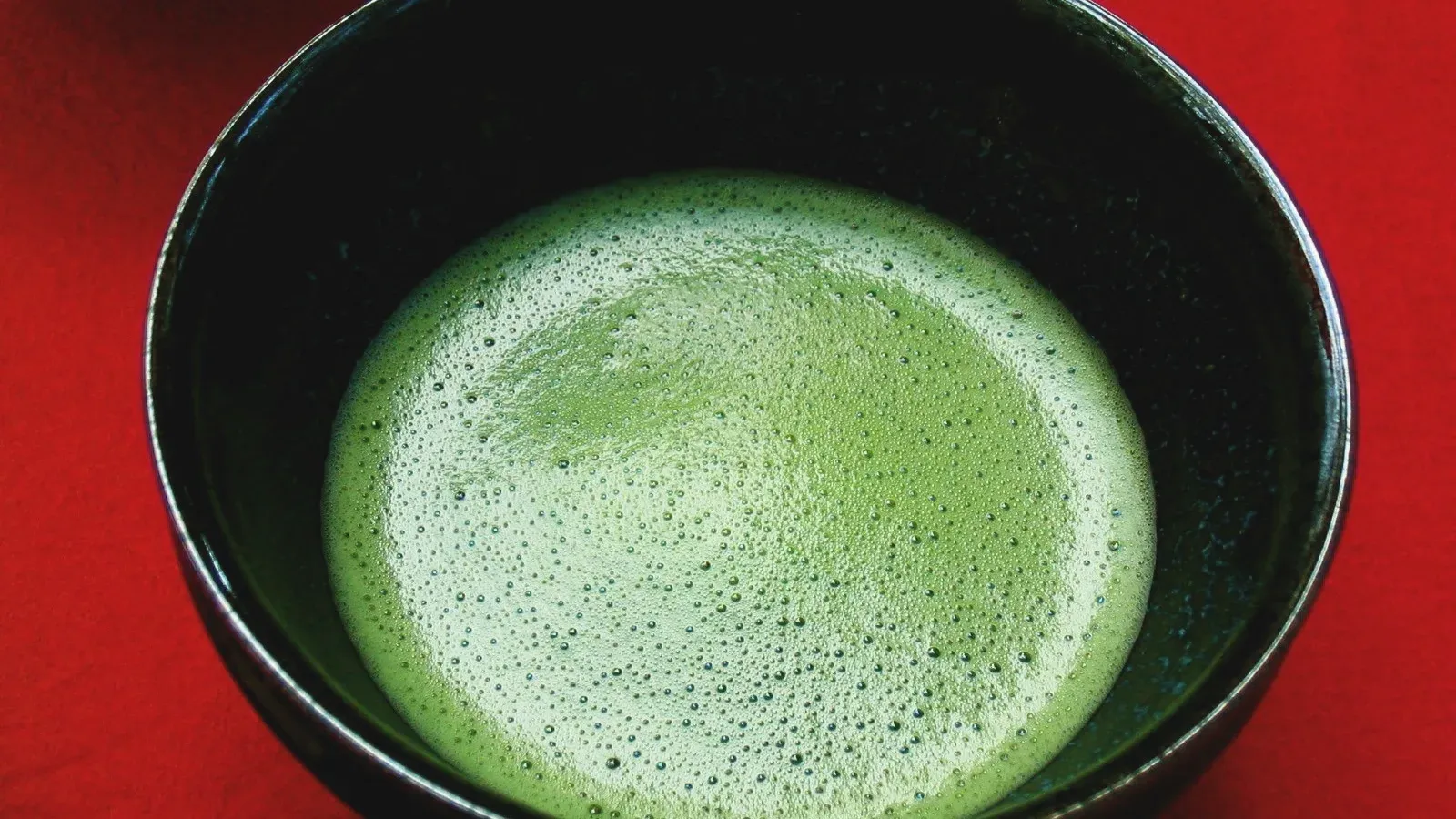
Making a bowl of matcha at home takes about five minutes: sift roughly 2 g, add about 70 ml of water at 80°C, and whisk briskly in a W until it foams. It is a short fixed sequence, done one step at a time, with a result you can see in the bowl.
You already make coffee on autopilot. The kettle, the grinder, the pour, and your hands know the order so well that your mind has moved to the day ahead before the cup is full. Coffee tolerates that. Matcha (抹茶) works differently, because every step waits on the one before it. You cannot leave it to drip while you check your phone. For five minutes it asks for your hands and your eyes, and that turns out to be most of what it offers.
This page is the front door to The Practice, the at-home side of chadō (茶道), the Way of Tea. The full ceremony is a deep and separate subject. What follows is the small daily version, stripped to its working parts: a whisk, the right temperature, and the willingness to stand still for the length of it. A tea room is welcome, and also optional. The bowl in your kitchen is built from the same gestures as the one set down at a formal table.
What you need
Five things, none of them precious. For the buying detail, which whisk earns real money and what a good bowl is, the matcha starter kit sorts the spend from the improvisation.
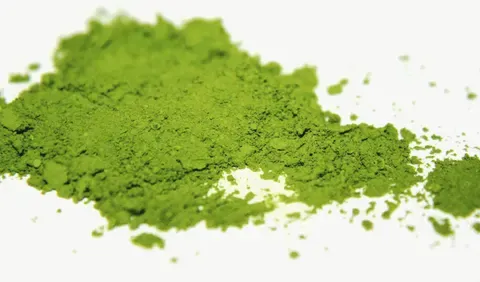
- Matcha. A tin of drinking-grade powder. “Ceremonial” on the label carries no legal weight, because there is no official standard for the term and anyone can print it on any tin. Judge the powder instead by colour and freshness: a bright, almost electric green, recently milled, kept cold and sealed. The real difference between ceremonial and culinary matcha lives in the leaf and the milling, not the marketing.
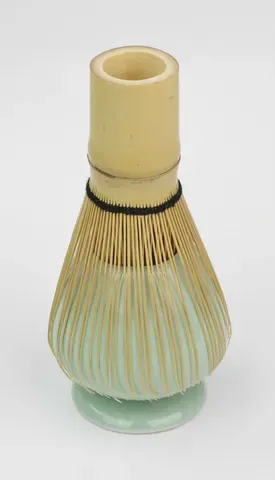
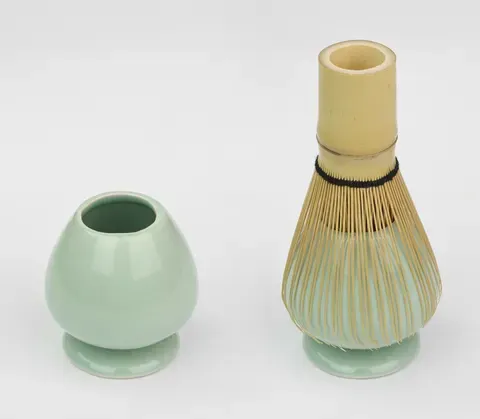
- A whisk (chasen, 茶筅). A single length of bamboo split into dozens of fine tines. A small kitchen whisk or a milk frother will move the powder, and a fan of split bamboo is what shears the clumps apart and raises the foam. Nothing in the drawer copies it.
- A bowl (chawan, 茶碗). Wide enough to swing the whisk freely. A cereal bowl works to start. The width is functional: a narrow mug crowds the tines against the wall and you never build a foam.
- A sifter (furui, 篩). A small fine-mesh strainer. Matcha cakes in the tin, and a clump that skips the sieve stays a clump however hard you whisk.
- A scoop (chashaku, 茶杓), optional. The slim bamboo ladle that measures the powder. A level half-teaspoon does the same job, and a level scoop runs close to a gram, so two scoops make a bowl.
A reliable kettle helps more than any of these. You are aiming for 80°C, and a guess costs you the bowl.
How to make a bowl of usucha
This is the thin, everyday matcha, usucha (薄茶), one light bowl per drinker, as against the thick kneaded koicha (濃茶) shared from a single bowl at formal gatherings 5. The amounts follow Ippodo’s published recipe: about 2 g of matcha to 60 ml of water at 80°C, whisked briskly for around fifteen seconds until it foams 1. A little more water, up to about 70 ml, gives a lighter, more forgiving bowl.
Made this way, usucha comes out bright green and lightly frothed, with a soft, grassy, faintly sweet body and a clean bitterness that clears off the tongue instead of lingering. That is the target to whisk toward. When a bowl reads harsh, drying, and flat instead, the cause is almost always one of two things, water too hot or powder that skipped the sieve, and both cost nothing to fix. The steps below put them in the order that heads off the usual faults.
- Warm the bowl and soak the whisk. Pour a little hot water into the empty chawan, swirl it, and rest the chasen in it tines-down for a minute while everything heats. The soak softens the bamboo so the tines flex open rather than snap, and the warm bowl holds the tea’s heat where a cold one pulls it straight out. Marukyu Koyamaen has you sift into a prewarmed, dry bowl, so tip the water out and wipe it before the powder goes in 3.
- Boil the water, then let it fall to about 80°C. Matcha wants water off the boil. A rolling boil scalds the powder and drives out a hard, flat bitterness. With no thermometer, boil the kettle and pour the water into a separate cup or the empty teacup to stand a moment, which is Ippodo’s own method for reaching 80°C, and every change of vessel sheds roughly 5 to 10 degrees 2.
- Sift about 2 g of matcha into the dry bowl. Roughly one level teaspoon, or a heaped chashaku and a half. Press it through the strainer with the back of the scoop. This is the step most people are tempted to skip, and the one that most reliably ruins the bowl, since a clump that goes in whole comes out whole and grits on the tongue.
- Add about 60 to 70 ml of the water. Pour it down the side of the bowl rather than straight onto the powder, so the matcha wets evenly instead of packing into a paste at the bottom.
- Whisk briskly, in a W or M. Hold the bowl steady with one hand. Move the whisk fast from the wrist and forearm, tracing a tight W back and forth across the base, with the tines gliding just off the floor. Ippodo describes the stroke as an M shape 2. Marukyu Koyamaen tells you to raise the chasen a little and whip back and forth, warning in as many words against swivelling the tea around the bowl 3. A slow circle folds air in weakly and tires the arm. After ten or fifteen seconds a fine foam rises, and you lift the whisk straight up through the centre so the surface settles flat.
- Drink it now. Usucha does not hold. The foam falls, the powder sinks, and the fragrance a quick whisk preserves, which Ippodo calls the secret to the full aroma, is gone within minutes 1. Drink it in two or three sips while it is hot.
- Rinse and dry the whisk. Swirl the chasen in clean water, no soap, and stand it tines-up to dry, on a whisk holder if you have one, which keeps the splayed shape. A whisk left wet and capped in a drawer grows mould and turns brittle. For grip, motion, and reading the foam, the whisking guide goes deeper on the one step that decides most bowls.
| Step | Amount / setting |
|---|---|
| Matcha | ~2 g (1 level tsp, or ~1.5 chashaku scoops) |
| Water | ~60–70 ml |
| Water temperature | 80°C (176°F) |
| Whisk motion | brisk W or M, off the base |
| Whisk time | ~10–15 seconds |
| Drink within | a few minutes |
How much foam is up to you
How much foam you raise is a matter of school, not correctness. Urasenke (裏千家) whisks to a dense, even layer of fine foam that covers the whole surface, close to half the bowl by volume, and that fully foamed look is what most people now picture as matcha 4. Omotesenke (表千家) whisks more lightly and leaves a partial foam floating over open pools of deep green, a surface its practitioners call the pond. Both are correct. The amount of foam changes the drink rather than its quality: a thicker head mellows the bitterness and softens the aroma, while a barer surface reads more direct on the palate 4. Whisk it the way you like to look at it.
What the five minutes are for
It would be easy, on a page like this, to promise the bowl will centre you for the day. Some mornings it will not. The foam comes out patchy, the water ran too hot, you drink it anyway and feel nothing in particular, and that is fine. The value sits in the steps, not in a mood the matcha is supposed to hand you.
Look at what the five minutes hold. The whisk is soaking. The bowl is warming. The water is falling toward a number you cannot hurry past. The powder is going through the sieve one push at a time. None of it runs in parallel, and none of it rewards a divided mind. For the length of the sequence there is a short list of concrete things to do in order, each with a visible result, and nowhere else to be. The attention has somewhere to go and something to show for itself at the end, sitting in the bowl.
Keep it small and it survives. The practice that lasts is the one you can do on a rough morning in five minutes, without special water or a clear head, and the version people quit is the elaborate one they save for when they have time, which rarely comes. A modest bowl every day beats a perfect bowl once a month. Five minutes is a floor low enough to clear on the worst day of the week, and that low floor, more than any single flawless bowl, is what turns matcha into a habit that holds.
This is the small, honest version of what the formal ceremony does at length. The four principles of tea, wa-kei-sei-jaku (和敬清寂), harmony, respect, purity, tranquility, are first an ethic of how people treat each other and the room, and the tranquility of the fourth arrives as the result of the first three rather than as a mood you reach for directly. A bowl made alone in a kitchen falls short of a tea gathering. Even so, the cleaning-up at the end, the sequence you hold in order, the deliberate cooling of the water are the same actions scaled down to one person and one cup. To carry the ethic past the bowl, wa-kei-sei-jaku in everyday life follows the longer thread, and a tea meditation treats the single bowl as the whole object of attention.
Where in the morning the bowl lands is worth settling early, because a habit needs a fixed hook to hang on. Many people slot it after the first task that wakes them up and before the day’s demands arrive, which gives the five minutes a clear edge on either side. The hook matters more than the hour. A bowl tied to a moment that happens every morning survives, and one that waits for a free stretch of time gets skipped, because the free stretch keeps not arriving.
Do it daily and the practice drifts with the year on its own: a cooler bowl and a lighter hand as the mornings warm, a hotter and thicker one when it is dark out by five. Seasonal tea practice follows that around the calendar.
Common mistakes
- Boiling water. The single most common error, and the one worth guarding against above all the rest. Water off a hard boil scalds the powder, and you taste it as a harsh edge with no sweetness underneath. Let it drop to 80°C.
- Skipping the sieve. Clumps do not whisk out. They ride the tines and settle on the base of the bowl, and the last mouthful comes up gritty. Sift every time, into the dry bowl, before the water.
- Whisking in circles. A circular stir folds air in slowly and rarely foams. The fast back-and-forth W is what aerates the tea. Drive it from the wrist, not the shoulder.
- A bowl too narrow. A tall mug traps the whisk against the wall and frays the tines. You need width to sweep the whisk flat.
- Too much powder, too little water. Doubling the matcha to make it stronger mostly makes it bitter and pasty. A richer bowl is closer to koicha, a separate thick preparation, not more powder in the same water.
- Letting it sit. Whisked usucha separates fast. Make it when you are ready to drink, not before.
- Storing the whisk wet or capped. Bamboo holds water and grows mould. Rinse, shake, and stand it tines-up in open air.
When the kit itself is the question, which whisk, what counts as a good bowl, whether the sifter earns its place, start with the beginner’s matcha starter kit. And when you want to make a bowl for someone else, hosting a simple tea gathering at home takes the same five minutes and turns them outward.
None of this is difficult, and none of it improves much with reading. Sift the powder, cool the water, whisk from the wrist, drink it hot. Tomorrow the water will be a shade too hot or the foam a shade uneven, and you will make it anyway, and the day after that. The bowl teaches its own small lesson to anyone willing to make it every morning, which is that a good one is mostly a matter of showing up with a clean whisk and five unhurried minutes.
Related
- What Is Chadō? The Way of Tea, Explained — where this daily bowl sits in the larger tradition.
- Wa-Kei-Sei-Jaku: The Four Principles of Tea — the ethic behind the attention.
- Ceremonial vs. Culinary Matcha: The Real Difference — what the grade means and does not.
- How to Whisk Matcha Properly
- Tea Meditation: Mindfulness in a Single Bowl
- The Beginner’s Matcha Starter Kit: What You Actually Need
- How to Host a Simple Tea Gathering at Home
- Bringing Wa-Kei-Sei-Jaku Into Everyday Life
- Seasonal Tea Practice: A Year of Mindful Tea
The pieces
 How to Whisk Matcha Properly (The W/M Technique) Most bad matcha at home is a whisking problem, not a matcha problem. Sift, use cooler water, and whisk briskly in a W from the wrist. 02 Tea Meditation: Mindfulness in a Single Bowl What tea meditation is, minus the fluff: a fixed sequence of simple tasks that holds attention better than trying to relax, plus its honest Zen roots. 03
  How to Host a Simple Tea Gathering at Home Adapt the shape of a chakai for a beginner host with no tea room: a few guests, a clean room, a seasonal sweet before usucha, and an unhurried hour. 04
  The Beginner's Matcha Starter Kit: What You Actually Need What a matcha starter kit requires, what's optional, and what you can improvise. The whisk and fresh matcha are where money matters; the rest can wait. 05
  Bringing Wa-Kei-Sei-Jaku Into Everyday Life The four principles of tea — harmony, respect, purity, tranquility — applied off the tatami, kept faithful to what they mean in the tea room. 06
  Seasonal Tea Practice: A Year of Mindful Tea A home-scaled adaptation of chadō's seasonality — what to drink and what to notice across the tea year, from spring shincha to the November tea new year. 07
  How to Make a Hōjicha Latte (Powder and Brewed) Hōjicha powder and brewed leaf make two different lattes. The ratios for each, why powder wants cooler water than leaf, and how to stop it tasting milky. 08
  How to Make a Matcha Latte at Home A café matcha latte is mostly technique you can do at home: sift, make a paste, whisk, add milk. The method for hot and iced, and the grade to use. 09
  Why Your Matcha Tastes Bitter (and How to Fix It) Bitter matcha is almost always a fixable mistake: water too hot, powder unsifted, the wrong grade, or a stale tin. The five causes and the fix for each.
 Sources
5sourcesIppodo Tea (Global, Kyoto since 1717)
SupportsUsucha recipe: 2 g matcha (1.5 heaped ladles / 1 level teaspoon), 60 ml water at 80°C, sift first, whisk vigorously 15 seconds; preparing quickly is the secret to the full fragrance
Ippodo Tea (USA)
SupportsSame usucha recipe at 80°C/176°F; pour boiling water into a teacup to cool it to 80°C first; whisk vigorously ~15 seconds in an M shape
Marukyu Koyamaen (Uji)
SupportsPress matcha through a sifter net into a prewarmed dry bowl; use soft water boiled once then cooled; raise the chasen a little and whip vigorously back and forth with the wrist and arm until a fine creamy foam forms
Tezumi
SupportsVendor source, foam-preference note only: Urasenke favours dense fine foam (~50% by volume), Omotesenke a partial foam over pools of green (~5%); foam framed as personal taste, more foam mellows bitterness and aroma
Global Japanese Tea Association
SupportsUsucha is thin, whisked frothy, one bowl per guest; koicha is thick and syrupy, ~2 g matcha to 30–40 ml water, kneaded and shared from a single bowl
Common questions
How much matcha per bowl?
About 2 g, roughly one level teaspoon or a heaped bamboo scoop and a half. Ippodo's published usucha recipe is 2 g of matcha to 60 ml of water, and a little more water, up to about 70 ml, gives a lighter bowl. Doubling the powder to make it stronger mostly makes it bitter and pasty rather than richer.
What water temperature should I use?
About 80°C (176°F), off the boil. Water straight from a rolling kettle scalds the powder and turns it harsh and flat. Without a thermometer, boil the kettle and pour the water into a separate cup first to let it drop before it reaches the bowl, the way Ippodo and Marukyu Koyamaen both cool it.
Do I need a bamboo whisk?
A milk frother or a small kitchen whisk will move the powder and works as an honest beginner shortcut, but neither breaks up the clumps or raises a fine foam the way a bamboo chasen does. The chasen is the one matcha tool with no real substitute. Sift the powder carefully first whatever you use.