The Leaf
Ceremonial vs. Culinary Matcha: The Real Difference
No legal standard defines 'ceremonial' or 'culinary' matcha. Here is what differs — shade, harvest, milling — and how to read a tin yourself.
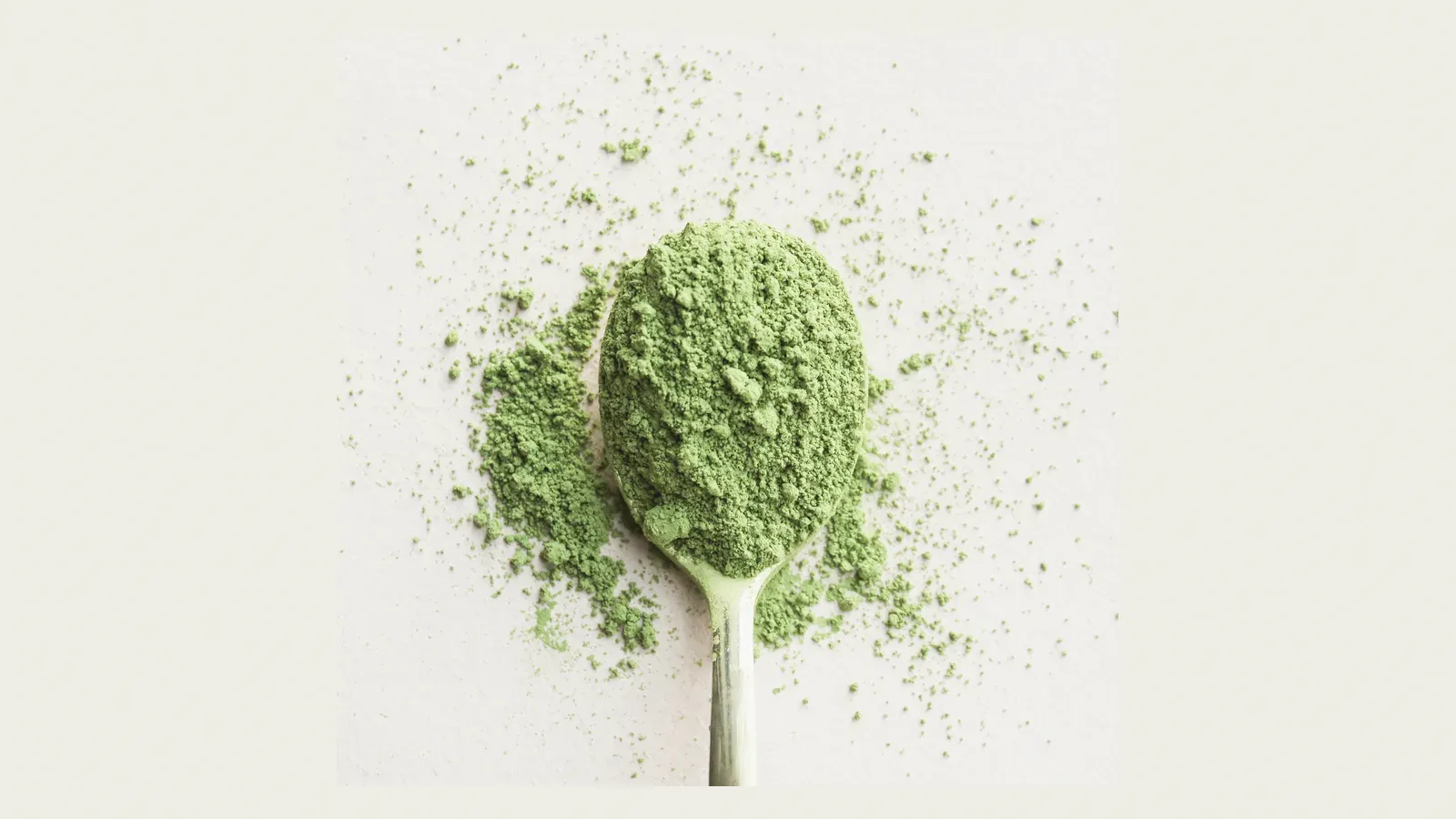
“Ceremonial” and “culinary” are marketing words, not regulated grades. What separates good matcha from cooking matcha is shade duration, first-flush harvest, leaf selection, and stone- versus machine-milling — all of which you can read off a tin’s color, origin, harvest date, and price per gram.
One tin says ceremonial grade. The tin beside it says culinary. You reach for the first to whisk into a bowl and the second to stir into a latte, on the assumption that the first is better. The instinct is sound. The words that taught it to you carry no authority at all.
No one certifies “ceremonial grade”
No government office, trade body, or Japanese certification defines “ceremonial grade.” Naoki Matcha, a Uji producer that sells under both labels, puts it flatly: no organisation regulates the term, and Japan has no standardized matcha (抹茶) grading system to begin with 2. Tezumi, an importer, reaches the same conclusion. The phrase is undefined on both sides of the Pacific, and inside Japan only tencha (碾茶), the raw leaf, carries a regulated definition at wholesale 3.
The labels were coined for export, around the early 2000s, to tell American buyers which powder to whisk and which to bake with. They caught on because they answer a real question. They just answer it on the seller’s honour.
The differences the two words gesture at are real. Below is where they come from, and how to read them off a tin without trusting either word.
Every matcha begins as tencha
Ceremonial or culinary, all of it is ground tencha, the leaf grown specifically to become powder. Matcha sits at one end of the Japanese green tea family, the only member milled to a powder rather than steeped and poured off. The Global Japanese Tea Association describes the process: the plants stand in shade for about four weeks before harvest, then the leaves are steamed and dried, and — unlike sencha or gyokuro (玉露) — never rolled. “The rolling process, that breaks the tea leaf cell walls and helps to release flavour components into water, is skipped entirely.” The dried leaf is then “carefully separated from the stems” before grinding 1. Gyokuro is shaded too, for around three weeks, but it is rolled like sencha, and that rolling is the fork in the road that sends one leaf to a teapot and the other to a stone mill.
That shared origin tells you where quality can and cannot come from. Two matchas can both be real tencha, both stone-ground, both from Uji, and still sit at opposite ends of a price list. The split happens earlier: in the field, at harvest, and in how hard the leaf is sorted. For the full leaf-to-powder sequence, see What Is Tencha.
What separates a whisking matcha from a cooking one
Four things do most of the work, and you can read all four off the packaging.
Shade
Covering the plants before harvest is the most consequential step. Starved of light, the plant slows photosynthesis and holds on to L-theanine, the amino acid behind matcha’s savory sweetness, rather than spending it on the catechins that read as bitter. Shade also drives up chlorophyll, which is why well-covered leaf grinds to a vivid green. The GJTA gives about four weeks for tencha 1. Growers commonly cite 20 to 30 days under cover for their top lots. The finest tencha is shaded under a built canopy, a trellis draped with reed and straw, which darkens the field more slowly and evenly than black cloth laid straight on the bushes. Shorter cover, or none, leaves more bitterness, thinner umami, and a duller powder. Good in a recipe, weak in a bowl.
First flush versus the later pickings
Japanese tea is harvested in flushes across the season. The first, ichibancha (一番茶), comes from tender spring growth that spent the winter storing amino acids. Sugimoto Tea Company dates it from early April in Kagoshima to early June farther north, and calls it the source of the highest grades of matcha and sencha, with markedly higher L-theanine and a sweeter, milder taste 6. The second flush, nibancha (二番茶), arrives in June or July from summer growth that raced up under strong sun, and it gives a coarser, more astringent, cheaper leaf 6. Bowl-grade matcha leans on first flush. Cooking-grade often draws on the later pickings.
Leaf selection and de-veining
Tencha is destemmed and deveined before milling, and how strictly a lot is sorted tracks its price. The tenderest top leaf grinds smoothest and sweetest. Stems and veins come out because they “interrupt the grinding process, leading to an uneven powder,” as Mizuba Tea Co. puts it 4. Higher lots are picked young and sorted hard. Cheaper lots tolerate more stem and older leaf, which is one more reason two “matchas” from the same village can taste nothing alike.
Stone mill versus machine
Turning tencha into powder changes both feel and flavor. The traditional tool is the granite ishi-usu (石臼), a stone mill turned slowly, roughly 55 to 60 revolutions a minute, to keep friction from heating the leaf. It is glacially slow, about 40 grams an hour 4, and grinds to a particle around six or seven microns that suspends smoothly in water. Push it faster and, as Mizuba warns, “the leaves will oxidize and burn” 4. Industrial mills pulverize the same leaf with steel balls or high-powered blenders in a fraction of the time, at a coarser grind and a cost to aroma and color.
Milling is not the whole story. Nakamura Tokichi, an Uji house grinding since 1854, works by stone and still cautions that “what matters most is not the method — it’s the quality of the tencha” 5. A stone mill cannot rescue late-harvest, under-shaded leaf. It protects good leaf that was already good. Here is the judgment to carry out of this section: ball-milled matcha is fine in a latte and wasted in a bowl.
Stack the four variables and they compound into two different products.
| Whisking matcha (“ceremonial”) | Cooking matcha (“culinary”) | |
|---|---|---|
| Shade | ~3–4 weeks / 20–30 days, heavy cover | Shorter or partial |
| Harvest | First flush (ichibancha), spring | Often nibancha and later |
| Leaf | Tender top leaf, hard-sorted | Coarser, more stem and vein |
| Milling | Stone mill (ishi-usu), ~40 g/hr | Ball mill or blender |
| Color | Vivid jade | Yellowish or army green |
| Taste | Umami-forward, low bitterness | Sharper, astringent |
| Made for | Whisked usucha or koicha | Lattes, smoothies, baking |
What the difference does in the bowl
Whisked into plain hot water, a first-flush, well-shaded, stone-milled matcha has nowhere to hide. Its smoothness and sweetness are the whole of it. Put a coarse, astringent powder through the same whisk and bitterness is most of what you taste.
The gap widens as the preparation grows more demanding. Thin tea, usucha, forgives a lot: about two grams whisked into 70-odd millilitres of water, frothy and light, drunk every day. Thick tea, koicha, forgives nothing — roughly four grams kneaded into a bare 30 millilitres, undiluted and slow, the formal preparation of the tea room. Sazen Tea is blunt about the stakes. Koicha “is made with the highest grade matcha,” and “usucha grade matcha is not suitable to make koicha” 7. The thicker the tea, the better the leaf has to be. The two preparations, and why koicha sits at the center of formal chadō (茶道, the way of tea), are their own subject.
Turn that around and culinary matcha stops looking like a lesser thing. In a latte or a cake, the astringency of a later-harvest powder becomes an asset. Milk and sugar round it off, and a delicate bowl-grade tea would vanish under them. Ippodo’s range maps the same logic: formal grades it calls “Rich” for whisking, an entry powder labelled “Light & Sharp,” and a separate sweetened product built for lattes and smoothies 8. Cooking matcha is a different tool, priced for a different job. The mistake is paying whisking-grade money for it, or asking it to taste like more than it is in a bare bowl.
How to read a tin
Set the front label aside and read the evidence a producer cannot fake cheaply.
Color. The fastest tell. Well-shaded first-flush matcha is a vivid, near-electric jade. Yellow, brown, or dull army green points to thin shade, a late harvest, or stale powder. Color can be gamed at the margins, and it fades with age regardless, so read it alongside the rest rather than on its own.
Origin and harvest date. A serious producer names where the tea grew and, often, when it was picked. Uji (Kyoto), Yame (Fukuoka), Nishio (Aichi), and Kagoshima are the names to want. “Product of Japan” with no region is a flag. Ground matcha stales fast once milled, oxidising toward that dull, hay-like green, so a recent first-flush or spring-harvest date, ideally with a year, tells you the producer expects you to care about freshness.
Price per gram. Convert every tin to price per gram and the market sorts itself. The economics are unforgiving: a stone mill turns out about 40 grams an hour 4, so real first-flush stone-milled matcha is slow and costly to make. Good whisking matcha commonly lands somewhere around one to two US dollars a gram, and premium tins run small, 20 to 40 grams rather than 100. A 100-gram pouch priced like a single small tin is telling you honestly what it is: baking matcha, dressed as a whisking tea.
Milling. Reputable houses advertise “stone-milled,” because it costs them to do it. Take that claim, from a producer who also names origin and harvest, as a good sign. Its absence alone settles nothing.
Put it together. A vivid jade powder, from a named region, first-flush, stone-milled, in a 20-to-40-gram tin at a believable price per gram, is what “ceremonial” is trying to promise, and you confirmed it without the word. A duller, cheaper, region-vague powder in a big bag is your latte and baking matcha, bought for exactly that with no apology owed.
Everything above sorts good matcha from cooking matcha. It is a separate question whether a tin holds matcha at all, rather than milled sencha sold under the name — a question that has grown sharper as prices climbed and supply tightened.
If you are starting out, buy two tins rather than one asked to do both: an honest whisking matcha for the bowl and a cheaper culinary one for lattes. From there the chasen, the water temperature, and the bowl decide what tastes good, and if you would rather someone else assemble the shortlist, the starter kit covers it. The most expensive habit in matcha is trusting a word that no one in Japan is required to mean.
Sources
8sourcesGlobal Japanese Tea Association
SupportsTencha grown in shade ~4 weeks, steamed and dried, rolling step skipped, leaves separated from stems; matcha stone-ground; gyokuro shaded ~3 weeks and rolled
Naoki Matcha
SupportsNo organization regulates 'ceremonial grade'; no standardized matcha grading system in Japan; first flush typically best; culinary tastes more bitter
Tezumi
Supports'Ceremonial grade' undefined and unregulated in Japan and abroad; only tencha, the raw leaf, carries a regulated definition at wholesale
Mizuba Tea Co.
SupportsIshi-usu stone mill grinds ~40 g/hour; slow rotation avoids heat so leaves do not oxidize and burn; stems/veins cause uneven powder; steel-ball and blender milling coarser and degraded
Nakamura Tokichi (Uji, since 1854)
SupportsStone milling yields about 40 g/hour; states that what matters most is the quality of the tencha, not the milling method
Sugimoto Tea Company (since 1946)
SupportsIchibancha (first flush) early April to early June; nibancha June/July; first flush has higher L-theanine, sweeter/milder taste, yields highest grades of matcha and sencha
Sazen Tea
SupportsKoicha made with the highest grade matcha, formal; usucha-grade matcha not suitable for koicha; ratios ~4 g thick vs ~1.5–2 g thin
Ippodo Tea (Kyoto, since 1717)
SupportsRange from entry 'Light & Sharp' to formal 'Rich' whisking grades; separate sweetened product aimed at lattes and smoothies; Uji-grown, stone-milled
Image: Evanhoever, Wikimedia Commons · CC BY-SA 4.0
Common questions
Is 'ceremonial grade' a real, regulated standard?
No. No government or trade body certifies the term, and Japan has no standardized matcha grading system. The industry there regulates only tencha, the raw leaf. Anyone can print 'ceremonial' on a tin, so treat it as a claim, not a guarantee.
Can I drink culinary matcha straight?
You can, though it will taste sharper and more astringent, because it is usually later-harvest, less-shaded leaf. In a latte or a cake, that edge disappears under milk and sugar. Whisked thin in plain water, it has nothing to soften it, and the bitterness is most of what you get.
Does a higher price guarantee better matcha?
Not on its own, but price per gram is a useful filter. Stone-milled first-flush tencha is slow and costly to make — a single mill yields about 40 grams an hour — so good whisking matcha rarely comes cheap. A powder priced far below that floor is unlikely to be what a 'ceremonial' label implies.