L6 · Zen Writing
Zen Writing: Bokuseki and the Tea Room Scroll
Bokuseki — Zen calligraphy — and the kakemono in the tokonoma: the brushed words a host hangs first and guests read first at a tea gathering.
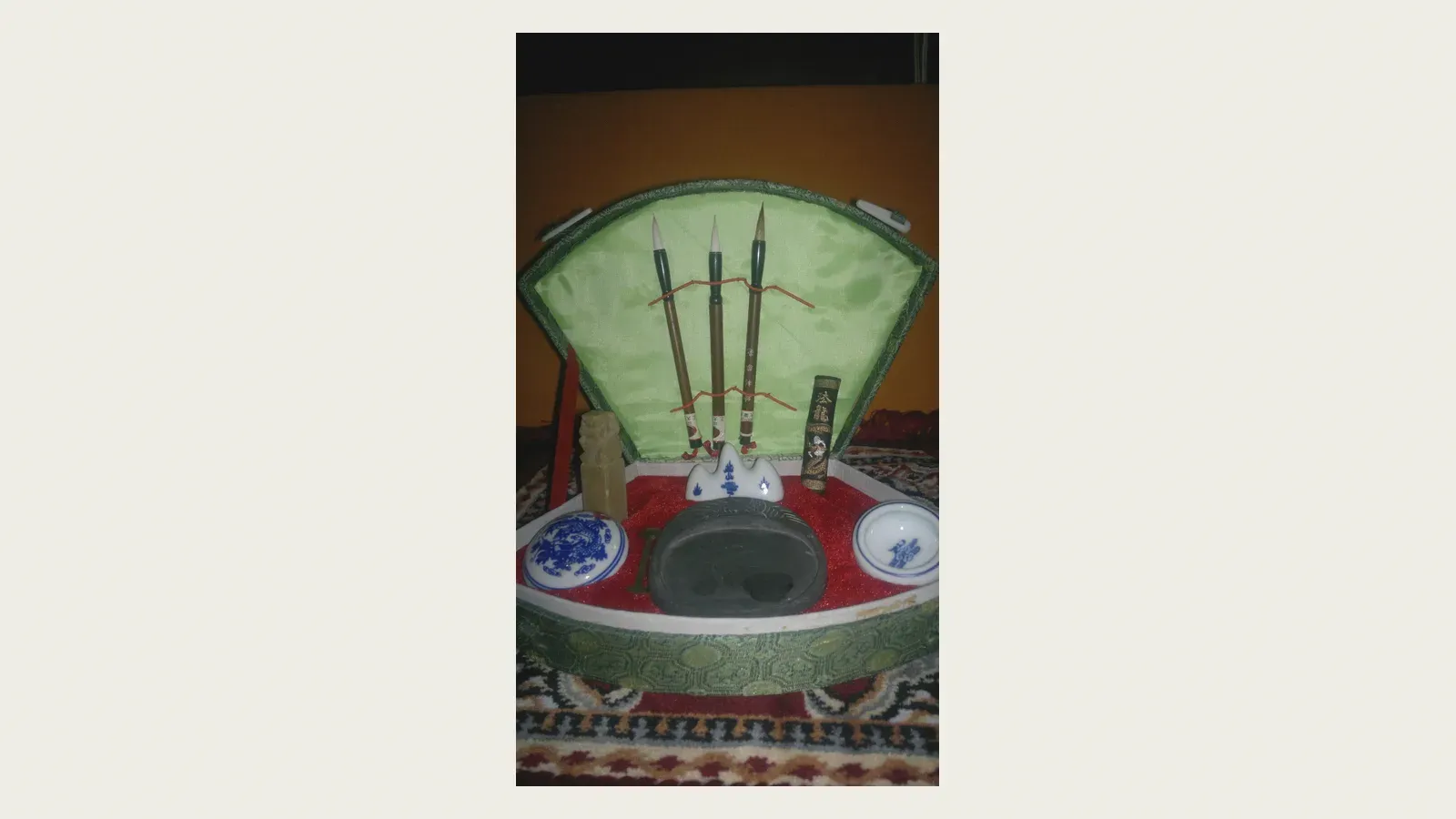
In chanoyu (茶の湯) the hanging scroll, the kakemono (掛物), is treated as the most important object in the tea room, and the scrolls held highest are bokuseki (墨跡), calligraphy brushed by Zen monks. The text is usually a short Zen phrase. What a bokuseki is prized for is the writer’s Zen practice and lineage, not a polished hand.
A tea gathering is read before it is tasted. Cross the low door of a tea room, and before the greeting and before the kettle, a guest moves to the recessed alcove, the tokonoma (床の間), kneels, and bows to a narrow strip of paper hung on its back wall with a few black characters brushed down its length. That strip is the kakemono, and by the tradition’s own reckoning it is the most valued object in the room, set above the bowl and above the kettle it will share the afternoon with.3 It states the theme of the day. Everything the guests taste and handle afterward answers to it.
This hub is the overview of that scroll and the writing on it. It covers what a bokuseki is and why the monk’s practice counts for more than the brushwork, how the tea scroll descends from the Kyoto Zen temples, why it outranks every other utensil and pairs with the season’s single flower, and what the one-line phrases say. Two companion pieces go deeper. The object itself, its mounting and the etiquette of viewing it, is set out in how to read the tea room scroll. The phrases, from the plain kissako to the single character mu, are laid out in the one-line Zen scrolls. All of it belongs to the wider Way of Tea the room serves.
What a bokuseki is
Bokuseki, “traces left by ink,” is the calligraphy of Zen priests: the works of Song- and Yuan-dynasty Chinese masters and of Japanese monks from the Kamakura period onward.1 In the wabi style of tea it became the pinnacle of the scrolls hung in the alcove, the form a host reaches for when the gathering asks for weight.1
The category is broad. A bokuseki can be a monk’s letter, a poem, a sermon transcribed, or a certificate of enlightenment handed to a disciple, as well as the short Zen phrase mounted for a tea room. What ties them is the hand, and the surprise is how that hand is judged. Bokuseki is prized for the writer’s Zen practice and spiritual standing, above any evenness of stroke.1 The room reads the ink as a trace of the writer’s mind, and the writings of high priests who had passed through hard ascetic training were held to carry a charm absent from the polished calligraphy of professional scribes. A line by an abbot of known practice can outrank a more even sheet by a lettered layman. This runs against the grain of how most writing is valued, and it takes some getting used to. A scroll that looks blunt or awkward on the wall can be the prized thing in the room, hung precisely for whose hand made it. Here is the judgment to carry into the alcove: a viewer who studies only the balance of the strokes is looking at the wrong half of the object.
The most esteemed bokuseki of all bears this out. The oldest surviving example is a certificate of enlightenment brushed by the Song master Yuanwu Keqin (圜悟克勤, 1063–1135, Engo Kokugon in Japanese) in 1124, ranked at the top of the tradition both as the earliest of its kind and for the writer’s high standing as a priest.1 It survives as a National Treasure. The ink is urgent and plain. Its authority comes from the mind behind the brush, which is the whole premise the tea room builds on.
Daitoku-ji and the first tea scroll
The tea scroll begins with a monk’s brushwork treated as the heart of a gathering, and the story runs back to the fifteenth century. By tradition, Murata Jukō (村田珠光, 1423–1502), usually named as the first wabi tea master, studied Zen under Ikkyū Sōjun (一休宗純) at Daitoku-ji (大徳寺), the Kyoto Rinzai monastery bound up with the whole history of tea. From Ikkyū he received a sheet of Chinese Zen calligraphy by the same master Engo, and he hung it where he served.2 That gesture, a Zen line placed at the centre of a tea gathering, is where the tea scroll starts.
Daitoku-ji stayed the source. Many of the most prized tea scrolls were written by its abbots, and a piece from a Daitoku-ji hand still carries the weight of the temple behind the ink.5 The connection deepened with each generation of masters. Sen no Rikyū (千利休, 1522–1591), the sixteenth-century figure who codified wabi tea, trained in Zen at Daitoku-ji and is recorded mounting a line by his own teacher there, Shunoku Sōen (春屋宗園).2 The lineage of the tea scroll is a Zen lineage first. When a host today hangs a bokuseki, the room is looking back through five centuries of monks to the temple gate at Daitoku-ji.
Why the scroll comes first
The clearest old statement of the scroll’s rank comes from the Nanpōroku (南方録), a later record of Rikyū’s teaching. It ranks the kakemono above every other utensil, names the calligraphy the first priority, and tells the guest to respect the spirit of the writer.2 Treat the attribution with some care, since the Nanpōroku was compiled generations after Rikyū and its authenticity is debated by scholars. The ranking it records is uncontested across the schools. A modern teaching glossary puts it flatly: the scroll is the most valued item in the tea room.3
That rank is built into the order of the work. The host decides the scroll first when assembling a gathering, ahead of the flower, the sweet, and the bowl, because each of those is chosen to agree with it.3 Here the site will stake a plain claim about where a newcomer’s eye tends to go. The bowl is the object a guest notices and photographs, the piece with a name and a maker and a price. The line on the wall is the one the host chose first and built the whole afternoon around. Learn to look at the scroll the way the host does, and the rest of the room falls into place behind it.
A guest meets it early, and by design. On entering, the guests view the tokonoma before settling at their places, and a first act is to kneel and bow before the alcove.4 The scroll leaves before the tea. In a full gathering it hangs through the opening seating and the meal, and then, at the mid-gathering break, the nakadachi (中立), the host sweeps the room, takes the scroll down, and hangs a single flower where it was.4 By the time thick tea is served the words are gone and the alcove holds a stem of something seasonal. So a guest reads the scroll in the first quarter of an hour or misses it. Whatever it had to say is said before the tea is made.
The flower that replaces it, the chabana (茶花), is chosen to answer the same theme the scroll set. That pairing of words and stem, and the way the two hand the alcove between them across a gathering, has its own treatment in chabana and kakemono. The alcove itself, its dimensions and its place in the room, belongs to the tea room.
Ichigyō-mono: the one-line scroll
The commonest tea scroll is a single vertical line. The form has a name, ichigyō-mono (一行物), the “one-line object”: one column of a short Zen phrase, a zengo (禅語, “Zen word”), brushed down the length of the sheet. The phrase is usually about five characters, borrowed from a koan or a Zen precept and centuries old, and the host picks which one to hang for this day and these guests. It is the closest thing tea has to a host speaking, and they do it in another person’s words.
The choosing is where the host’s intent lives. The words are fixed and old, but the act of selecting one line, for this weather and this occasion and these particular people kneeling on the mats, belongs entirely to the host. The same phrase hung on a grey November afternoon for two old friends means something other than the same phrase hung at a bright New Year gathering for strangers. A guest who learns to read that choice is reading the host, which is why the tradition treats a few borrowed characters as the most personal object in a room full of hand-made things.
A handful of lines recur often enough that a regular guest learns to know them.
| Phrase | Reading | Sense |
|---|---|---|
| 喫茶去 | kissako | ”Go drink tea” |
| 日々是好日 | nichi nichi kore kōjitsu | ”Every day is a good day” |
| 和敬清寂 | wa-kei-sei-jaku | Harmony, respect, purity, tranquility |
| 一期一会 | ichigo-ichie | ”One time, one meeting” |
| 無 | mu | ”No / nothing” |
Two of these carry attributions a host should get right. Wa-kei-sei-jaku (和敬清寂), the four principles set down as the spirit of tea, is attributed to Rikyū, and it is a precept rather than a riddle.5 Its fourth term, jaku (tranquility), is understood as the result of the first three, the stillness that arrives once harmony, respect, and purity are in the room. Ichigo-ichie (一期一会) is the most famous tea phrase and the most often misattributed. It was given its familiar four-character form by Ii Naosuke (井伊直弼, 1815–1860), the late-Edo statesman and tea master, in his treatise Chanoyu Ichie Shū, drawing on an idea Rikyū had expressed. It was not coined by Rikyū himself.6 The line holds that this gathering, these guests, this arrangement of a single day will never recur, and so asks to be met as the only meeting there will be.
The others give a guest less to hold. Kissako, “go drink tea,” reads as a warm host’s welcome and began as a Chan koan with an edge to it. Mu, one character, is the flat “no” a master gave when asked whether a dog has Buddha-nature, and it is about as far as tea takes the idea of restraint: a single black mark on a white ground in a room stripped to a kettle and a flower. The readings, the koans behind them, and the harder cuts a host reaches for when the room can carry them are the subject of the one-line Zen scrolls. For all their differences, these lines share a pattern. A few characters of borrowed Zen, placed where every guest must pass them, turn a bare room and a bowl of tea into an afternoon with a subject.
How a guest reads the scroll
Reading the scroll is the guest’s first task, and it opens with a difficulty nobody warns a newcomer about: you almost certainly cannot read it. Zen phrases are usually brushed in sōsho (草書), the fast “grass script” cursive, where characters melt into a few continuous gestures and lose the printed shapes a learner knows. Fluent readers of standard Japanese routinely stall on it. The tradition asks something else of you and knows the cursive defeats most readers, guest and host alike.
The etiquette around the scroll is fixed, and the sequence rewards learning. Enter through the low door and cross to the front of the tokonoma before settling at your place. Kneel, set your folding fan on the mat in front of your knees, and bow to the alcove. Look at the scroll first, taking in the whole of it before the flower beneath it. Vertical Japanese reads from the top down, and where a scroll carries more than one column the columns run right to left, though a single-line tea scroll is the simplest case: one gesture of ink falling from the top bar toward the roller. You read it the way you enter the room, from the top, slowly, once. Then greet the host, and let the later viewing of the kettle and the bowl come after the alcove has been read.
Do all of this from your knees, and keep your hands off the scroll. It is the one utensil a guest never handles. The bowls and caddies come out for close viewing later in the gathering, but the scroll stays on its hook, a thing you look into the alcove to read and do not touch. The full sequence of arriving, bowing at the alcove, and being served is set out in how to host a tea gathering, and the object in detail, its mounting and its parts, in how to read the tea room scroll.
Once you have the line, whether you puzzled it out or the host told you, the reading has further to go. The work is to hold it lightly through the afternoon and let the gathering answer it. The bare walls, the chosen flower, the pace of the water all lean on those few characters, and a guest who has taken the line in is reading the whole room by its light.
The most valued object in a tea room, then, is a line of borrowed Zen in a dead monk’s hand, chosen by a living host for one afternoon and taken down before the tea is poured. That is a strange thing to place at the centre of a gathering, and it is the exact strangeness the tea room is built around. The bowl you drink from was made to be used again next week. The scroll on the wall says something true for this day only, in someone else’s words, and then it goes back in its box.
The pieces
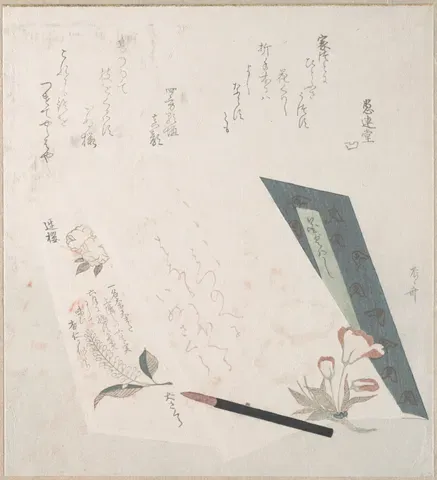 How to Read the Tea Room Scroll The kakemono in the tokonoma is the first thing a guest reads at a tea gathering. What the hanging scroll is, why it ranks first, and how to read a bokuseki. 02
 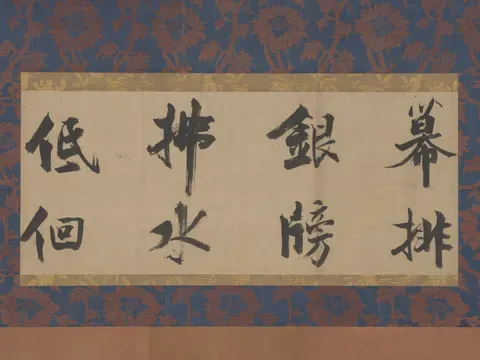 Ichigyō-mono: The One-Line Zen Phrases of the Tea Room The tea-room scroll usually carries one line of Zen. What kissako, nichi nichi kore kōjitsu, mu and the other zengo mean, and where each began.
 Sources
6sourcesTokyo National Museum — The Calligraphy of Buddhist Priests
SupportsBokuseki ('traces left by ink') is the calligraphy of Zen priests, from Song and Yuan China and Kamakura–Edo Japan; in wabi tea it was the pinnacle of hanging scrolls for the tokonoma; valued for the writer's personality and spiritual state over calligraphic skill; Yuanwu Keqin's (Engo) hogo of 1124 ranked top of bokuseki as the oldest and for the priest's high standing
SAKURA Kyoto — Hanging Scroll / Bokuseki
SupportsPer the Nanpōroku, no utensil is more important than the kakemono and the calligraphy is the first priority, with instruction to respect the spirit of the writer; the tea use of Zen calligraphy began when Murata Jukō received a sheet by the Song master Engo (Yuanwu) from Ikkyū Sōjun at Daitoku-ji; Rikyū is recorded mounting calligraphy by his teacher Shunoku Sōen
Five Colleges Center for East Asian Studies — Tearoom, Utensils, and Accessories
SupportsThe kakemono/jiku is 'the most valued item in the tearoom'; it displays Zen words and the host selects one matching the theme of the gathering; the tokonoma is where the scroll is hung and flowers or utensils displayed
Wikipedia — Japanese tea ceremony
SupportsGuests view the items in the tokonoma on entering; Rikyū preferred to hang bokuseki, the calligraphy of Zen priests; during the nakadachi intermission the host takes down the scroll and replaces it with a flower arrangement before thick tea is served
Nara Tea Co. — Why Is Zen Calligraphy Displayed in the Tea Room
SupportsThe hanging scroll is the theme of the gathering, not decoration; a guest's first gesture on entering is to bow before the tokonoma; many tea scrolls were written by Zen monks of temples such as Daitoku-ji; phrases include ichigo-ichie and wa-kei-sei-jaku (attributed to Sen no Rikyū)
Wikipedia — Ichi-go ichi-e
SupportsThe four-character phrase ichigo-ichie was given its form by Ii Naosuke (1815–1860) in Chanoyu Ichie Shū, drawing on an idea expressed by Sen no Rikyū (recorded as ichigo ni ichido); it was not coined by Rikyū himself
Common questions
What is bokuseki?
Bokuseki (墨跡, 'ink traces') is the calligraphy of Zen monks, prized in chanoyu as the tea-room hanging scroll. It is valued for the writer's Zen practice and standing rather than for a polished hand, so a line by an abbot of known practice can outrank a more even sheet by a professional scribe. The category is broad: a monk's letters, poems, sermons, and certificates of enlightenment all count as bokuseki.
Why is the scroll the most important object in the tea room?
Because it states the theme of the gathering. The host hangs it first and chooses everything else — the flower, the sweet, the bowl — to agree with it, and a guest's first act on entering is to kneel and bow before the alcove and read it. The Nanpōroku, a record of Sen no Rikyū's teaching, ranks the kakemono above every other utensil and names the calligraphy the first priority.
What does the tea-room scroll usually say?
Usually a single line of Zen, an ichigyō-mono. Common ones include kissako (喫茶去, 'go drink tea'), nichi nichi kore kōjitsu (日々是好日, 'every day is a good day'), wa-kei-sei-jaku (和敬清寂, the four principles of tea), and ichigo-ichie (一期一会, 'one time, one meeting'). A bare mu (無) turns up when the host wants to ask more of the room.