The Way
Usucha vs. Koicha: Thin Tea and Thick Tea
Usucha is the thin, whisked, frothy bowl. Koicha is thick tea, kneaded to a syrup and shared from one bowl, and the formal heart of the ceremony.
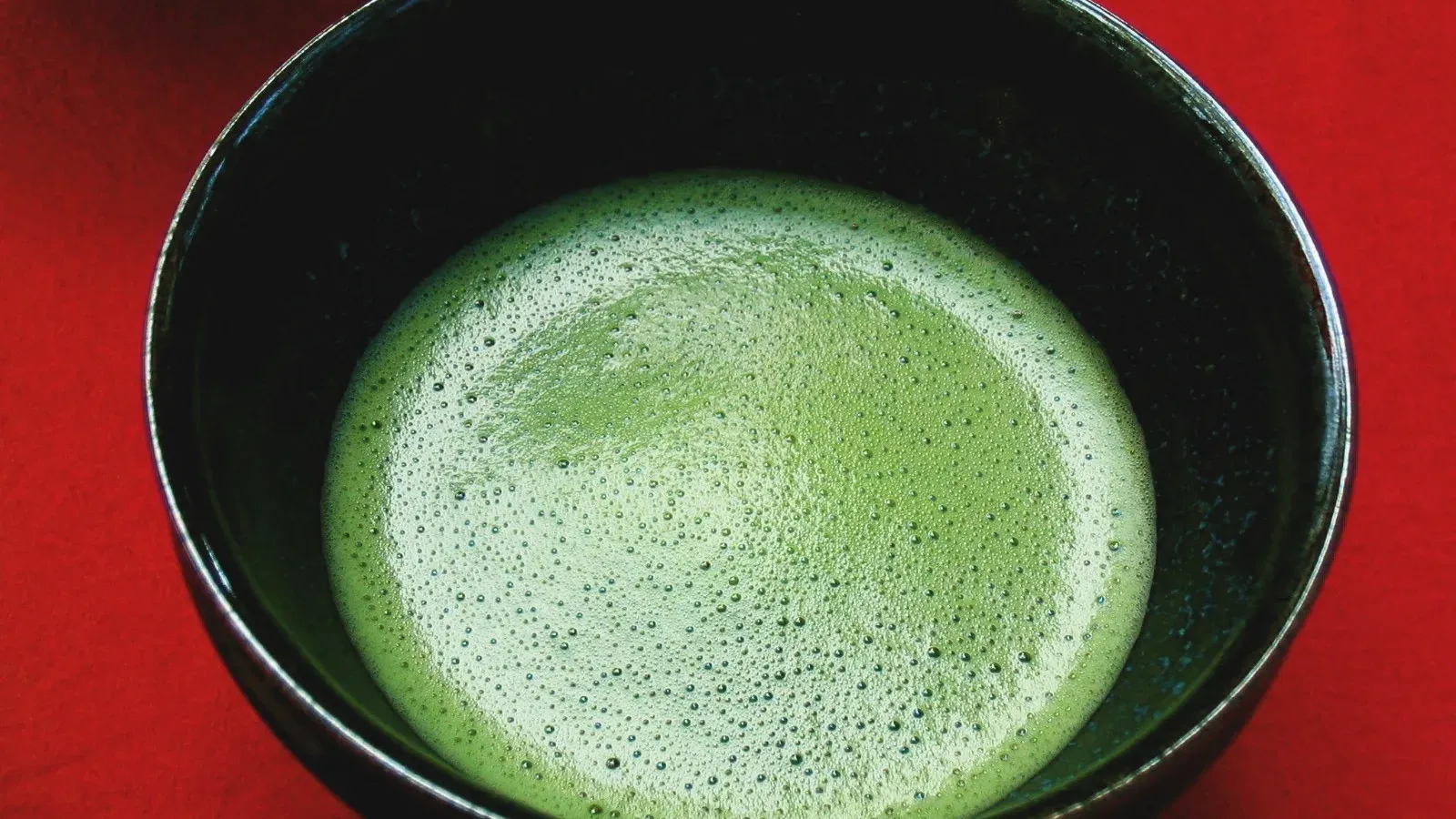
Usucha (thin tea) is the light, whisked, frothy bowl most people picture as matcha, made one bowl per drinker. Koicha (thick tea) uses roughly double the powder against less than half the water, kneaded — not whisked — into a glossy, foamless paste, and shared from a single bowl among several guests. Koicha is the formal centre of a tea gathering and demands the highest grade of matcha. Usucha is its lighter coda.
Almost everyone who has had matcha has had usucha (薄茶, “thin tea”): the bright, frothy, single-serving bowl. Far fewer have had koicha (濃茶, “thick tea”), and most don’t know it exists. Inside the tea ceremony the ranking runs the other way. Koicha is the formal heart of the gathering, the reason the guests were invited, and usucha is the lighter tea that sends them home. Same powder, same whisk, the same bowl. Almost nothing else in common.
The two bowls, side by side
| Usucha (薄茶) | Koicha (濃茶) | |
|---|---|---|
| Meaning | Thin tea | Thick tea |
| Matcha | ~2 g (about two chashaku scoops) | ~4 g (double or more) |
| Water | ~60–70 ml | ~30–40 ml |
| Concentration | Baseline | roughly 4× usucha |
| Technique | Whisked briskly to a foam | Kneaded slowly to a paste |
| Consistency | Light, aerated, liquid | Syrupy, like melted chocolate |
| Grade | A good everyday grade will do | The top of the range only |
| Service | One bowl per guest | One bowl shared down the line |
| Place in a gathering | The relaxed close | The formal centre |
The ratio is the root of everything else. Koicha takes roughly twice the powder against less than half the water, which makes it about four times as concentrated as usucha 2. Producers differ on the exact grams — Ippodo builds a usucha bowl on 2 g, the Global Japanese Tea Association counts three scoops of koicha per guest, Mizuba portions out about 4 g for a shared bowl and folds in a little extra “for the bowl” 3. The constant holds under the variation: far more powder, far less water. That single fact sets the technique, the grade of leaf required, and the way the tea is served.
Usucha: the thin, whisked bowl
Usucha is the bowl this site’s whisking guide is about. Around two grams of matcha, water off the boil at roughly 80°C, and a brisk working of the bamboo chasen aerate it into a light, even foam 7. Each guest gets their own bowl, drinks it in a few mouthfuls, and it’s gone. This is the approachable face of matcha: quick to make, pleasant on its own, and forgiving of a merely good grade.
How much foam counts as “right” depends on the house. Urasenke whisks usucha to a dense froth that covers the whole surface. Omotesenke stops sooner and leaves a crescent of clear green tea showing. Both are correct within their own tradition, a small visible split laid out in the three schools of tea. Koicha, by contrast, looks the same whoever makes it, because there is no foam to style.
Koicha: the bowl you knead
Here is the surprise that catches every newcomer. You do not whisk koicha. With four grams of powder against thirty of water, a brisk whisk would only beat air into a paste that wants none of it, and koicha’s whole character is a smooth, dense, bubble-free surface. So the host kneads it. The Japanese word is neri (練り). The chasen moves slowly through the bowl — the Global Japanese Tea Association describes drawing two horizontal and two vertical strokes until the powder takes up the water, Mizuba describes a slow circular motion, “painting the matcha away into the water until a smooth paste is formed” 13.
The target is the opposite of usucha’s froth. No air, a glossy dark-green surface, a liquid closer to melted chocolate or honey than to tea 2. Thick, deep, and from good leaf startlingly sweet and full, with a body that coats the mouth. It is less a drink than a very dense cream. The water usually goes in over two or three additions instead of all at once, so the host can bring the paste to a consistency the group can pass and drink without it setting stiff.
One bowl, three sips, wipe the rim
Then it is shared. A single bowl of koicha is made for the whole party and passed from guest to guest. The first person drinks about three sips (the old teaching counts three and a half), wipes the rim with a folded paper, and hands the same bowl to the next, on down the line 1. A moist seasonal sweet has already been eaten, just before, so the sugar on the tongue meets the tea’s bitter depth. The bowl chosen for koicha is usually a sober, dark piece weighted to the moment rather than a bright one.
Drinking in turn from one vessel is the most intimate gesture in the whole tradition, which is why the room goes quiet and the host reserves the best tea owned for it. The kneading and the sharing are also why koicha is taught late and reserved for the most formal gatherings: there is no foam to cover an uneven bowl, and no second serving to fix a first. Where this single bowl sits inside the four-hour arc of a formal gathering (the meal, the charcoal, the pause in the garden that all lead up to it) is walked step by step in a tea gathering, in order.
Why koicha needs the oldest bushes
Because koicha is four times as concentrated, it magnifies every quality and every flaw of the powder about fourfold 2. Usucha can carry a merely decent matcha. Koicha exposes it. A grade that tastes clean whisked thin turns, kneaded thick from a lesser leaf, into what one producer bluntly calls a “treacly, mud-like sludge” 4.
So koicha demands the top of the range. The leaf is shaded longer and more heavily than the usual three-to-four weeks, taken only from the spring first flush, and often hand-picked so only the finest goes in 1. That heavy shade is what makes the grade possible: starved of light, the leaf builds up the amino acids behind matcha’s sweetness and holds down the catechins that read as bitter, which is exactly what lets a tea survive being kneaded this strong. The bushes themselves tend to be old. Producers commonly put koicha leaf at plants over thirty years, against younger plantings for everyday usucha, and the darkest thick-tea matcha is said to come from bushes of seventy years or more 4. Treat those ages as the trade’s rule of thumb rather than a measured fact — they come from producers describing their own gardens, and no label on a tin lets you check the birthday of a tea bush.
The best of this leaf carries a name. A blended koicha is often sold under a poetic chamei (茶銘, “tea name”) bestowed by an iemoto — the hereditary grandmaster of one of the three Sen schools, Urasenke, Omotesenke, or Mushakōjisenke.6 A naming convention even marks the split for you: grades ending in mukashi (昔, “old times”) are meant for koicha, and grades ending in shiro (白, “white”) for usucha.5 The tin often tells you which bowl it’s for before you reach the price.
Which is the buying rule I’d hold to. Keep a shiro-style grade for daily usucha and a single mukashi-style tin for the rare thick bowl. Whisking a koicha grade thin tastes superb and wastes the tea: its sweetness is bred to survive concentration, and thin water throws that advantage away. In practice the koicha tin is the small, dear one. A house like Marukyu Koyamaen reserves its upper grades for thick tea and keeps cheaper grades for usucha alone, some of the best carrying an iemoto’s seal 8. The grade distinction, and why the “ceremonial” label on the front means less than the color, origin, and price per gram, is set out in ceremonial vs. culinary matcha.
Making each at home
Usucha is a weeknight tea. Two grams sifted, water around 80°C, a brisk W or M from the wrist for fifteen seconds — the full mechanics are in how to whisk matcha, and the same tin rewards getting them right.
Koicha is harder, and honestly, most people should live with usucha for a while first. If you want to try it: sift about 4 g of a koicha-grade matcha into a warmed tea bowl, add a little water at roughly 80°C, and fold the chasen slowly through the powder to a stiff paste before loosening it with more water to about 30–40 ml total. Work it to a smooth, foamless gloss. From here the two failure modes are the wrong grade, which no technique will rescue, and adding all the water at once, which leaves lumps.
The order the tradition keeps
Set the two bowls in a full tea gathering and the ranking is plain. Koicha is the climax the whole day moves toward. Usucha follows it, lighter in every sense, as the gathering unwinds 1. The everyday tea most of us drink is, in the architecture of the ceremony, the encore. The four demands a gathering is held to keep (harmony, respect, purity, and the calm they produce) sit most visibly in that shared thick bowl, and are traced in full in wa-kei-sei-jaku and across the wider Way of Tea.
If you have only ever had usucha, koicha is the one bowl to go out of your way to taste. It is the moment the whole apparatus — the shading, the hand-picking, the old bushes, the grandmaster’s name on the tin — finally lands on the tongue at once. The frothy bowl you can make tonight. The thick bowl asks you to find a tea room, and rewards it with a mouthful of leaf off a bush older, sometimes, than the person who planted it.
Sources
8sourcesGlobal Japanese Tea Association, 'Koicha (濃茶)'
SupportsKoicha kneaded not whisked, drawing two horizontal and two vertical lines in the bowl; ~3 scoops (~2 g) per guest into 30–40 ml water; shiny dark-green syrupy consistency, very intense; one bowl shared, each guest 3 sips then wipes the rim with a napkin and passes it on; koicha grade shaded ~4 weeks or longer and heavier, spring harvest; served in the full-length chaji
Matchaeologist, 'Usucha vs Koicha'
SupportsUsucha ~1 g / ~70 ml; koicha ~2 g / ~35 ml, double powder half water; koicha ~4× more concentrated than usucha; koicha kneaded to a melted-chocolate or honey consistency; koicha leaf from plants older than 30 years, usucha from younger plants; higher concentration amplifies aromas and flavours (and flaws)
Mizuba Tea Co., 'What is Koicha'
Supports~3.75–4 g matcha for the bowl (2 g per guest plus extra 'for the bowl'); kneaded by slowly moving the chasen in a circle, 'painting the matcha away into the water until a smooth paste'; result looks more like syrup than tea; leaf from plants over 30 years old; paired with a sweet (wagashi)
Breakaway Matcha, 'Thick or Thin Matcha? Why No in Between?'
SupportsKoicha requires very high quality matcha or it tastes unpleasant; ~4 g (two teaspoons) koicha ≈ 4× the ~1 g usucha serving; koicha ~1 oz water vs usucha 3–4 oz; low-grade matcha at koicha strength becomes a 'treacly, mud-like sludge'; usucha from bushes under 30 years, koicha from bushes 30 years and older; darkest matcha historically from bushes over 100 years
Matchagraphy, 'Beyond Ceremonial Matcha: The Meaning of Shiro and Mukashi'
SupportsChamei (tea names) are poetic names given to blends by the grandmasters of the tea ceremony; mukashi (昔, 'old times') almost exclusively designates koicha-suitable thick-tea matcha; shiro (白, 'white') almost always designates usucha thin-tea matcha; mukashi linked to the November kuchikiri jar-opening
Kawagiri, 'Premium Matcha Guide: 14 Features Beyond Ceremonial Grade'
SupportsA chashi (茶師, tea master) blends multiple tenchas and sells the result under a poetic chamei (茶銘) bestowed by an iemoto (家元) grandmaster of one of the three Sen family schools — Urasenke, Omotesenke, Mushakōjisenke
Ippodo Tea (Global), 'Basic Usucha Matcha'
SupportsUsucha recipe: 2 g matcha, 60 ml water at 80°C, sift first, whisk vigorously ~15 seconds in an M shape to a foam
Marukyu Koyamaen, 'Enjoy Matcha' / matcha range
SupportsSift matcha into a prewarmed bowl; usucha 60–70 ml water at ~80°C, whip back and forth from the wrist; house range spans usucha-only grades up to grades suitable for both koicha and usucha, some carrying an iemoto's seal
Image: rumpleteaser from Nagoya, Japan, Wikimedia Commons · CC BY 2.0
Common questions
Can I drink koicha every day like a matcha latte?
It isn't built for that. One bowl of koicha carries roughly double the powder of a bowl of usucha in a fraction of the water, so it's far more concentrated in both caffeine and L-theanine, and it uses the most expensive matcha on the shelf. In the tea room it is shared among several guests, three sips each. As a solo daily drink it would be costly and heavily caffeinated. Usucha, or a matcha latte, is the everyday form.
Can I use koicha-grade matcha for usucha, or usucha matcha for koicha?
You can whisk a koicha grade thin, and it will taste superb — but you're pouring a tea bred to survive concentration into water that throws that advantage away. Going the other direction fails outright: a usucha or culinary grade kneaded thick turns harsh and muddy, because koicha amplifies every flaw about fourfold. Match the grade to the bowl. Producers even name them for it — mukashi grades for koicha, shiro grades for usucha.
Why is koicha so intense and sometimes bitter?
Concentration. With about four times the matcha per mouthful of usucha, koicha magnifies everything in the powder, the sweetness and the flaws alike. From top-grade, well-shaded, first-flush leaf it reads as thick and startlingly sweet. From a lesser grade it turns astringent and treacly. Harsh koicha is almost always a grade problem, not a brewing one.