The Implements
The Chawan: How to Read, Choose & Hold One
How to read a Japanese tea bowl — its shape, foot, and front — and how to choose a first chawan and hold it without a beginner's fumble.
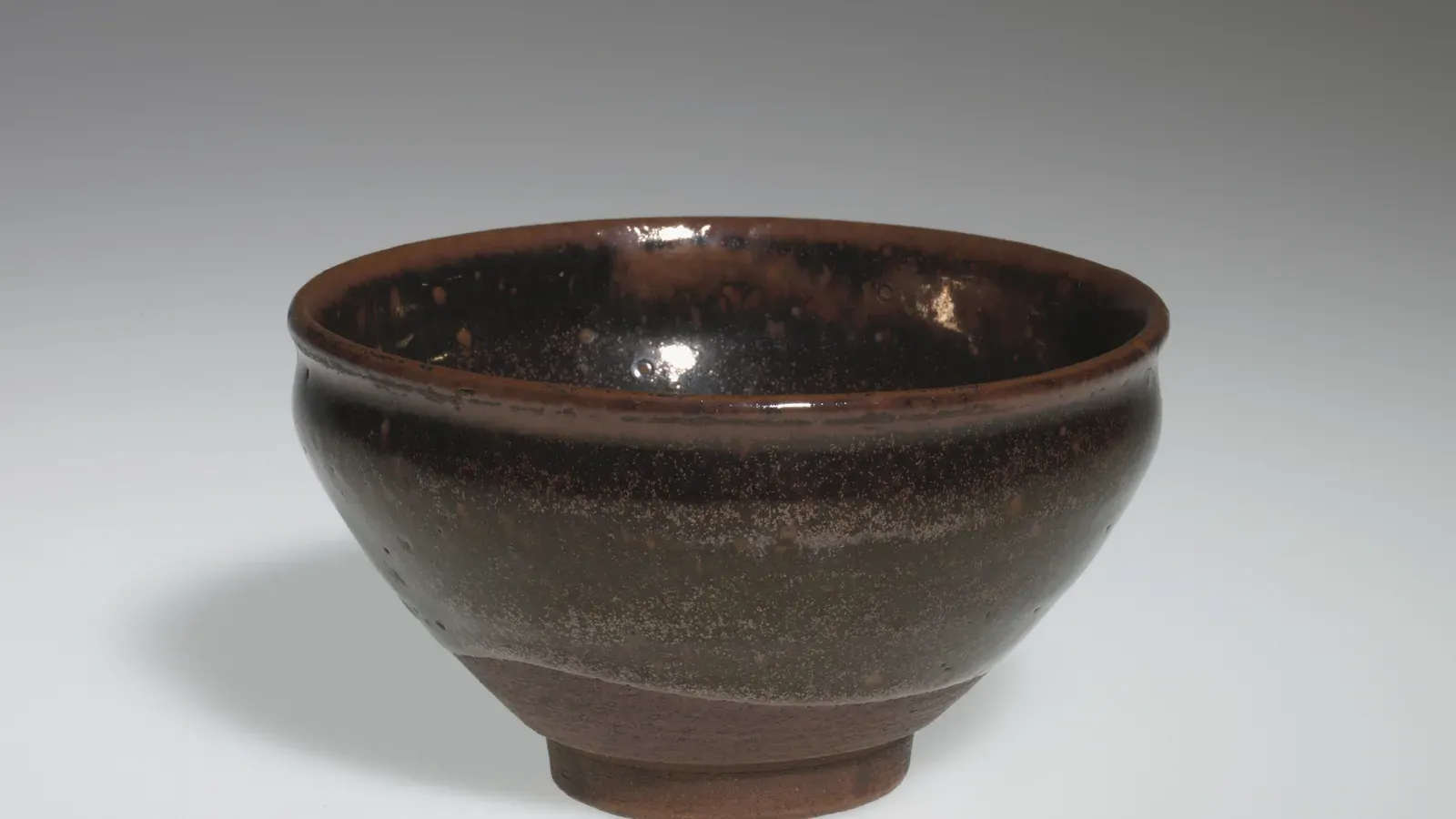
A chawan is read from the outside in: its shape tells you the season, its unglazed foot tells you how it was made, and its front is the spot you politely never drink from. Choose a first bowl by hand-feel and a wide whisking floor, not by price.
The chawan (茶碗, “tea bowl”) is the one object in chanoyu (茶の湯, the tea gathering) you drink from, and the one most people buy first and worst. A chasen (茶筅, the whisk) wears out. A scoop is a scoop. The bowl outlives both, and a badly chosen one fights you every morning: too narrow to whisk in, too heavy to lift in comfort, too steep to scrape clean. Learn to read one before you own one.
Everything you can see on a chawan answers to a decision the potter made and to a way the bowl will behave in your hands. Start with the silhouette.
The shape tells you the season
Matcha is whisked in an open bowl, exposed to the air, and how fast it cools depends on how much surface it presents and how much wall stands around it. Tea masters turned that plain physics into a calendar.
In high summer a host reaches for a hira-chawan (平茶碗), a shallow, wide-mouthed bowl with low walls and a nearly flat interior. The broad surface sheds heat fast, the tea settles to a comfortable temperature quickly, and the open form reads as cool to a guest in July. Winter reverses the logic. A tsutsu-chawan (筒茶碗, “cylinder bowl”) stands tall and narrow, deeper than it is wide, and its small mouth holds heat through a long sitting. The tsutsu comes out only in the coldest weeks, around mid-January, when a slow procedure would otherwise leave the tea cold by the last sip 2.
| Form | Season | Profile | Why |
|---|---|---|---|
| Hira-chawan 平茶碗 | High summer | Shallow, wide, low walls | Large surface cools the tea fast; feels open and cool |
| Standard wan-nari | Spring / autumn | Rounded, moderate depth | All-purpose; the everyday shape |
| Tsutsu-chawan 筒茶碗 | Deep winter | Tall, narrow, deep | Small mouth holds heat through a long sitting |
These are the poles, not a rulebook. Most of the year a host uses a rounded, moderate bowl, the shape you should buy first. Knowing the poles explains why a serious tea person owns more than one bowl: the vessel is dressed to the weather, the same way the brazier gives way to the sunken hearth when the cold arrives.
The tea inside also asks for a shape. Koicha (濃茶, “thick tea”), whisked to the body of warm cream and traditionally shared from a single bowl passed among the guests, wants a deep vessel that keeps its heat, often the finest bowl in the house, a raku or a treasured Hagi. Usucha (薄茶, “thin tea”) is the frothy everyday version, one bowl per guest, and takes a wider, more open form 4. At home you are almost always making usucha, so a rounded bowl with a broad floor covers you. On why one is shared and the other poured per guest, see usucha and koicha.
The foot, and what the bare clay admits
Turn the bowl over. The ring it stands on is the kōdai (高台), the foot, and it’s the most honest part of the object. Glaze hides clay. The foot is usually left bare, so the kōdai shows the raw body, the potter’s tool marks, and the way the foot was trimmed. Collectors turn a bowl over first for this reason. As Kogei Japonica puts it, the carving of the foot and the texture of the clay “clearly reflect the individual character of the maker” 3.
Read three things there.
How it was made. A foot ringed with fine concentric lines was trimmed on a wheel. A foot that is faceted, lopsided, or cut with a few decisive knife strokes was shaped by hand. That difference runs deep. The most revered tea bowls in Japan, the black raku (楽) wares, are molded by hand rather than thrown, then fired at a low temperature into a light, slightly porous earthenware. The Metropolitan Museum describes raku as ceramic “molded by hand rather than thrown on a potter’s wheel,” prized in the tea ceremony for its restraint 1. Raku begins around 1579 in Kyoto, when the tile-maker Chōjirō made bowls to the taste of Sen no Rikyū. The name arrived later: Toyotomi Hideyoshi gave Chōjirō’s successor a seal bearing the character raku (楽, “ease”), drawn from his Jurakudai palace, and it became the family’s name. In Chōjirō’s own lifetime the bowls were called ima-yaki, “the ware of now.” The foot of a raku bowl is the signature of a whole aesthetic.
What the clay is. The bare body at the foot names the ware. Sandy, pale, porous clay points to Hagi (萩). Dense dark stoneware points to Bizen. An old saying ranks the wares by their fitness for matcha, ichi-Raku, ni-Hagi, san-Karatsu (“first Raku, second Hagi, third Karatsu”) 2. Hagi earns its place through change. Its loose, low-fired body wears a crazed glaze, and over years of use tea seeps into the fine cracks and moves the colour from pale through amber to a smoky grey. Potters call it hagi-no-nanabake (萩の七化け), “the seven transformations of Hagi” 6, seven standing loosely for “many.” The first page of that story is already in the raw foot.
| Ware | Where | At the foot | For tea |
|---|---|---|---|
| Raku 楽 | Kyoto | Hand-molded, soft low-fired body | First for koicha; light, warm, quiet |
| Hagi 萩 | Yamaguchi | Pale sandy clay, crazed glaze | Colour changes with use (hagi-no-nanabake) |
| Karatsu 唐津 | Kyushu | Iron-rich stoneware, rough tooth | Robust and earthy; third in the old ranking |
Whether it will sit and pour cleanly. A foot trimmed flat and true sits still on the mat and rinses dry without trapping water. A roughly cut one may rock. Either can be right, so long as you know which you are holding. The full tour of these wares, raku, Hagi, Oribe, Seto, Bizen and the rest, is its own subject. See the ceramic traditions guide.
The front, and why you turn it away
Most chawan have a shōmen (正面), a front: the best passage of glaze, a chosen brushstroke, a flaw the potter decided to feature. The host sets the bowl down with the shōmen facing the guest, as a small offering. This is the best of the bowl, and it points at you.
The turn gets explained as deep symbolism. The plainer reading is the better one: you don’t set your lips on the finest face of someone’s bowl, the way you wouldn’t take the best seat without being offered it, and the courtesy sits inside the gesture rather than on top of it. For koicha, where one bowl travels the whole party, that care carries further. Each guest turns, drinks, wipes the rim, and turns the front back before passing the bowl along. The whisking that fills it is a separate short discipline of its own.
Glaze, clay and weight — what the hand learns
Beyond the foot, three qualities decide how a bowl serves, and one habit keeps you from fumbling it.
The interior floor. Matcha is whisked, not stirred, and the tines need room. A wide, gently curved floor lets the chasen move and pull air into the tea. A steep, V-shaped well crowds the whisk and leaves you a thin, lumpy bowl. Look down into a chawan before anything else. The broad landing at the bottom where the tea pools is the chadamari. The interior seen as a whole is the mikomi, and Kogei Japonica’s one firm rule is that the mikomi be wide enough for the whisk tips to move without striking the walls 3. Give that room priority over every other feature.
The rim and the glaze. Run a thumb around the lip. A rolled or slightly thickened rim is kinder to the mouth and chips less readily. Crazing, the fine web of cracks in the glaze, is expected in raku and Hagi, and collectors count it as character. Thinly glazed or bare clay will stain and darken over time, and in these wares that patina is welcome, part of what an old bowl is prized for.
Weight, balance, and how to hold it. This is the test no photograph passes and the one that matters most. A good bowl, in Kogei Japonica’s phrase, “sits well when held with both hands” and lifts in one without straining the wrist. Full of tea it carries more heft than it looks. To hold it, cradle the base on your left palm and steady the side with your right, keep your thumb clear of the rim and the tea, and lift and lower with both hands. In winter, rinse the bowl with hot water and pour it off before you whisk. It warms the walls so a tall tsutsu-chawan won’t chill the tea, and it settles the vessel in your hands before there’s anything to spill. A bowl that fights all of this is a bowl you will quietly stop using.
How to choose a first bowl, honestly
Ignore the words on the box. “Ceremonial,” “authentic,” and “handmade by a master” are unregulated, and price tracks the maker’s name and the gallery’s margin as much as how the bowl performs. Kogei Japonica states the priority flatly: choose for ease of whisking and holding over the fame of the region or the artist. Buy for use.
A sound first chawan:
- Is a rounded, all-season shape, not a flat summer hira-chawan or a tall winter cylinder. One bowl that works every month beats two that work for one.
- Has a wide, gently curved floor so the whisk can move. This is the single most useful thing to check and the most often ignored.
- Sits comfortably in both hands and lifts easily in one. Weight is felt, not read. Hold it before buying if you can.
- Costs little enough that you’ll handle it daily. Mino ware is a common, forgiving starting point, and it earns its keep because you won’t be afraid to use it. A bowl you protect from your own kitchen teaches you nothing.
- Has an honest foot. Turn it over. You want to see the clay, a cleanly trimmed kōdai, and no surprises.
So here is the call, stated flat out: a single honest hand-thrown bowl beats a matched “starter set” every time. A boxed set hands you five vessels chosen by nobody, for floors you may not be able to whisk in. A single well-made everyday chawan hands you the one thing that teaches your hands. You’ll want a second, more characterful bowl later, a raku, or a Hagi that shifts colour under your tea, and that is the right order. Learn the whisk and the turn on a bowl you don’t fear, then earn one that rewards attention.
A chawan is the only utensil in the tea room a guest is trusted to hold. The scoop, the whisk, the kettle all stay with the host. The bowl is handed across, warmed against your palms, turned, drunk from, and given back. Read it well and there’s a season in its shape, a maker in its foot, and a courtesy in its front, all of it waiting in a thing you can pick up. The rest of the tea room’s kit is arranged around this one object, and chadō, the Way itself, opens with the plain manners of turning the bowl before you drink. Buy the honest one first, and turn it clockwise.
Sources
6sourcesThe Metropolitan Museum of Art
SupportsBlack Raku Tea Bowl, Momoyama period; raku as lightweight glazed earthenware molded by hand rather than thrown, esteemed in chanoyu
Japanese Wiki Corpus
SupportsTsutsu-chawan (winter, holds heat) vs hira-chawan (summer, cools fast); the ranking 'ichi Raku, ni Hagi, san Karatsu'
Kogei Japonica
SupportsChoosing a first chawan: both-hand fit, wide whisking floor (mikomi), moderate weight; kōdai reveals the maker; prioritize whisking and holding over region or artist
Global Japanese Tea Association
SupportsKoicha is thick, shared from one bowl; usucha is thin, one bowl per guest
Ibasen (tea ceremony manners)
SupportsGuest turns the chawan clockwise to move the shōmen away before drinking, then turns it back
Kogei Japonica
SupportsHagi-no-nanabake, the 'seven transformations of Hagi'; crazed glaze takes in tea and shifts colour over years of use
Common questions
Which chawan should a beginner buy?
A rounded, all-season bowl with a wide, gently curved floor that fits both hands and lifts easily in one. Choose ease of whisking and holding over the maker's name or region, and pick one modest enough that you'll handle it daily. Mino ware is a common, forgiving starting point.
Can I use any bowl for matcha?
You can whisk matcha in most wide, shallow bowls, but a steep or narrow one crowds the whisk and leaves you a thin, lumpy tea. A dedicated chawan has a broad interior floor sized for a chasen to move, which is why it whisks better than a random cereal bowl.
Why do you turn the tea bowl before drinking?
The host presents the bowl with its front, the shōmen, facing you as a courtesy. Turning it clockwise a couple of times moves that honored face away from your lips before you drink. After drinking you wipe the rim and turn the front back toward the host.