The Way
The Three Schools: Omotesenke, Urasenke & Mushakōjisenke
The san-Senke — Omotesenke, Urasenke, Mushakōjisenke — descend from Rikyū's grandson Sōtan's sons, not Rikyū directly. What sets the three houses apart.
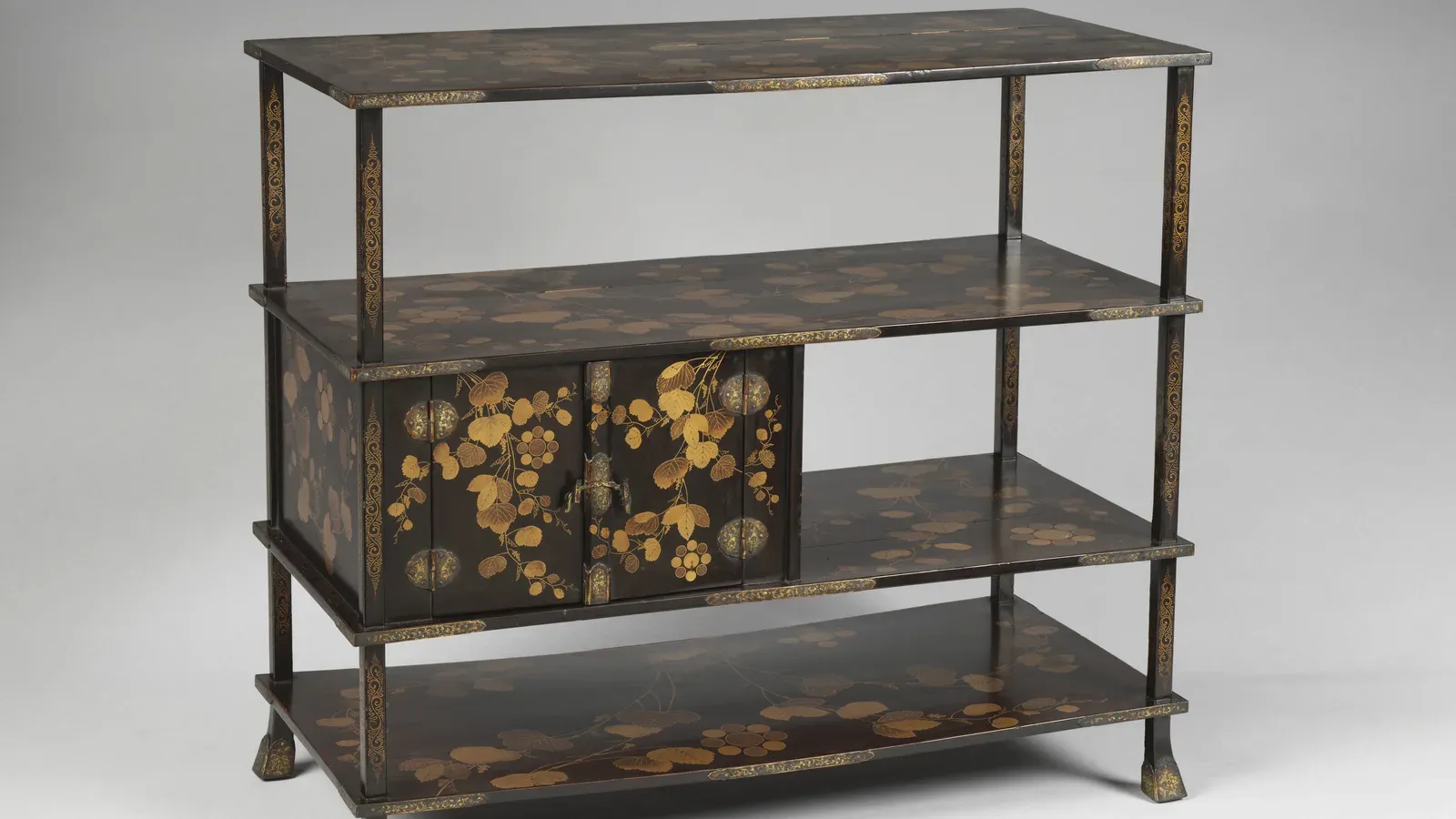
Omotesenke, Urasenke, and Mushakōjisenke — the san-Senke, or three Sen houses — descend from Sen no Rikyū, but were founded a generation later by three of the four sons of his grandson, Sen Sōtan. Each keeps its own hermitage, a hereditary headmaster (iemoto), and a distinct form. The differences a beginner can see are small and physical: Urasenke whisks thin tea to a full foam, Omotesenke leaves a crescent of clear tea, the schools favour different bamboo for the whisk. Urasenke is the largest and most international, so it is the house most learners meet first.
Take a tea lesson in Kyoto, San Francisco, or Sydney and you are studying one school’s version of chadō (茶道, “the way of tea”), most often Urasenke, even if nobody names it on the first day. The bow, the fold of the silk cloth, the number of passes the whisk makes across the bowl: each belongs to a particular lineage. Three principal Sen houses carry those lineages, and the shorthand that they all “come from Rikyū” is true and skips the step that decides everything.
The family that almost ended
Sen no Rikyū (千利休, 1522–1591) is the shared root. He codified the austere wabi style of chanoyu (茶の湯, “hot water for tea”) and was forced by Toyotomi Hideyoshi to commit seppuku in 1591. His death nearly took the family’s tea with it. Under the shadow of that disgrace the Sen name went into eclipse, and only later was the household allowed to re-form.2 The revival is what made the three schools possible, and it runs through two men most accounts skip.
The first is Rikyū’s stepson and adopted heir, Sen Shōan (千少庵, 1546–1614). Shōan led the family briefly after the pardon, then handed the headship to his own son in the conviction that Rikyū’s blood descendant should head the house.1 That son is the hinge of the whole story. Sen Sōtan (千宗旦, 1578–1658), Rikyū’s grandson, took the headship young — Urasenke puts him at eighteen — and spent his life holding his grandfather’s wabi austerity intact through a period when grander, showier tea was in fashion at the warrior courts.1 He is the reason Rikyū’s tea reached the modern schools rather than dying with its maker. The line that matters, then, is Rikyū to Shōan to Sōtan, and only after Sōtan does it branch. His life is told in full in Sen no Rikyū.
Sōtan’s four sons, and how the estate was divided
Sōtan married twice and fathered four sons: Kanō Sōsetsu and Ichiō Sōshu by his first wife, Kōshin Sōsa and Sensō Sōshitsu by his second.1 The eldest, Sōsetsu, fell out with his father and left home early, and never headed a Sen house.2 The other three founded the san-Senke (三千家), the “three Sen houses,” and their story is the story of one Kyoto property and how a retiring father split it.
The second son took the strangest road to tea. Ichiō Sōshu (一翁宗守, 1605–1676) was placed outside the family as a boy and made his living as a lacquer craftsman under the name Yoshioka Jin’uemon. Only in later life did he take back the Sen name and return to tea, at his brothers’ urging.3 A working lacquerer becoming the founder of a tea house is the kind of biographical fact the tidy “three sons of Sōtan” summary erases, and it is exactly right.
When Sōtan retired around 1646, he parcelled out the estate.2 The third son, Kōshin Sōsa (江岑宗左, 1613–1672), kept the main residence and its tea room, Fushin-an (不審庵), and headed what became Omotesenke. Sōtan had built himself a retirement hut behind that residence, Konnichi-an (今日庵), and it went to the youngest son, Sensō Sōshitsu (仙叟宗室, 1622–1697), who founded Urasenke. Ichiō built his own hut, Kankyū-an (官休庵), on Mushakōji street nearby, and his house took the street’s name: Mushakōjisenke.
The names of the two senior houses are literal compass directions. Omotesenke (表千家) is the “front Sen house,” Urasenke (裏千家) the “rear,” because Sōsa’s main residence stands in front (omote) and Sensō’s retirement quarters sit behind it (ura) on the same block.5 Mushakōjisenke (武者小路千家) is the house on Mushakōji street. The three hermitages sit a few minutes’ walk apart in Kyoto’s Kamigyō ward, and have for close to four centuries. Fushin-an, Konnichi-an, and Kankyū-an are still the working headquarters of their schools, on the same ground the sons divided. Konnichi-an, the “Hut of This Day,” carries its own small story: Sōtan named it after a message from his Zen master, a reproach about living in the present instead of putting things off until tomorrow.1
Because the split fell in the fourth generation, all three schools reckon their founders as the fourth head of the house, counting Rikyū, Shōan, and Sōtan ahead of them. The houses have run roughly fifteen generations since: Urasenke is now on its sixteenth head, Omotesenke its fifteenth, Mushakōjisenke its fourteenth.1 No house outranks another today. Seniority of the main residence gives Omotesenke a nominal precedence, but the three are treated as equal keepers of the same inheritance.
Omotesenke (Fushin-an)
Omotesenke holds the original family residence, which is why it is often called the senior house — though its founder, Sōsa, was Sōtan’s third son, younger than Mushakōjisenke’s Ichiō. Its headmasters carry the hereditary name Sōsa (宗左), and the line reached its fifteenth head, Yūyūsai, in the current generation. The tea room Fushin-an gives the school its second name. It traces back to a small room of Sōtan’s own, kept on by Sōsa when the estate was divided.2 Omotesenke’s teaching is generally described as the most conservative of the three, holding closely to Sōtan’s restrained reading of Rikyū, and its practice reads that way in the bowl: less whisking, less foam, more of the tea left plainly visible.
Urasenke (Konnichi-an)
Urasenke descends from Sensō Sōshitsu, who took over the Konnichi-an retreat and built it into a household of its own.1 Its headmasters carry the name Sōshitsu (宗室). It is by a wide margin the largest of the three today and the most international, and that reach is recent and deliberate. The fifteenth-generation grand master, Hōunsai (Sen Genshitsu, 1923–2025), spent a long tenure carrying chadō abroad, by Urasenke’s own count more than three hundred trips to over sixty countries, before handing the name Sōshitsu and the Konnichi-an estate to his son, Zabōsai, the sixteenth head, on 22 December 2002.1 If you meet Japanese tea instruction outside Japan, the odds are heavily that it is Urasenke, and the odds that the books and videos you find in English teach the Urasenke form are heavier still.
Mushakōjisenke (Kankyū-an)
Mushakōjisenke, founded by Ichiō Sōshu on Mushakōji street, is the smallest of the three houses. Its headmasters carry the name Sōshu (宗守), a name conferred on Ichiō by his Zen teacher, and the line stands at its fourteenth head, Futetsusai.3 The school is known for an economical, unhurried style that prizes movement free of waste. As with every distinction between the houses, that is a difference of degree. All three teach the same wabi tea, and a host from any one of them would recognise the others’ gatherings on sight.
Beyond the three houses
Not every tea lineage runs through Sōtan, and a student may meet one of the smaller schools, so it helps to know where they sit. Some grew out of the san-Senke themselves — Edosenke and the Fuhaku line branched off the Sen houses and teach close variants of their form.5 Others are separate lineages that reach Rikyū through different disciples. The Yabunouchi-ryū (藪内流), founded by Yabunouchi Kenchū Jōchi (1536–1627), learned chanoyu from the same master as Rikyū, Takeno Jōō, and has kept its own Kyoto house since before the Sen split.5 A whole family of warrior schools sits alongside them: Enshū-ryū from the daimyō Kobori Enshū (1579–1647), Sekishū-ryū from Katagiri Sekishū (1605–1673), each carrying Rikyū’s tea into the service of the shōguns in the more polished, lordly register set out in warrior tea.5 The san-Senke are the mainstream a beginner is likeliest to enter, and the largest limb of a much wider tree.
The iemoto system: how a lineage stays itself
Each house is held together by the iemoto (家元) system, a structure of hereditary headship common to many traditional Japanese arts, from tea to flower arranging to nō theatre. The iemoto is the living head of the school. He — the headship has been male by custom — holds the founding tea room, embodies the authoritative form of the school’s practice, and stands as the source from which teaching licences flow down through a graded hierarchy of certified instructors.
In practice that comes to three things. The headmaster’s name is hereditary and continuous: each Urasenke head becomes “Sōshitsu,” each Omotesenke head “Sōsa,” each Mushakōjisenke head “Sōshu,” numbered in sequence from the founder, and a retiring head often takes the name Sōtan in turn. The correct form of every procedure — how the cloth is folded, the order in which the utensils are cleaned, the path the whisk takes across the bowl — is fixed by the iemoto and passed down by direct imitation, not by any published rulebook. A student climbs the form in stages, earning graded permissions to learn each successive temae, the most advanced granted in the headmaster’s name. And the right to teach is a licence held within that hierarchy, not a title anyone confers on themselves.
The design is conservative on purpose. It is why a temae (点前, the choreographed procedure for preparing tea) learned in Urasenke today is recognisably the Urasenke version and not one teacher’s improvisation, and why three houses that share a common ancestor have held their distinct forms for fourteen to sixteen generations without merging or blurring into a single practice. The full choreography, and where the schools’ small divergences fall inside it, is laid out in the temae and kaiseki, step by step.
How the three differ in the bowl
The houses share far more than they part on. All three teach Rikyū’s wabi tea, the same core utensils, the same wa-kei-sei-jaku — harmony, respect, purity, tranquility — and the same split between thin tea and thick, usucha and koicha.4 The differences live in execution, and most are invisible to an untrained guest.
The one a beginner can see is the foam on a bowl of usucha (薄茶, thin tea). Urasenke whisks it briskly, holding the chasen (茶筅, the bamboo whisk) parallel and snapping the wrist so the tea works up into a thick, fine foam that covers the whole surface.6 Omotesenke whisks more gently and stops sooner, leaving a deliberate crescent of clear green tea at one edge, a shape tea people liken to a sliver of moon over water. Mushakōjisenke leans the same lighter way. Accounts variously group it with Omotesenke’s crescent or place it between the two, so treat its foam as “lighter than Urasenke’s” and leave the finer claim there. The choice carries into the taste. Less foam leaves more of the tea’s surface open, and tasters describe the lower-foam styles as letting the bitterness and the umami read more directly on the palate.7 Thick tea, koicha (濃茶), is handled more alike across the houses, kneaded to a smooth paste instead of whisked to a foam, so the beginner’s visible split belongs to usucha.
The whisk itself is cut from different bamboo by house. Urasenke favours a pale white-bamboo (白竹, shiratake) chasen. Omotesenke uses a darker, smoked bamboo (煤竹, susudake), more austere to the eye.6 Mushakōjisenke is reported to use a darker bamboo again, though that third point rests on thinner sourcing than the first two, so I would not stake much on it. Beyond the whisk, the visible markers are small and consistent within each school:
| Omotesenke | Urasenke | Mushakōjisenke | |
|---|---|---|---|
| Founding tea room | Fushin-an (不審庵) | Konnichi-an (今日庵) | Kankyū-an (官休庵) |
| Founder (4th head) | Kōshin Sōsa (3rd son) | Sensō Sōshitsu (4th son) | Ichiō Sōshu (2nd son) |
| Hereditary name | Sōsa (宗左) | Sōshitsu (宗室) | Sōshu (宗守) |
| Usucha foam | Crescent of clear tea | Dense, full-surface foam | Lighter than Urasenke |
| Whisk (chasen) | Smoked bamboo (susudake) | White bamboo (shiratake) | Darker bamboo (reported) |
| Reach today | Conservative, restrained | Largest; broadest reach abroad | Smallest; economical style |
Tempo differs too. Urasenke’s procedures are often described as comparatively crisp, Omotesenke’s as more deliberate, and the colour and fold of the fukusa (袱紗, the silk cloth used to purify the utensils) vary by school and by the practitioner’s rank and gender. None of these makes a better or worse bowl. They are dialects of one language, each internally complete, and a guest who knows them can read which house trained a host from across the room. There is a practical corollary for anyone whisking at home: if you learned to work a bowl up to a full, even foam from an English-language guide, you learned the Urasenke way without being told, since that is the form those guides overwhelmingly teach. The crescent styles ask for a lighter touch and an earlier stop, and a foam-covered bowl is less a mark of doing it “right” than a mark of which house you unknowingly followed. How to whisk matcha sets out the mechanics.
Which house a beginner meets
For most people the school is chosen by geography, not conviction: you study with the teacher you can reach. Outside Japan that teacher most often follows Urasenke, for the plain reason that Urasenke built the widest network of branches and instructors over the twentieth century and is the most heavily represented in English-language books and videos. The dominance compounds itself — more Urasenke teachers make more Urasenke materials, which make more Urasenke students.
The advice is the same whichever house you find. Learn from one school rather than mixing them, because the value of the training is the coherence of a single lineage’s form. The parts are cut to fit each other, and a fold borrowed from one house into another’s procedure fits nothing. Ask a prospective teacher which school they teach, and expect one of these three, or, less often, one of the smaller schools that branched off over the centuries. Then commit. The differences between the houses will come to matter to you in time. On the first day, what matters is that someone is showing you a complete, living tradition rather than an improvisation — the difference a first gathering at home makes plain, and one you can feel the moment you first whisk a bowl properly.
So the shorthand can stand corrected. There are three Sen schools, not one Rikyū school. They are the work of a grandson who kept a dead man’s tea alive and three great-grandsons who divided a Kyoto garden between them. And the proof of it is in your hands before anyone speaks: a bowl handed to you under a full, even foam was made by Urasenke, and a bowl with a crescent of clear green tea at its rim was not.
Sources
7sourcesUrasenke Konnichian (official English site), 'About Urasenke Chado'
SupportsLineage Rikyū (1522–91) → adopted son Shōan Sōjun (1546–1614) → grandson Sen Sōtan (1578–1658), who became head at eighteen and is credited with transmitting Rikyū's ideals; Sōtan had four sons by two wives (Sōsetsu and Sōshu by the first, Sōsa and Sensō by the second); Omotesenke founded by third son Sōsa, Urasenke by fourth son Sensō (1622–97) who inherited the Konnichi-an teahouse, Mushakōjisenke by second son Sōshu; 'omote'/'ura' from the households' front/rear positions; Konnichi-an ('Hut of This Day') named after a message from Sōtan's Zen master; Hōunsai (1923–2025), 15th iemoto, made 300+ trips to 60+ countries and transferred the headship to his son Zabōsai (16th, b. 1956) on 22 December 2002
Chanoyu / Omotesenke Fushin'an (official English), 'The separation of the three Sen families'
SupportsAfter Sōtan's retirement (c. 1646) the three houses formed: Kōshin Sōsa, third son, succeeded at Fushin-an (Omotesenke); Sensō Sōshitsu, fourth son, built on land behind the main residence (Urasenke); Ichiō Sōshu, second-oldest son, founded Mushakōjisenke, having trained first as a lacquer craftsman before resuming the Sen name; the eldest brother, Kanō Sōsetsu, left home early
Mushakōji Senke Kankyū-an (official English), 'History'
SupportsFounder Ichiō Sōshu (1605–1676), second son of Sōtan; worked as a lacquer artisan under the name Yoshioka Jin'uemon before returning to tea at his brothers' encouragement; Kankyū-an tea room named by Sōtan; the hereditary name Sōshu conferred by his Zen teacher Gyokushū Sōban; 14th head Futetsusai Sōshu (b. 1945)
Encyclopædia Britannica, 'tea ceremony'
SupportsTea-ceremony overview; Rikyū (1522–91) and the rustic wabi style; most modern schools, Omotesenke and Urasenke among them, descend from his teachings; usucha (thin) and koicha (thick) tea
Wikipedia, 'Schools of Japanese tea ceremony'
SupportsThe san-Senke descend from three of the four sons of Genpaku Sōtan (Rikyū's grandson); the names come from the estates' locations — the family in front (omote), the family in the rear (ura), and the family on Mushakōji street
RIKYU Matcha Guide, 'The Schools of Matcha: Omotesenke, Urasenke'
SupportsUrasenke whisks usucha vigorously to a thick, fine, even foam covering the whole surface, with a white-bamboo (shiratake) chasen; Omotesenke whisks gently, leaving a deliberate crescent of clear tea, with a smoked-bamboo (susudake) chasen; both Omotesenke and Mushakōjisenke leave a 'crescent moon' of clear tea on the surface
Tezumi, 'Is Foam Important? Comparing Styles of Usucha'
SupportsUrasenke's dense full foam versus Omotesenke's crescent of clear tea; Urasenke holds the chasen parallel and snaps the wrist rapidly; less foam leaves more of the tea's surface exposed, so tasters describe the lower-foam styles as letting bitterness and umami read more directly