The Leaf
Is Matcha Good for You? What the EGCG Evidence Shows
Matcha is rich in the antioxidant EGCG — but you absorb very little of it. An honest look at the catechin evidence and the real caveats.
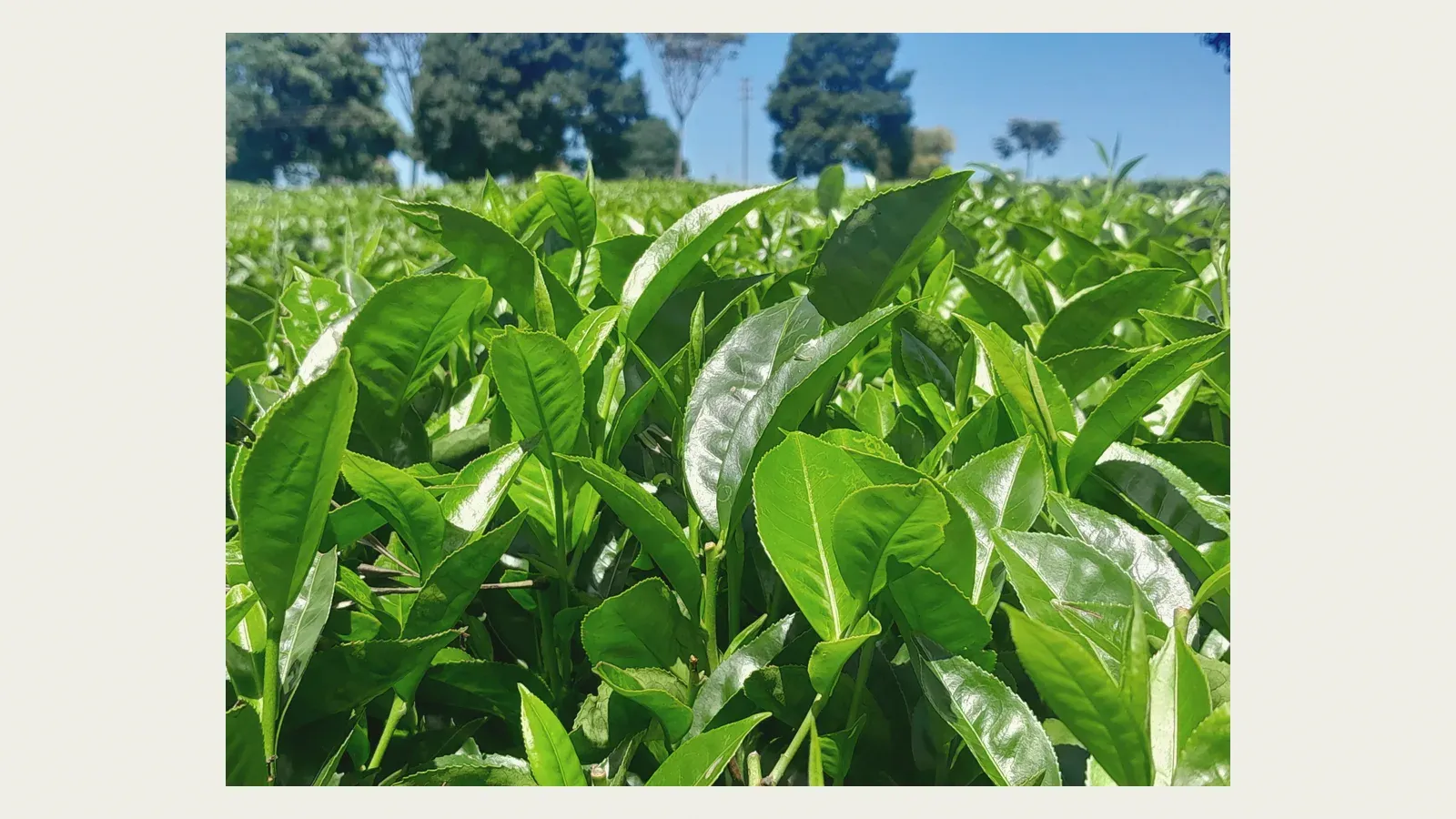
Matcha is high in catechins, especially EGCG, and because you drink the whole powdered leaf it delivers more of them than a cup of steeped green tea. But the body absorbs only a tiny fraction of the EGCG you swallow, the strongest health findings are still from animals, and the one clear safety signal is for concentrated extract supplements, not the whisked bowl. Drink matcha as good tea, and be skeptical of the supplement-aisle claims.
Matcha (抹茶) arrived in the West wearing a health halo. The antioxidant superfood. Wellness in a bowl, a shot of green concentrate that does your body good. Part of that reputation is earned, because matcha is dense in the compounds the headlines name, denser than the tea in most cups. What the marketing skips is what becomes of those compounds after you swallow them, and that is where the honest account turns out to be more interesting than the label.
What’s in the powder
The compounds in question are catechins, a family of plant polyphenols, and the most studied is EGCG (epigallocatechin gallate). Matcha carries a lot of both. Polyphenols make up as much as 30% of matcha’s dry weight, and catechins account for around 90% of those polyphenols, with EGCG the most abundant and the most active.1 On a lab bench these are potent antioxidants, rated almost as effective at scavenging free radicals as vitamin C.1
What separates matcha from a cup of steeped green tea is the delivery. Brew loose-leaf sencha (煎茶) and you steep the leaf, then discard it, so you drink only the fraction that dissolves into the water. Matcha is the leaf itself, stone-ground to powder and whisked into suspension, so the whole thing goes down. The same review found dissolved matcha yields about three times the catechins of an equivalent brew of loose-leaf green tea.1 Shading the plants for a few weeks before harvest, the step that makes matcha matcha, also drives up the amino acids behind its savory taste and its calm-energy reputation. That side of the chemistry — caffeine, L-theanine, the attention research — is a separate story, told in matcha, caffeine and L-theanine.
So the first claim survives scrutiny. Per serving, matcha delivers more catechins than steeped tea. The next question is whether your body can reach them.
The catch nobody advertises: you barely absorb it
Here is the fact that should reframe every “antioxidant powerhouse” headline. Catechins are poorly absorbed, and EGCG worst of all. They are chemically unstable in the conditions of the gut, breaking down or transforming before they can cross into the blood. A 2018 review of the pharmacokinetic evidence put it in numbers: under 5% of an oral dose of tea catechins reached the bloodstream in rats, and in humans only about 1.68% of ingested catechins turned up across plasma, urine and feces over six hours. For EGCG on its own, under 1% appeared in the blood.2
Where does the rest go? Most of it never crosses the gut wall. Studies of people with ileostomies recovered about 70% of ingested catechins still intact in the small-intestine output, and much of what remains travels on to the colon, where resident bacteria dismantle it into smaller phenolic fragments.2 Some of the little that is absorbed cycles back through the liver and bile into the gut again, a recirculation that keeps blood levels low.2 Even catechins injected straight into a vein degrade before reaching tissue.2 The molecule the marketing sells you is fragile, and your digestion is hard on it.
That low number doesn’t leave matcha worthless, and two things keep the picture from being bleak. The bacterial breakdown products may carry effects of their own, and the antioxidant activity inside the gut, where catechin concentrations run highest, is real while it lasts. What collapses is the tidy syllogism the labels imply: EGCG is a strong antioxidant, matcha is full of EGCG, so matcha floods your body with strong antioxidants. The middle step quietly fails, because almost none of the EGCG gets in. So the “antioxidant powerhouse” pitch, the one thing everyone knows about matcha, is the claim that holds up least well once you follow the molecule past your throat.
Antioxidant in a dish, antioxidant in a person
The antioxidant figures you see quoted — scavenging assays, ORAC values — come from a dish, where the compound meets its target directly and at high concentration. A living body imposes the obstacle the dish removes: it has to be absorbed, survive digestion intact, and arrive in tissue at a dose that matters. EGCG does that part badly. The concentration gap is measurable. After a strong dose of green tea, human plasma EGCG peaks below one micromolar, around 0.57 μM in one trial of three grams of decaffeinated tea, far under the levels many cell studies use to produce their striking results.2 A substance can be a champion antioxidant on the bench and a bit player in the bloodstream, and this is the gap “superfood” language papers over. The chemistry is real. The physiology is the harder claim, and it’s the one the headlines borrow the chemistry to make.
What the studies do and don’t show
Strip the hype and the human evidence is uneven, strong in a couple of places and thin across most. Precision about which is which matters here.
- Metabolic and cardiovascular. The animal file is the strongest part. In rodents fed high-fat diets, matcha halted weight gain and produced statistically significant drops in blood glucose, total cholesterol, triglycerides and LDL, in a dose-dependent way.1 A real signal, and a signal in mice. The review’s own authors write that the findings need to be confirmed in human randomized controlled trials.1
- Cancer. This is where the largest body of human data sits, and it doesn’t deliver the headline. A 2020 Cochrane review pooled 142 studies covering more than 1.1 million people and found the association between green tea and lower cancer risk inconsistent: some studies suggested benefit, some none, a few a slightly raised risk. Its verdict was that a protective effect “remains unproven so far,” and it raised the same flag about high-dose extract supplements.4 Most of that evidence is observational, which can show a link but can’t prove a cause.
- Cognitive and stress. Some human studies point to modest gains in attention and lower stress, likely driven by L-theanine more than by catechins. The results conflict, and the matcha review calls the studies heterogeneous and small, with no firm conclusion available.1
- Antioxidant status. Matcha reliably raises antioxidant markers in the lab. Turning that into a hard clinical outcome, fewer heart attacks or a longer life, is the leap the data hasn’t made.
The shape of the file is the thing to notice. The most dramatic results sit in animals dosed at levels and durations that don’t map neatly onto a daily bowl, while the large human datasets are observational and land on “inconsistent.” The randomized human trials that would bridge the two are the ones that keep getting called for and not yet run. That gap, animal-strong and human-thin, is the honest state of the science, and it’s the part the superfood copy leaves out.
Here is the plain summary. Matcha is a plausibly healthful drink with encouraging early evidence, most of it preclinical or observational, and no proven disease-prevention claim to its name. “Studies suggest” is the accurate verb. “Boosts,” “detoxifies” and “proven to” are marketing.
Where matcha can go wrong: the supplement dose
There is one place the safety question turns serious, and it’s the capsule, not the cup. Concentrated green tea extract supplements — pills standardized to high EGCG — are a different kind of exposure from a whisked bowl. In 2018 the European Food Safety Authority reviewed the evidence and tied EGCG at or above 800 mg per day, taken as a supplement for four months or longer, to raised liver transaminases (ALT and AST, markers of liver stress) in a minority of users, usually under 10%. The panel could name no extract dose it was willing to call reliably safe, and the EU went on to cap how much EGCG a food product may contain.3
Now the scale that makes the distinction concrete. EFSA put the EGCG you’d get from traditionally brewed green tea infusions at roughly 90 to 300 mg a day and judged catechins from those traditional infusions generally safe. Supplement users, by contrast, were reaching around 860 mg a day.3 A bowl or two of matcha sits at the low end of that range, well under the 800 mg threshold, and the liver signal traced to the capsules. Drink matcha and you’re almost certainly nowhere near the cautionary dose. Drink matcha and swallow green tea extract capsules for fat loss, and you could clear it — that stacking is the thing to watch, rather than the morning bowl. If you’re pregnant, on medication, or managing a liver condition, ask a clinician before adding green tea extract capsules. The whisked bowl is another matter.
How the catechin story differs from the caffeine one
The sibling piece covers what a bowl does to your alertness, and that story rests on firmer ground. Caffeine and L-theanine are absorbed well and act within the hour, so the calm-focus effect people report has a clear mechanism under it. The catechin story is the inverse on absorption: the compounds are abundant going in and scarce getting through. Same bowl, two very different grades of evidence. Come for the calm focus and the science is broadly with you, over at matcha, caffeine and L-theanine. Come for the antioxidants and the honest advice is to temper the expectation.
How to think about it
Drink matcha because it’s good tea that carries a real dose of catechins, and treat the antioxidant math as a bonus you mostly can’t cash. The most defensible reason to make a bowl is the plainest one, the reason the wellness framing forgets: a pleasant daily habit with a plausible upside and no meaningful downside at the amounts anyone drinks. The disease-prevention evidence may firm up in time. It hasn’t yet, and a site that tells you so straight is the one to trust on everything else.
For the everyday version of the habit, the matcha starter kit covers what you need, and the grade difference sorts which matcha to drink plain and which to bury in a latte. Matcha is one of the seven Japanese green teas, and the care with which it’s whisked and served belongs to chadō (茶道), the Way of Tea. That care is a better reason to make a bowl than the number on the tin — a number that, by the time it reaches your bloodstream, has mostly stopped being true.
Sources
4sourcesSokary et al., Current Research in Food Science (2022) — PMC9792400
SupportsMatcha review: polyphenols up to 30% of dry weight, catechins ~90% of those with EGCG most abundant/active; dissolved matcha ~3x the catechins of loose-leaf brewed green tea; high-fat-diet rodent studies show dose-dependent drops in weight gain, glucose, cholesterol/triglycerides/LDL but authors say human RCTs needed; cognitive/stress evidence heterogeneous, small, contradictory
Cai et al., Molecules 23(9):2346 (2018) — PMC6225109
SupportsBioavailability review: <5% of orally administered catechins reach systemic circulation in rat, ~1.68% in humans (plasma/urine/feces over 6h); EGCG specifically <1% appears in blood; catechins unstable/degrade, ~70% recovered intact in ileostomy output, remainder metabolized by colonic microbiota
EFSA Panel, EFSA Journal (2018), doi:10.2903/j.efsa.2018.5239
SupportsGreen tea catechin safety opinion: EGCG >=800 mg/day from supplements for 4+ months associated with raised ALT/AST in usually <10% of people; no safe extract dose identifiable; EGCG from traditional infusions ~90-300 mg/day judged generally safe vs ~860 mg/day for supplement users; EU capped EGCG in foods
Filippini et al., Cochrane Database of Systematic Reviews (2020) — CD005004.pub3
SupportsGreen tea for cancer prevention: 142 studies, >1.1 million participants; association with lower cancer risk inconsistent (benefit, none, or slightly raised risk across studies); protective effect 'remains unproven so far'; most evidence observational; cautions on high-dose green tea extract supplements (raised liver enzymes among adverse effects)
Common questions
Does matcha have more antioxidants than green tea?
Per cup, yes. Because matcha is the whole leaf ground to powder and suspended in the water, a serving delivers more catechins than an infusion of the same tea, where much of the leaf is discarded. One review reports dissolved matcha yielding about three times the catechins of brewed loose-leaf green tea. How much your body absorbs is a separate question, and the answer is: not much.
Is it safe to drink matcha every day?
For most people, yes — brewed and whisked tea at normal amounts has no established liver-safety concern. The caution applies to concentrated green tea extract supplements: European regulators link doses at or above 800 mg of EGCG a day, taken for months, to a raised risk of liver enzyme changes. A bowl of matcha is far below that. If you take green tea extract capsules on top of drinking tea, that's where to be careful.
Does matcha detox your body?
There's no scientific basis for the detox claim. Your liver and kidneys do that work, and no food shortcuts it. The catechins matcha is sold on are barely absorbed to begin with — under 1% of the EGCG you swallow reaches your blood. Matcha is a good drink on its honest merits, which don't include flushing toxins.