The Leaf
Hōjicha: Japan's Roasted Green Tea, Explained
Hōjicha is green tea roasted until it turns brown — toasty, low in caffeine, and brewed near boiling. What it is, how the roast changes it, and how to make it.
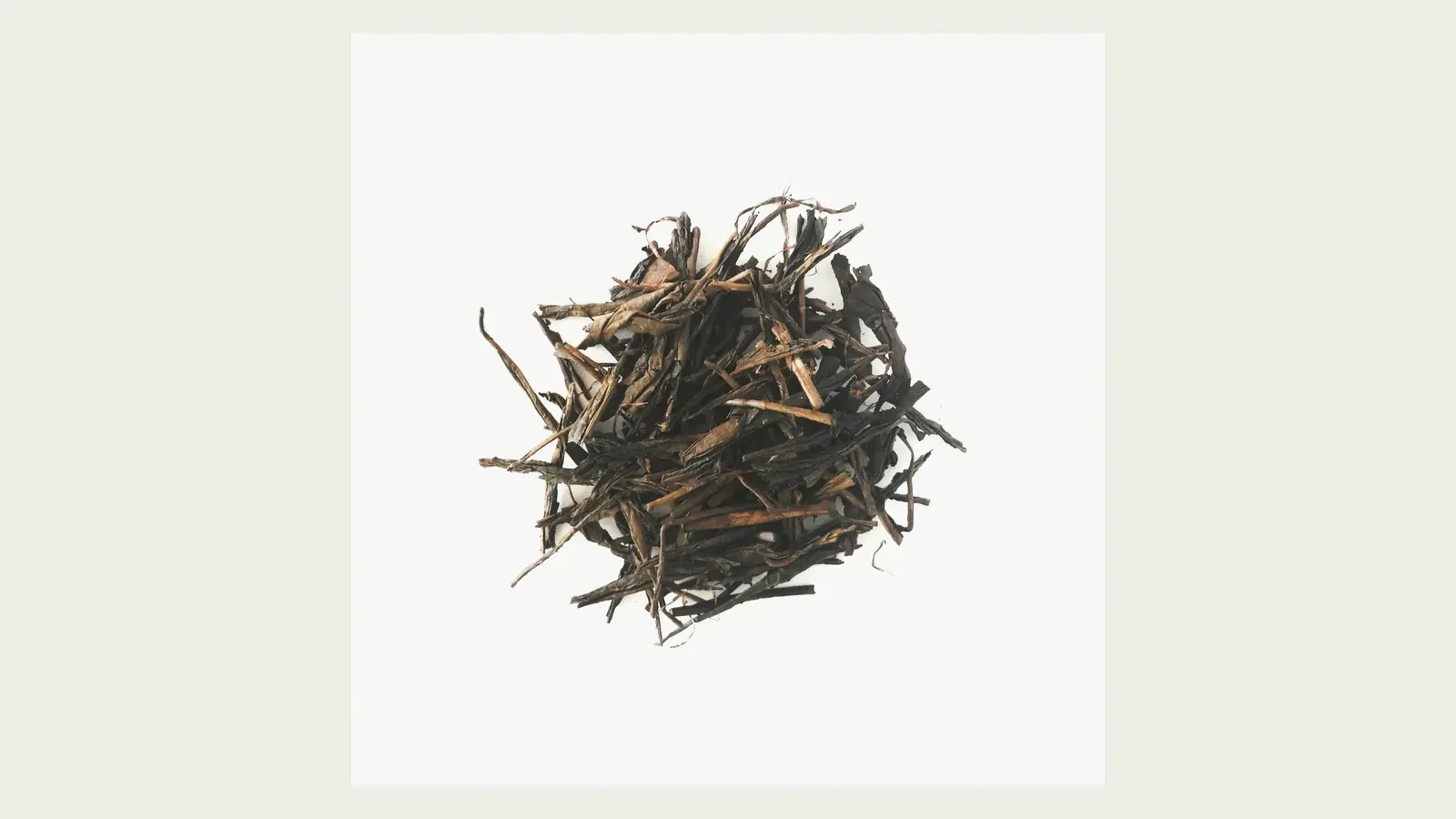
Hōjicha is Japanese green tea — usually bancha or kukicha — roasted at high heat until the leaf turns reddish-brown. The roast burns off most of the caffeine and astringency and leaves a toasty, caramel-sweet cup you brew near boiling, not cool. It is the everyday after-meal tea of Kyoto, and a useful low-caffeine alternative to matcha.
Pour hōjicha (焙じ茶, “roasted tea”) next to a cup of sencha and the first surprise is the colour. Hōjicha runs a clear amber-brown, nothing like the jade of an ordinary Japanese green, and it smells of toast and toffee where sencha smells of cut grass. It is the same plant, Camellia sinensis, grown in the same gardens, put through the same steaming and drying as any other Japanese leaf. Then it goes through one more step the others skip. Someone roasts it.
That roast explains the tea. The colour, the low caffeine, the round sweetness, the reason you brew it with water that would ruin a gyokuro (玉露) all trace back to it. Start there and the rest of hōjicha follows.
What hōjicha is
Hōjicha begins as ordinary green tea and becomes itself in the roaster. The base is usually bancha (番茶), the coarser leaf from later harvests, or kukicha (茎茶), the stems and twigs sorted out when finer teas are made. Some producers roast sencha (煎茶) for a fuller, higher grade with more body 1. What goes in sets the ceiling. Kukicha-based hōjicha brews light and sweet, leaf-based hōjicha carries more weight, and sencha-based hōjicha holds onto a little more caffeine.
The roast is the defining act. Steamed, dried green leaf is heated in a rotating drum, or traditionally in a shallow earthenware pan called a hōroku (焙烙) set over charcoal, until it darkens from green to a glossy reddish-brown 5. Where the roaster stops decides the flavour. Producers run the heat anywhere from a light golden touch to a deep, near-coffee char, and a lighter roast keeps some green freshness under the toast while a darker one pushes into smoke and bittersweet caramel 1.
As Japanese teas go, this one is young. It dates to Kyoto in the 1920s, the early Shōwa years, when a tea merchant sitting on stems and coarse leaf that would not sell as sencha roasted the lot over charcoal and found he had something people wanted to drink. One account has him carrying the leftovers to Kyoto University for advice and being told to re-dry and roast them 6. The exact story is half-legend, and the precise year varies by teller, but the shape holds across sources: leftover leaf, a hot pan, an accident that stuck 5. It was thrift before it was fashion. The impulse has a name in Japanese, mottainai (もったいない), the sense that something useful should not go to waste, and hōjicha is that impulse turned into a cup.
That origin still shows at the table. Hōjicha is the tea poured after a meal, given to children and to anyone avoiding caffeine at night, served without ceremony in homes and in restaurants at the end of the bill.
What the roast does to the chemistry
The roast reworks the leaf’s chemistry, well past its aroma. Two of those changes are the reason people reach for it.
The first is caffeine. Heat drives caffeine out of tea. A deep hōjicha roast can reach around 200°C, and caffeine sublimes (passing straight from solid to vapour) near its boiling point of 178°C, so a real fraction of it leaves the leaf during roasting 2. The raw material starts low as well, since bancha and kukicha carry less caffeine than young first-flush leaf to begin with 3. Put those together and a 250 ml cup measures around 7.7 milligrams of caffeine 2. Other producers quote a wider band, roughly 5 to 20 mg depending on leaf and steep, though every figure lands well under a steeped green tea. Even the deep-roast cup keeps a trace of the alkaloid, so an evening pot is a sound idea while a litre of it at bedtime still counts as tea.
| Drink | Caffeine per cup (approx.) |
|---|---|
| Hōjicha, 250 ml | ~7–8 mg |
| Steeped green tea, 1 cup | ~28 mg |
| Sencha, 1 cup | ~30 mg |
| Matcha, 2 g bowl (usucha) | ~35–80 mg |
| Drip coffee, 8 oz | ~96 mg |
The matcha and coffee figures are drawn from measured references elsewhere. The matcha range is the one settled in Matcha, Caffeine & L-Theanine, and the coffee and green-tea numbers come from the Mayo Clinic’s caffeine tables 9.
The second change is flavour, and it is the more interesting chemistry. Above roughly 150°C the amino acids and sugars in the leaf start to react through the Maillard reaction, the same browning that colours bread crust and seared meat 8. Two things happen at once. The catechins that give green tea its astringency break down, so the bite fades 8. And new aromatic compounds form in their place — pyrazines, chiefly, the molecules behind roasted, nutty, toasted-grain scents everywhere from coffee to bread, along with furans and the brown melanoidins that carry the colour 8. Hōjicha loses the vegetal edge and marine umami of an unroasted green and gains caramel, chestnut, and a faint cocoa or woodsmoke at the dark end.
One practical consequence follows from all that lost astringency. Hōjicha is the most forgiving Japanese tea there is. With little bitterness left to draw out, it barely punishes a heavy hand, and it is close to impossible to brew badly 7.
How to brew it
Here hōjicha inverts the rule that governs most Japanese green tea. Sencha and gyokuro want cool water, because heat pulls bitterness out of a delicate leaf. Hōjicha has already had its bitterness roasted off, so it asks for the opposite: near-boiling water, which is what lifts the toasty aromatics out of the roasted leaf.
Ippodo’s standard recipe is a clean starting point: about 10 g of leaf to 240 ml of water at 100°C, steeped 30 seconds 7. That is a generous scoop, roughly a heaped tablespoon of the bulky leaf per cup. Pour the water straight off the boil, let it sit undisturbed, and decant every last drop so the next steep starts clean.
| Step | Amount |
|---|---|
| Leaf | ~10 g (a heaped tablespoon) per cup |
| Water | 90–100°C (just off the boil) |
| First steep | 30–60 seconds |
| Re-steeps | 2–3 more, a touch longer each |
It re-steeps two or three times before it gives out. Because the leaf is so light and large, hōjicha also suits a pot that holds its heat — a cast-iron tetsubin or heavy stoneware kyūsu keeps the water hot enough to keep pulling aroma across steeps (see tetsubin vs. kyūsu on choosing between them). For the cool-water teas that want the opposite hand, the full temperature and time guide lays out every Japanese green side by side.
Iced hōjicha, cold brew, and the latte
Hōjicha makes an excellent iced tea and a good latte, which is most of why it has spread beyond Japan. Search interest in hōjicha and hōjicha lattes climbed sharply through 2024 and 2025 as matcha prices spiked and supply tightened, sending drinkers looking for the next Japanese tea to put in a glass 4.
For cold brew, skip the heat entirely. A cold-water steep, mizudashi (水出し), of hōjicha leaf in the fridge for a few hours draws a smooth, low-caffeine amber with the toast intact and none of the harshness heat can add. The latte usually goes the other way: hōjicha brewed strong, or made from hōjicha powder (finely milled roasted leaf), then stirred into steamed milk. Those are two different drinks with two different water temperatures, which is where most hōjicha lattes go wrong. The toffee note carries through dairy far better than a grassy sencha does, which is why the drink works where a “sencha latte” mostly does not.
Styles and grades
There is no grade language to decode here, no first-flush hierarchy and no shortage premium to pay. Hōjicha sorts along two axes: what was roasted, and how hard.
Leaf versus stem. Leaf-based hōjicha, roasted from bancha, has the fuller body and the deeper colour. Stem-based hōjicha, roasted from kukicha, brews lighter and golden, comes out sweeter, and sits lowest in caffeine, because tea stems are richer in sweet amino acids and poorer in bitter catechins than the leaf.
Light versus dark roast. A light roast leaves some green character under the toast and reads closer to a mellow bancha. A dark roast leans into smoke, coffee, and bittersweet caramel, and it is the one to drink black after dinner.
Kaga bōcha. The most celebrated stem hōjicha is kaga bōcha (加賀棒茶), roasted kukicha from Kaga in Ishikawa Prefecture. It is credited to a Kanazawa merchant, Shinbei Hayashiya, who around 1902 looked for a use for the stems left behind when finer leaf was shipped as export tea and roasted them into something drinkable 6. It brews a fragrant golden cup rather than a dark brown one, and it is the example to reach for if you want to taste how far a stem roast can go.
Powder. Finely milled roasted leaf, sold for lattes, ice cream, and baking. It behaves like matcha in a recipe and dissolves the toast straight into milk, though it trades the clarity of a brewed cup for convenience.
How to buy it
Buy hōjicha by the two things that vary: the roast and the cut. A reputable seller will tell you whether the tea is leaf or stem based and roughly how dark the roast runs. Beyond that, store it like any roasted tea, airtight and away from light and heat, and drink it within a few months, because the aromatic pyrazines that carry its flavour are volatile and fade with time in the bag.
If you buy one bag, make it a dark-roast kukicha bōcha, loose leaf, and brew it strong off a full boil. It is the cleanest demonstration of what roasting does to tea, and it shrugs off a heavy hand with the kettle in a way no other Japanese green will. The powdered latte versions are pleasant, and they are having their moment, but milk and sugar bury the toasted top notes the roast worked to build. The plain brewed cup is where hōjicha earns the argument that it is the most underrated everyday tea Japan makes.
Hōjicha sits at the humble end of the Japanese table, the after-meal pour and not the guest-of-honour bowl. Its whole history is written into that modesty: a merchant unwilling to throw away good leaf, a hot pan, an accident that a century later turns up in cafés as a latte. Set it against the deliberate single bowl of matcha and the formal choreography of chadō (茶道), the Way of Tea, and the two teas mark the outer edges of what the Japanese leaf is for. Most days, most tables, it is the roasted one in the cup.
Sources
9sourcesNaoki Matcha
SupportsMade from bancha, kukicha or sencha; roasted from light golden to near-coffee char; caramel/nutty flavour, darker roast = smokier; brewing near boiling, short steep
Hojicha Co.
Supports~7.7 mg caffeine per 250 ml cup; roasting reaches ~200°C and caffeine sublimes near its 178°C boiling point; younger sencha leaf retains more caffeine than mature bancha, kukicha lowest
Yunomi
SupportsWhy hōjicha is low in caffeine: high roast volatilises caffeine; raw materials (bancha, kukicha) already low; roasting also reduces catechins/astringency
Country & Town House
SupportsHōjicha and hōjicha-latte search interest rising sharply through 2024–2025 alongside matcha price spikes and shortage
Wikipedia
SupportsOrigin 1920 Kyoto from unsaleable bancha; roasted over charcoal, light roast around 150°C for golden colour; clear red infusion, nutty/toasty flavour, low bitterness; made from bancha with sencha and kukicha variants
Yunomi
SupportsKyoto 1920s origin, one account of a merchant taking leftover leaf to Kyoto University and being advised to re-roast; kaga bōcha = roasted stems from Kaga, Ishikawa, credited to Shinbei Hayashiya in 1902; exact origin acknowledged as uncertain
Ippodo Tea
SupportsStandard hōjicha brew: 10 g leaf, 240 ml water at 100°C (boiling), 30 s steep; hōjicha forgiving, does not turn bitter with over-brewing
Kametani Tea
SupportsRoasting at ~150–200°C drives the Maillard reaction; catechin levels fall (lower astringency); forms pyrazines and furans responsible for the roasted, nutty aroma
Mayo Clinic
SupportsCaffeine reference: brewed coffee ~96 mg per 8 oz, steeped green tea ~28 mg per 8 oz — used for the comparison table
Image: Francois Mathieu, Wikimedia Commons · CC BY-SA 4.0
Common questions
Does hōjicha have caffeine?
A little. A 250 ml cup measures around 7.7 mg of caffeine, against roughly 30 mg for a steeped cup of sencha and roughly 35 to 80 mg for a two-gram bowl of matcha. High roasting heat drives off much of the caffeine, and the bancha and kukicha used as raw material were low to begin with. It is low-caffeine, not caffeine-free.
Is hōjicha the same as genmaicha?
No. Both are toasty, brown-brewing teas, but hōjicha gets its colour and flavour from roasting the tea leaf itself, while genmaicha is green tea blended with roasted, popped rice — usually polished white rice, despite a name that means 'brown rice tea'. Some blends combine the two as 'hōjicha genmaicha'.
How do you brew hōjicha?
Near-boiling water, unlike the cool water sencha and gyokuro need. Use a generous scoop — about a tablespoon of the bulky leaf per cup — pour water at 90 to 100°C, and steep 30 to 60 seconds. It re-steeps two or three more times. Because the roast has removed most of the astringency, over-steeping barely punishes you.