The Leaf
How to Brew Every Japanese Tea: A Temperature & Time Guide
Exact water temperature, leaf weight, and steeping time for gyokuro, sencha, fukamushi, bancha, hōjicha, genmaicha and kukicha — and why heat makes tea bitter.
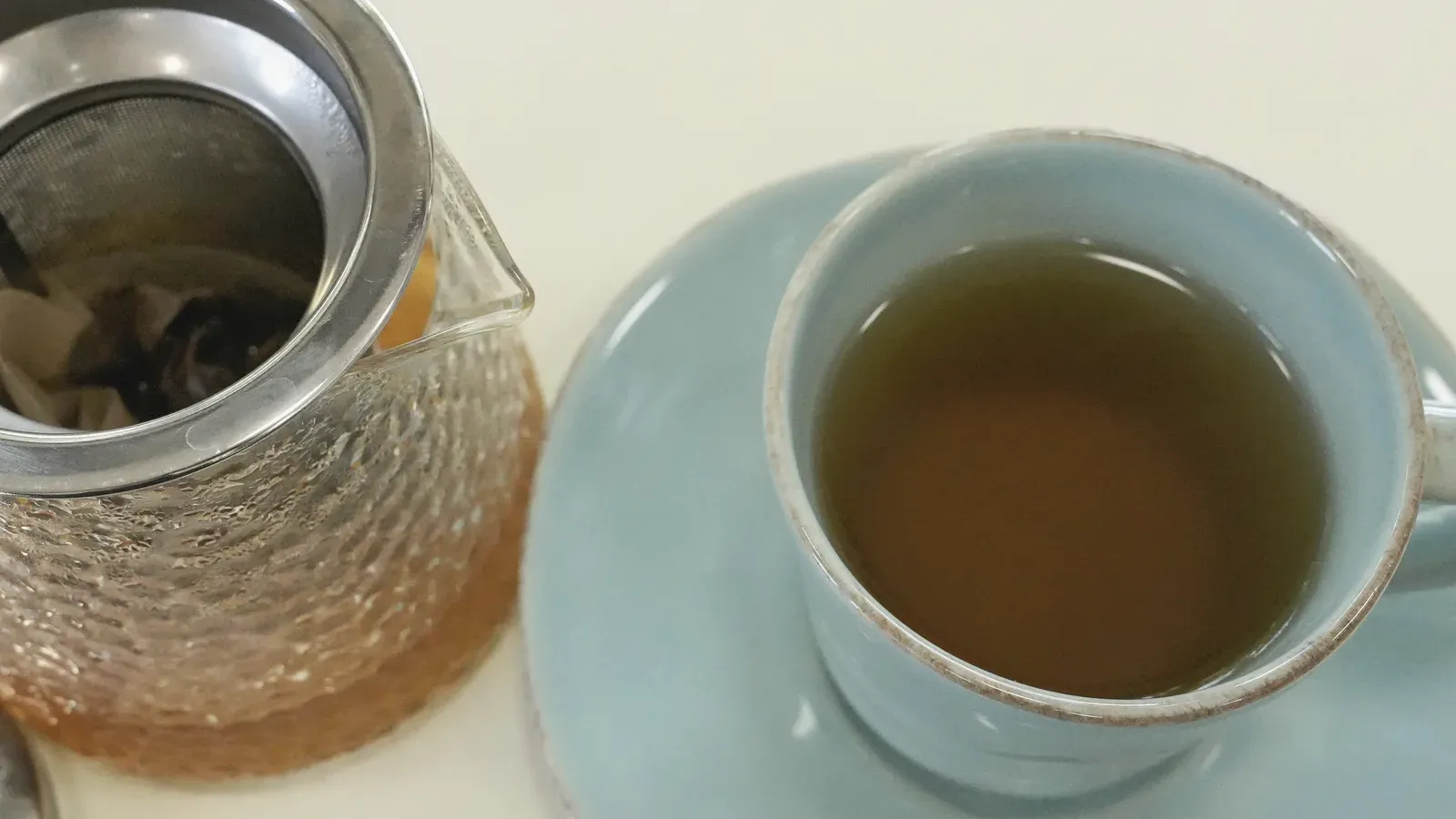
The gap between umami and bitterness is mostly water temperature. Hot water pulls out catechins (astringency), cool water favors theanine (umami). Match the temperature to the leaf and steep accordingly — cool and slow for gyokuro, near-boiling for roasted hōjicha.
Most “bitter green tea” is a brewing error, not bad leaf. Pour boiling water onto a good sencha (煎茶) and you get the same harsh, drying cup a cheap teabag gives you, and you blame the tea. Cool that water by twenty degrees and the same leaf turns sweet, broth-like, round. The grams don’t change. The pot doesn’t change. Only the heat does.
This is the most useful thing to know about Japanese tea, and it has a clean chemical reason behind it.
Temperature, and what it pulls from the leaf
Three groups of compounds give Japanese green tea its character, and each leaves the leaf at a different rate as the water gets hotter.
- Catechins (the green-tea polyphenols, chiefly EGCG) read on the palate as astringency and bitterness. They extract fast in hot water.
- Caffeine is bitter, and it too comes out faster the hotter the water.
- L-theanine, an amino acid, is the source of the savory, faintly sweet umami that defines high-grade Japanese tea. It dissolves readily even in cool water.
The Global Japanese Tea Association states the mechanism plainly: cool water lowers the extraction of catechins and caffeine while barely touching theanine 4. Lowering the temperature works selectively. It holds back the bitter compounds, and the umami still comes through.
That logic runs the whole table below. A shaded, umami-rich tea like gyokuro (玉露) is brewed cool, slow, and concentrated to chase theanine and leave the catechins in the leaf. A roasted everyday tea like hōjicha (ほうじ茶) has had most of its catechins driven off in the roaster, so boiling water costs it nothing and gains it a lot of aroma.
The master brewing table
Leaf weights assume a small Japanese pot serving one or two people. A standard tea scoop holds roughly 2 grams, and a level teaspoon of leaf runs 2–3 grams, less for the fluffy roasted teas.
| Tea | Water temp | Leaf | Water | Steep (1st) | Re-steeps |
|---|---|---|---|---|---|
| Gyokuro (玉露) | 50–60°C | ~10 g | 80 mL | 90 sec – 2 min | 3–4 |
| Sencha (煎茶) | 70–80°C | ~5 g | 180 mL | 60 sec | 2–3 |
| Fukamushicha (深蒸し茶) | 70–80°C | ~5 g | 150–180 mL | 30–45 sec | 2–4 |
| Kabusecha (かぶせ茶) | 65–70°C | ~5 g | 150 mL | 60–90 sec | 2–3 |
| Bancha (番茶) | 90–100°C | ~5 g | 180 mL | 30 sec | 2 |
| Hōjicha (ほうじ茶) | 90–100°C | ~5 g | 180 mL | 30 sec | 2 |
| Genmaicha (玄米茶) | 90–100°C | ~5 g | 180 mL | 30 sec | 2 |
| Kukicha / karigane (茎茶 / 雁ヶ音) | 70–80°C | ~5 g | 200 mL | 45–60 sec | 2–3 |
| Matcha (抹茶) | ~80°C | ~2 g | 60–70 mL | whisked, not steeped | — |
Treat these as starting points and adjust to taste. For a stronger cup, add leaf rather than steeping longer, since a long steep mostly draws out more catechin bitterness. The per-tea sources and the finer adjustments follow below.
Notes by tea
Gyokuro — cool, slow, concentrated
Gyokuro is shaded for about three weeks before harvest, which raises its theanine and holds its catechins low. To make the most of that chemistry you brew it cold for green tea, with a lot of leaf in very little water. Ippodo’s standard recipe is 10 grams of leaf in 80 mL of water at 60°C, steeped 90 seconds and poured off completely 1. Marukyu Koyamaen goes cooler still, 50–55°C for a first infusion drawn 1.5 to 2 minutes 2. Top grades reward going lower again, as far as 40–50°C, where the umami peaks and almost no astringency comes through 9.
The result is a tablespoon or two of intensely savory, almost broth-thick liquor, served in a small cup. Treat it as the green-tea equivalent of an espresso rather than a thirst-quencher. For the full picture of how shading builds that flavor, see Gyokuro: Japan’s Shaded Treasure.
Sencha — get this one right and the rest follow
Sencha is the everyday tea of Japan and the one people most often ruin with hot water. Marukyu Koyamaen’s home method is 10 grams of leaf, water cooled to 75°C, steeped 60 seconds and shared out evenly between the cups 3. The Global Japanese Tea Association brews higher grades cooler, at 60–70°C for a rounder, sweeter cup, while 70–80°C is a reliable all-purpose target 4. Scale the leaf to roughly 5 grams per 180 mL for a single mug.
Pour off every last drop. Leaf left sitting in residual water keeps steeping, and the next cup turns bitter before you have refilled the kettle.
Fukamushicha — same heat, less time
Fukamushicha (深蒸し茶), deep-steamed sencha, is steamed two to three times longer than ordinary sencha during processing. The extra steaming makes the leaf brittle, so it breaks into smaller, partly powdered pieces with more surface area, and it gives up its flavor faster 6. Brew it at the same temperature as standard sencha but cut the time to 30–45 seconds. The cup comes out cloudy, deep green, and thicker-bodied than clear sencha. That cloudiness is fine leaf held in suspension, the mark of a good fukamushicha.
Kabusecha — between sencha and gyokuro
Kabusecha (かぶせ茶) is shaded for a shorter stretch than gyokuro, roughly one week to ten days, blocking about half the light rather than the near-total cover a gyokuro field gets 8. It is then rolled like sencha. In flavor and in brewing it sits between the two: water a little cooler than sencha, around 65–70°C, coaxes out its softened, half-shaded umami without pulling the astringency forward.
Bancha, hōjicha and genmaicha — boil away
These are the roasted and coarse everyday teas, and they are the forgiving ones. Bancha (番茶) is made from later, larger leaves. Hōjicha is bancha or sencha roasted until brown, and genmaicha (玄米茶) is green tea blended with roasted rice. Roasting and the lower catechin content of mature leaf leave little bitterness to guard against, so you use full boiling water and chase aroma. Ippodo’s method for the whole family is 10 grams of leaf in 240 mL of vigorously boiling water for 30 seconds, and it insists on water at a rolling boil “to get the full aroma” 5. Scale that to about 5 grams per 180 mL for one mug. Drink these with food, serve them in the evening and to children, since roasting also drives off some of the caffeine. If hōjicha is new to you, see Hōjicha: Japan’s Roasted Green Tea.
Kukicha and karigane — the stem teas
Kukicha (茎茶) is made from the stems and twigs sorted out during sencha and gyokuro processing. Karigane (雁ヶ音) is the higher tier, made specifically from the stems of gyokuro or top-grade sencha, and it carries some of that shaded sweetness 7. Stems hold less catechin than leaf, so kukicha tolerates warmer water than sencha, around 70–80°C, roughly 5 grams to 200 mL, steeped 45 to 60 seconds. Karigane made from gyokuro stems does better a touch cooler. Either brews pale, light, and faintly sweet, with a clean grassy note and none of the grip a hot sencha can have.
Matcha is whisked, not steeped
Matcha (抹茶) does not belong in a steeping table, and it is useful to see why. With every tea above, you extract soluble compounds from the leaf and discard the spent leaf. With matcha you drink the powdered leaf itself, suspended in water, so nothing is thrown away and there is no steep time, only a whisk. Use water around 80°C, since boiling water scorches the powder and turns it bitter, and roughly 2 grams of matcha to 60–70 mL, whisked briskly with a bamboo chasen (茶筅) until it foams. The full method is in How to Whisk Matcha Properly. Matcha is ground from tencha (碾茶), a shaded, de-stemmed leaf grown specifically for the purpose — see What Is Tencha? for how that leaf is made.
The kyūsu, and cooling water by hand
Most of these teas are made in a kyūsu (急須), the side-handled Japanese teapot built for exactly this work: a wide, low body and a fine mesh that let a few grams of leaf open fully in a small pour. A porcelain or fired-clay kyūsu will outlast almost anything else in the kitchen if you rinse it with plain water and never scrub it with soap, which lodges in the clay and taints the next brew. How to care for your teaware covers the rest.
Cooling the water is the fiddly part, and here is where I will stake a claim: a thermometer is training wheels, and you should keep it until your hand knows 70°C on its own, then set it aside. An electric kettle with a temperature dial is a fair shortcut. Neither is required. Water sheds heat predictably as you move it between vessels, and the traditional tool for that is a yuzamashi (湯冷まし, “water cooler”), a wide open bowl you pour the hot water into and let stand. Pouring through a cup does the same job, and warms the cup before you drink.
Ippodo’s instruction for gyokuro is to “cool boiling water to 60°C by transferring 3 times” through cups 1. Each pour into a room-temperature vessel drops the water roughly 5 to 10°C. A rough field guide:
- Off the boil, just stopped bubbling: ~95°C — bancha, hōjicha, genmaicha.
- Poured once into a cool cup or the pot: ~85°C — a short rest brings kukicha into range.
- Poured into a cup and rested, or transferred twice: ~70–75°C — sencha, fukamushicha.
- Transferred three times, cool to the lip of the cup: ~55–60°C — gyokuro.
When you serve more than one cup, pour a little into each in turn and go back along the row, rather than filling one cup and then the next. The liquor grows stronger toward the bottom of the pot, so this back-and-forth pour gives every cup the same strength.
Getting two or three cups from one pot
Most of these teas are not single-use. The first infusion pulls out the easiest, most soluble compounds, and the second and third bring different balances of the same elements, often the most interesting. The leaves sit open after the first steep, so two adjustments apply to every round after it: raise the temperature a little, and shorten the time.
Marukyu Koyamaen’s gyokuro sequence is a clean model. First infusion at 50–55°C for 1.5 to 2 minutes. Second a touch hotter at 55–60°C for about 30 seconds, third hotter still for around 15 seconds 2. Their sencha follows the same shape, the second steep a little warmer and only about 10 seconds 3. The reasoning mirrors the first principle: the leaf has surrendered its quick-release umami, so you raise the heat to draw out what remains, but cut the time so a now fully wetted leaf does not flood the cup with catechins.
Always pour the pot completely empty between infusions. Leaf standing in residual hot water over-steeps and spoils the next cup. That command over water and heat is also where the older discipline begins — chadō, the Way of Tea, assumes you can already make the cup before it asks anything more of you. For the seven Japanese teas laid out side by side, see The Leaf.
Once you can feel the difference twenty degrees makes, a single tin of leaf becomes three or four teas depending on how you pour it. Keep the thermometer until your hand learns the temperatures. After that, one rule carries most of the weight: when a Japanese green tea tastes bitter, cool the water before you blame the leaf.
Sources
9sourcesIppodo Tea (USA)
SupportsGyokuro recipe: 10 g / 80 mL / 60°C / 90 s; cool boiling water to 60°C by transferring 3 times; pour out every last drop
Marukyu Koyamaen
SupportsGyokuro re-steep sequence: first infusion 50–55°C for 1.5–2 min; second 55–60°C for 30 s; third at higher temperature for 15 s
Marukyu Koyamaen
SupportsSencha: 10 g leaf, water cooled to 75°C, 60 s first infusion; second a little hotter for 10 s; same leaves used up to three times
Global Japanese Tea Association
SupportsWarm brew 5 g / 80 mL / 60–70°C / 60–90 s; hot brew 5 g / 180 mL / 90–100°C / 20–30 s; cool water lowers catechin and caffeine extraction with little effect on theanine
Ippodo Tea Global
SupportsBancha / hōjicha / genmaicha: 10 g / 240 mL / 100°C / 30 s; use vigorously boiling water to get the full aroma
Nio Teas
SupportsFukamushicha: deep steaming breaks the leaf into smaller, higher-surface-area pieces that infuse faster; ~5 g / 150 mL / around 45 s; four infusions typical
Japanese Tea (Tealife)
SupportsKukicha: 4 g / 200 mL / 70–80°C / ~30 s; karigane is kukicha made from the stems of gyokuro (or high-grade sencha), sweeter and more umami-rich
My Japanese Green Tea
SupportsKabusecha shaded roughly 1 week to 10 days (vs 20+ days for gyokuro), blocking about half the light; brew around 70°C
Global Japanese Tea Association
SupportsTop-grade gyokuro first steep as low as 40–50°C for maximum umami and least astringency
Image: KQuhen, Wikimedia Commons · CC BY-SA 4.0
Common questions
Why is my green tea bitter?
Almost always because the water was too hot. Heat above roughly 80°C extracts catechins and caffeine quickly, and both read as bitterness and astringency. Cool the water and the same leaf turns sweet and savory.
Can I reuse Japanese tea leaves?
Yes. Most Japanese leaf teas give two or three good infusions. Raise the water temperature a little and shorten the steep on each subsequent brew, because the leaves are already open and give up their compounds faster.
Do I need a thermometer to brew Japanese tea?
No. A thermometer or a variable-temperature kettle is the easiest way to hit a target, and a good buy if you drink green tea daily. Water also sheds a predictable 5 to 10°C each time you pour it between vessels, so cooling it through a yuzamashi or your cups gets you there by feel. Keep the thermometer until your hand learns the temperatures, then set it aside.